“Change” is a word that matters in politics. For decades voters have been promised change, they voted for change, but they never really felt change. From the Big Society, through Austerity, Brexit, Build Back Better and Levelling Up, change never came.
No wonder trust is broken, and politicians’ promises are no longer enough. Voters want ‘change you can feel’ otherwise they won’t believe it’s real. They need to feel the change in their own neighbourhood, in their family, and in their hometown and local high street. This is how people measure whether politics is working for or against them.
It’s all about a focus on the place they call home, the place they belong to, which is why we must put those places at the heart of how we do politics and how we talk about politics. This is something we are actively encouraging people to sign up to and get involved in our “place agenda”.
Politics in the UK works in a very top-down way. Politicians are elected and then do things to people by taking decisions that affect their lives. But we don’t make those decisions with people. Other than putting a cross on a ballot paper every few years, politics is something very remote from people even though it affects their lives every day.

Over time, that’s created a big disconnect. Public services are slow to respond to what people really want them to do, high streets fall into decline and local communities can’t do anything about it, people become older or unwell and are allocated to services even if they would rather have something better tailored to their own preferences.
When the Labour Party was founded over 120 years ago, it grew from the friendly societies, self-help groups and trade unions of a newly industrialised Britain. Its purpose was to extend power to working people and open-up opportunity for them, their families and communities.
After the Second World War, Labour’s original communitarian spirit was replaced by a statist ideology more aligned with the thinking of the Fabians and the Webbs, learning from the centralised control of a wartime economy and the planned economies of the rapidly growing Soviet Union.
The post-war Labour government built big national institutions under public ownership – like the National Coal Board, and National Insurance. It improved life immeasurably, but, as the state grew bigger, it unravelled a rich tapestry of self-organised working class institutions that kept communities active and strong. Post-war mass council housing gave people better homes, but it also told them what front door they must have and where they should live. The British state became more paternalistic, seeking to manage the problems in people’s lives in a way that shrank the space for them to act for themselves as the role of the state grew and expanded into more areas of people’s lives.
When Thatcher took an axe to that postwar legacy its vulnerability was exposed. Trade unionism and the cultures of working-class solidarity were crushed, and as the country was violently deindustrialised, the proportion of GDP spent on welfare spiralled. Because local institutions had been replaced by the central state, there were no longer any self-organised groups to respond to the misery inflicted on millions. Communities that no longer had the resources to act for and defend themselves were laid waste.
The New Labour government from 1997 made great progress in many areas, but it didn’t rebuild the infrastructure that makes communities resilient and able to lead change for themselves. So, when the Tories came back in 2010 and austerity turned off the funding taps, many communities just sank.
Labour’s founders understood that working people and their communities can’t just be the passive recipients of decisions made about them by others. Strength comes from being able to direct those decisions and have your voice heard when they are made. At heart that’s what democracy is about. Communities need to be active not passive if they are to be strong, and without strong communities we can’t build a stronger country.
To undo the lasting damage of the Thatcher era, we must not just re-embrace communities, we must remake the state around them. Labour’s £6bn Pride in Place programme does precisely that by making up to £20m available to almost 300 of our poorest communities, but it’s local people who are in the driving seat deciding how that money will be spent. It makes sense because local people know best what needs to change in their own community.
But that’s just a start. We face a tangled web of problems including chronic health conditions, worklessness, youth offending, social division, caring for an ageing population, and an epidemic of loneliness. But there are examples across the country that show communities make a big difference when they have a say in what needs to change and can help shape it.
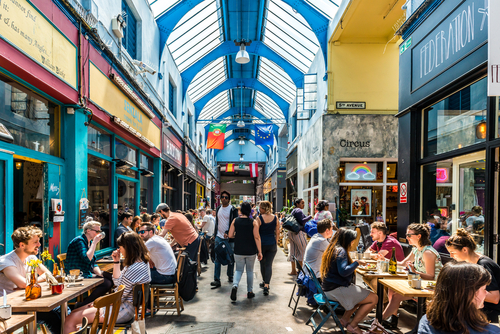
I first learnt the power of communities when I led Lambeth Council in the late 2000s. I saw a housing estate in Brixton improve dramatically when the housing managers reported to an elected residents’ board instead of to directors inside the town hall. I saw Brixton Market come back to life when it became a community-led social enterprise supporting start-ups that transformed into a vibrant hub of small food businesses helping to regenerate the local area. I saw youth violence fall dramatically when the families on the estates most affected by it could choose the support they needed to stop it. And I saw residents set up a community energy co-op with solar panels on the roofs of council housing blocks that grew into Repowering, now the country’s biggest community-owned clean energy co-operative.
Bringing people right to the heart of decision-making allows us to see people fully – not just as patients, voters or consumers, but as citizens with agency and belonging and inherent human value. It’s an approach that values relationships and seeks to prevent problems in people’s lives rather than manage them. It lets us put the entire system – of politics, of government, of institutions – back in service of people and open that system up to the innovation and creativity that lies in our communities.
We will roll this approach out through our Community Power Pilots which will let people redesign the services they rely on so we can learn what works best. The new Social Housing Bill will include new rights for tenants to manage their social housing estate, and this week I have announced a new Community Right to Buy Fund so local groups can take over empty buildings and run activities of value to their community.
Labour was founded to deliver power and opportunity to working people. That purpose can drive us forward into a new kind of state built around people and the communities they belong to. Whatever their background, people living in any community have a shared interest in making it a better place to live. Involving them more profoundly in the decisions that shape their area for the future becomes a bridge that brings people together, and a powerful response to the empty rhetoric of those who seek to divide us.
It’s time for Labour to hand back power to the people.
Content from our partners


Related