
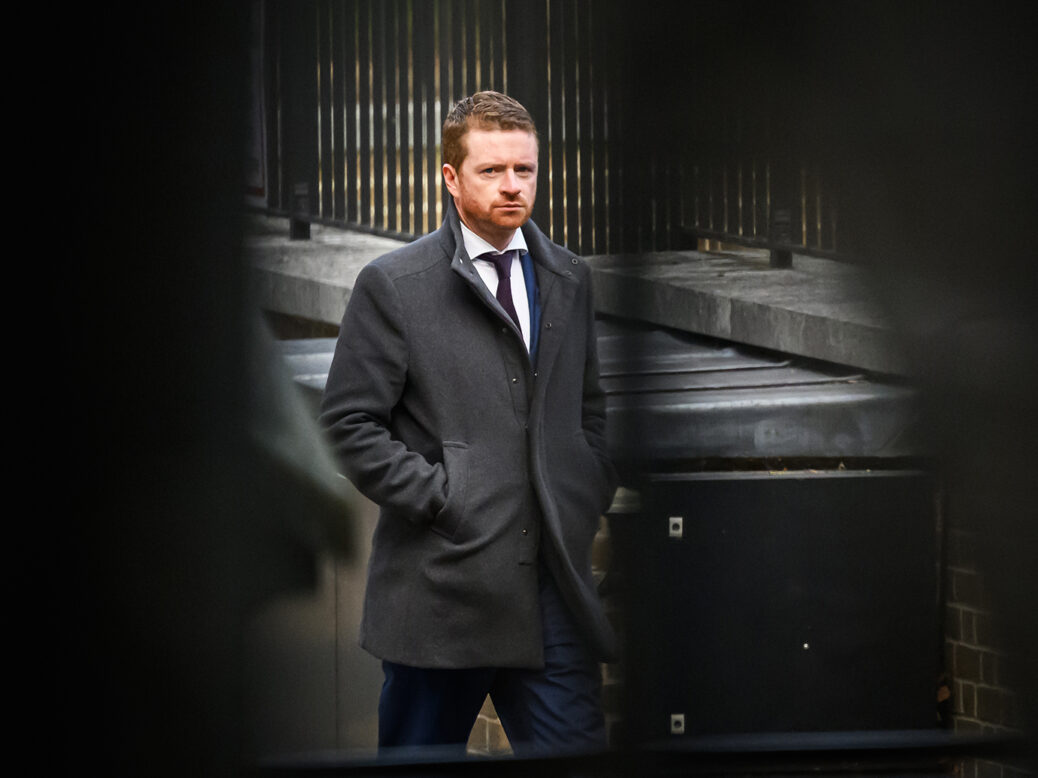
Morgan McSweeney, the former No 10 chief of staff, has given his first broadcast interview to the BBC’s Nick Robinson on his Political Thinking podcast.
McSweeney made his first public appearance at the Foreign Affairs Committee in April but this is the first time he has sat down for an on the record conversation with a journalist. He spoke at length about the course of the Starmer government in which he was perhaps the key player other than the Prime Minister himself. Here are five things we learnt.
1. He foresaw the failure of the Starmer project and admits his mistakes
McSweeney was surprisingly candid about what he called Labour’s failure to prepare for government. He told Robinson that in early 2024, before the general election, he had a concerning realisation: “At the start of 2024… I did start to realise that we hadn’t done enough to prepare for government and we got exposed for that I think early.”
He said that the entire party had failed to adequately make plans for entering office: “We didn’t prepare enough for what kind of world we were going to. We are now in a very different era than when Labour was last in government. I think we didn’t have enough conversations at the top of the party about what that meant, how to prepare for it, what that meant for the state. You have to deliver quite quickly for people, for them to see the change quickly. And I think we didn’t come in with enough of a theory about how we would do that.” One of his “main lessons” after his stint in No 10, he said, is that “preparation is far more important to strategy when it comes to just about any aspect of politics”.

When pressed by Robinson, McSweeney admitted that the decision to cut winter fuel allowance for ten million pensioners in the first month of the government was a politically damaging mistake. “It was means tested at too low a level,” he said. “I think it was one of those early mistakes and it defined the government in a way that really did us a lot of damage.”
2. But he continues to defend large parts of his record
McSweeney explained that he wanted to do an interview to show his true self after years of media coverage that he felt was inaccurate. “When I left and I started to meet new people, get interested in new areas, and meet people for the first time, new people for the first time in six years, repeatedly people were saying to me you’re not who I expected you to be,” he said. “I need to move onto a new chapter in my life and to do that I need to close the old one and to make clear that’s happening.”
Before this next chapter, McSweeney is clearly keen to defend his record after being blamed by some in the Labour Party for many of the party’s mistakes in government. He emphasised his role in convincing the party it could get back into government within one term, something most thought would take ten years after the 2019 election defeat.
While he admitted, “I failed in my job, I failed in my duty,” regarding the appointment of Peter Mandelson to the US ambassador role, he remained firm in denying that it was ultimately his fault: “I didn’t make that decision, I made a recommendation and I don’t think I was giving people orders”.
Despite often being maligned for a supposedly “toxic culture” in Starmer’s Downing Street, McSweeney tried to distance himself from this narrative. He said he would not miss “cheap shots from anonymous quotes” and rejected the notion of a “boys’ club” in No 10, emphasising the role of prominent women in Labour and claiming that journalists did not write about them enough.
3. And he believes the state is also to blame for the government’s problems
While he admitted political mistakes, McSweeney also laid out a broader critique of the state and its capabilities, blaming a weak centre for a number of problems that the Starmer government dealt with. “The state feels just out of shape, so it’s big but it’s actually quite weak,” he said, presenting as examples of state failure the Birmingham bin strikes, the continuing small boat crossings of the Channel and long waiting times for GP appointments.
4. Like most politicos, McSweeney is odd
In a particularly revealing moment, McSweeney laid out his long and complicated relationship with the Labour Party by way of karaoke. He said of the party: “You can love it and hate it. My karaoke song is “With Or Without You” [by U2] and it took me a few years to realise that the subject of “With Or Without You” for me was probably the Labour Party.”
Like most people who pursue politics at the highest levels, McSweeney revealed himself to be a political obsessive. He also spoke of his excitement as a young man when he bagged a job as an administrator at Labour Party HQ during the 2001 general election campaign even though none of the key players in the party had any interactions with him.
Elaborating on his own personal history, McSweeney said that as a young man he had been a “quite idealistic” member of the Campaign for Nuclear Disarmament. He said that his experience working in pubs and building sites when he moved to London as a teenager changed his perspective: “It rooted my politics a lot, moved away from ideas and more towards people… I understood more about the lives that people really had and how they lived them.”
5. He regrets Starmer’s demise and backs Burnham
After having worked with Starmer for six years, he said of the Prime Minister’s departure: “It’s very sad. I couldn’t watch all of his press conference because I found it quite sad.” McSweeney also offered some support to prime minister-in-waiting Andy Burnham, saying that he is “optimistic” about Burnham’s chances and “I quite like the idea of a No 10 for the North.”
[Further reading: At last, a literate prime minister!]
Content from our partners

Related
Join the debate
Subscribe here to comment