
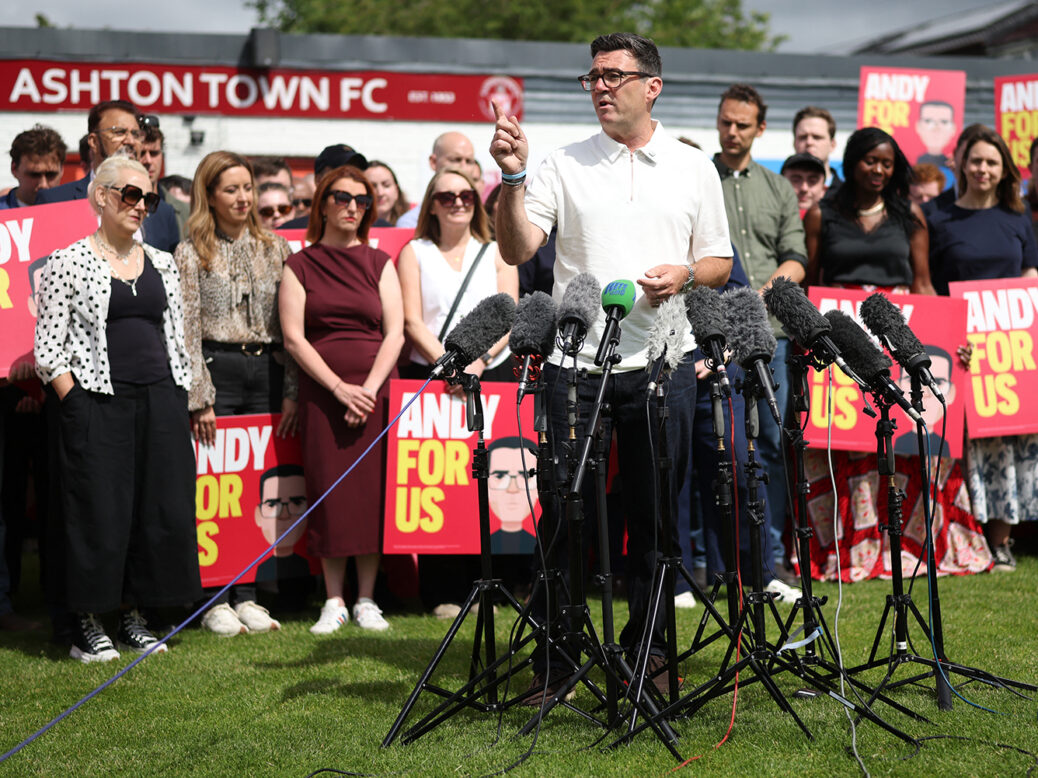
More than nine years after leaving parliament to head north, Andy Burnham is back. Thanks to the support of the good people of Makerfield, he returns with a tried-and-tested blueprint for making the Labour Party electorally competitive again. As the party processes this result, learning the right lessons is the essential next step.
This is not a seat that the Labour Party should have been able to win five weeks later – let alone win decisively. In May’s local elections, Reform UK won every single seat up for grabs in Makerfield. On the doorstep, the open hostility of voters towards the Prime Minister and his Labour government was palpable. In Makerfield, I lost count of the number of voters I spoke to that voiced intense displeasure with Keir Starmer.
In the coming days, there will be reams of analysis about how Burnhamdelivered a Labour win in the towns and villages which heartily rejected Labour just weeks ago. The most obvious explanation is “Brand Burnham”. In poll after poll and focus group after focus group, Burnham’s personal popularity has come to the fore. His by-election campaign slogan – “for us” – only worked because voters genuinely see Burnham as a politician who is on their side; someone meaningfully attuned to the concerns and priorities of ordinary people and serious about taking action.
But if Labour is to heed the lessons of the Makerfield by-election, it must understand why there is a “Brand Burnham” at all. The answer is political and only partly about personality. Whilst Burnham’s gifts as a communicator and relationship-builder no doubt helped him to resonate with the people of Makerfield, it was the political offer he put forward that secured victory in this by-election. It’s in this political offer that the blueprint for Labour’s future is to be found.

Burnham offered voters a new economic and political settlement and a Labour Party brave enough to bring it into being. He offered both a diagnosis of the problems experienced by people in Makerfield and a prescription for remedying them.
He was willing to name the political causes of the affordability crisis immiserating the people of Makerfield and beyond – deindustrialisation, privatisation and austerity – and to propose a suite of progressive but practicable policies to alleviate them. Front and centre of Burmham’s pitch to voters were policies that are popular with the public and of enormous transformative potential. Public ownership of essential utilities, a land value tax and electoral reform have felt like fringe proposals under this Labour government, but were front and centre of Burnham’s appeal to Makerfield.
Reform UK leads in the polls exactly because they are populists. But a lesser-said wrinkle is that the criticism levelled at the current Labour government, that it lacks a succinct analysis of Britain’s issues and a coherent way to solve them, apply to Reform in the long-term. When faced with something resembling it in Burnham’s campaign, one that hasn’t even been developed to the level that it will be by the time of any potential upcoming leadership contest, Reform’s braggadocious promises came across as very emperor’s new clothes.
A distinct aspect of “Brand Burnham” is a way to tackle Britain’s omnicrisis that could actually work. Reform is able to exploit anger and discontent with falling living standards and political disconnect, but the truth understood across the political spectrum is that Reform will never be able to fix those issues. Burnham, on the other hand, has spoken to what people interact with everyday – energy bills, water bills, the roads, the transport system – and shown a willingness to actually do something about it that is equal parts ambitious and realisable. For all their posturing, Reform simply can’t commit to reforming the issues of the everyday, like Burnham now can, because they are ultimately fine with the profit-maximising and Thatcherite agenda of austerity, privatisation and outsourcing that has landed Britain in the troubles it faces today.
“Brand Burnham” exists because Burnham’s is a politics that speaks to the crisis of power and control felt in communities like those in Makerfield. The bureaucratic managerialism that voters have come to expect from all of the mainstream political parties, including Labour, contrasts sharply with the agenda that Burnham offered in this by-election. And this was reflected in the way that Burnham ran this campaign. The transactional canvassing approach that modern parties rely on was challenged by Burnham’s determination to speak to every single undecided voter.
The danger for Labour now is that it misreads what happened in Makerfield. There will be those who conclude that the lesson is simply to find more candidates with Burnham’s profile or communication skills, or to echo core campaign messages about listening to communities and building a new politics together. But “Brand Burnham” cannot be stripped of its politics.
Attempting to replicate the Makerfield campaign without embracing the substance of the offer that Burnham made to voters would be to miss the point entirely. Labour cannot simply market its way back into the affections of voters who feel abandoned. It must demonstrate a willingness to confront the sources of that alienation and offer meaningful change.
That challenge applies to Burnham himself as he heads south. As the political earthquake emanating from Makerfield begins to reverberate across the country, there will be pressure to soften, to accommodate and to become another parliamentary operator. But the reality is this: the very qualities that make Nurnham successful were forged outside of Westminster’s conventions. His popularity was built not by adapting to the political centre of gravity in London but by challenging it.
What Burnham and the wider Labour Party need to do next is to, quite simply, nurture and take forward the substantive politics of “Brand Burnham”. In it, there might just be a project to take on Reform and the causes of Reform all across the country.
[Further reading: Only Keir Starmer can take Labour’s hope away now]
Content from our partners

Related
Join the debate
Subscribe here to comment