
Have reports of the Conservative Party’s death been exaggerated? That’s certainly what the polling trends of the last few months suggest. After reaching a nadir of 14 per cent last September, the party is now averaging 19 per cent and has taken second place (though that’s mostly due to Labour’s decline). One poll yesterday from More in Common put the Tories on 23 per cent, their highest share since last April.
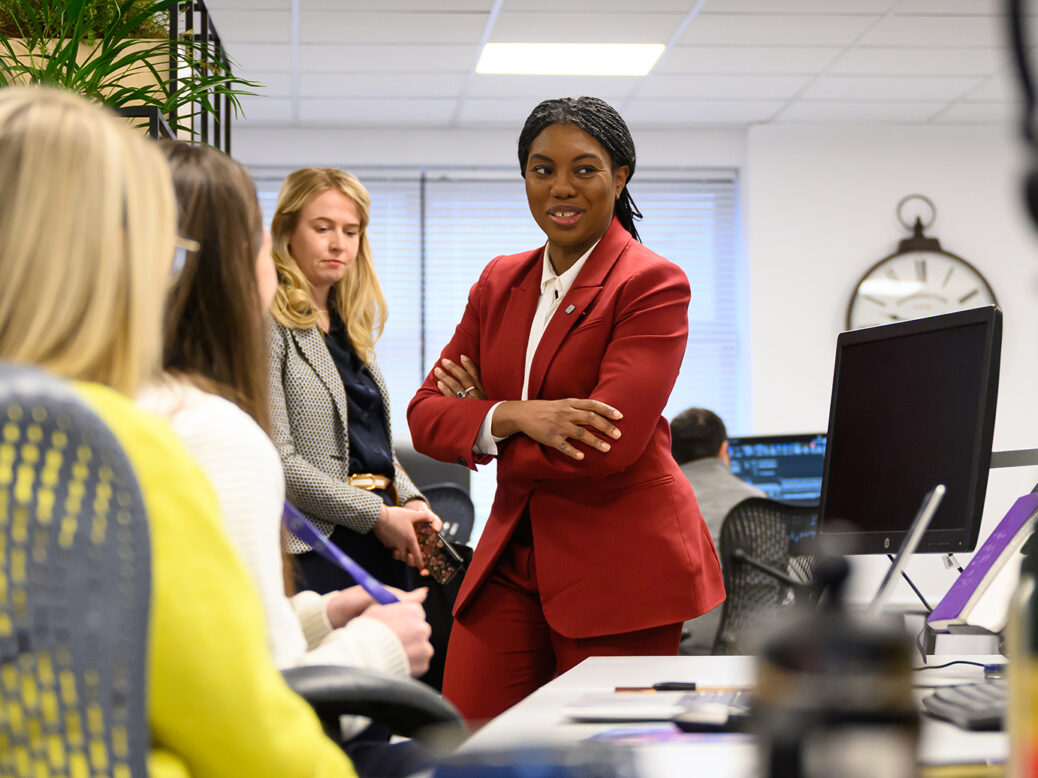
What’s driving this partial recovery? The party’s ratings began to improve after Kemi Badenoch’s well-received conference speech, in which she pledged to abolish stamp duty, and were further boosted by the Budget. That event gave the Tories a clear ideological target – a Labour government raising taxes and welfare spending – and Badenoch’s sardonic response to Rachel Reeves resonated with aggrieved voters. Badenoch’s approval rating now stands at -13, its highest level since 2024, compared to Keir Starmer on -47, Ed Davey on -10 and Nigel Farage on -9. (This is truly the age of unpopularity.)
There are deeper trends at work too. Luke Tryl, the director of More in Common, cites three factors from recent focus groups. First, public opinion is turning against higher taxes, which have now increased by £66bn across the last two Budgets, not least due to the cost of living pressures that Starmer has alluded to in recent days. Second, voters resent higher taxes all the more because of the state of public services, with a rising number paying for private healthcare and dentistry (one in eight Britons now has medical insurance, the highest level since 2008). Third, there is anger over “contribution” not being respected as taxes rise to fund measures such as the abolition of the two-child benefit cap (though, of course, around 60 per cent of households affected have at least one adult in work).

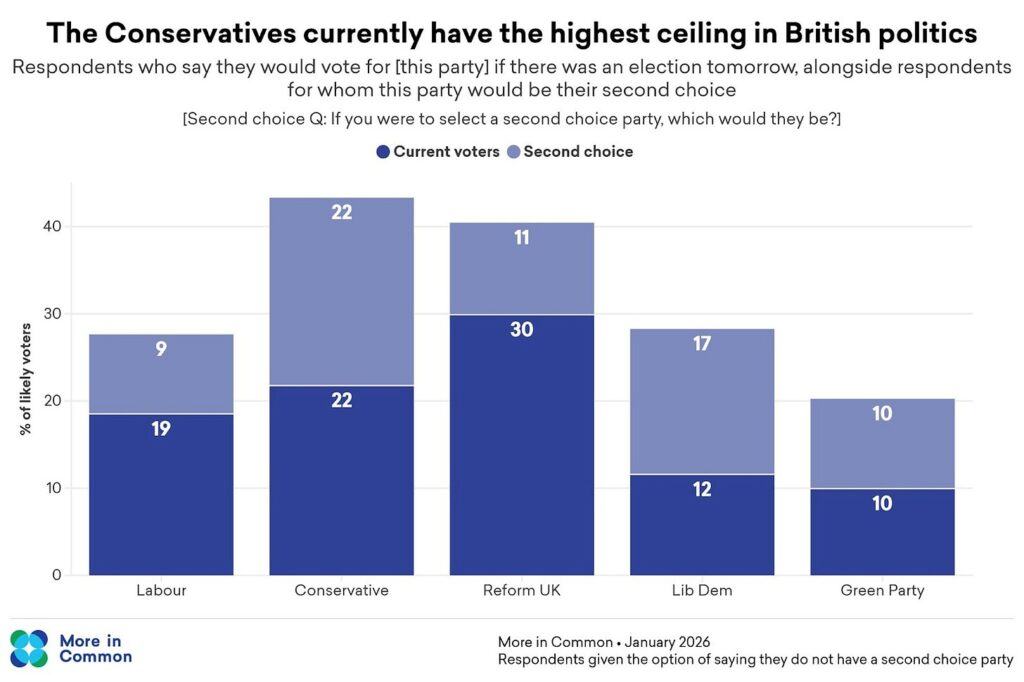
The Tories, who are more trusted than both Reform and Labour on the economy, have benefited from all this. Indeed, as exclusive data from More in Common below shows, they currently enjoy the “highest ceiling” of any party in British politics: 44 per cent of voters name the Conservatives as either their first or second choice (up six points since August), compared to 41 per cent for Reform, 29 per cent for the Lib Dems, 28 per cent for Labour and 20 per cent for the Greens. This, Tryl says, shows the potential for the Tories to benefit from tactical votes from “transactional” Reform supporters who, above all, want Labour out of power.
But the Conservatives have also been sustained by an often overlooked group: let’s call them the never-Faragers (after the never-Trumpers in the US). These voters, who Tryl describes as “pro-institutions, pro-Ukraine, globally-minded”, overlap with the third of Tory supporters who voted Remain and have no intention of defecting to Reform. In a submerged form, the Conservative Party of David Cameron and George Osborne lives on.
Two final points: first, yesterday’s More in Common poll, which put Reform and the Tories on a combined share of 54 per cent, has animated those inside government who believe that a “unite-the-left” strategy is doomed to fail. Second, any talk of “Tory recovery” must come with a major caveat: 23 per cent is still below the share of the vote that the party won under Rishi Sunak in 2024, its worst result in history. Death might have been averted but the patient remains in intensive care.
This piece first appeared in the Morning Call newsletter; receive it every morning by subscribing on Substack here
[Further reading: America’s imperial overreach]
Content from our partners



Related
Join the debate
Subscribe here to comment