
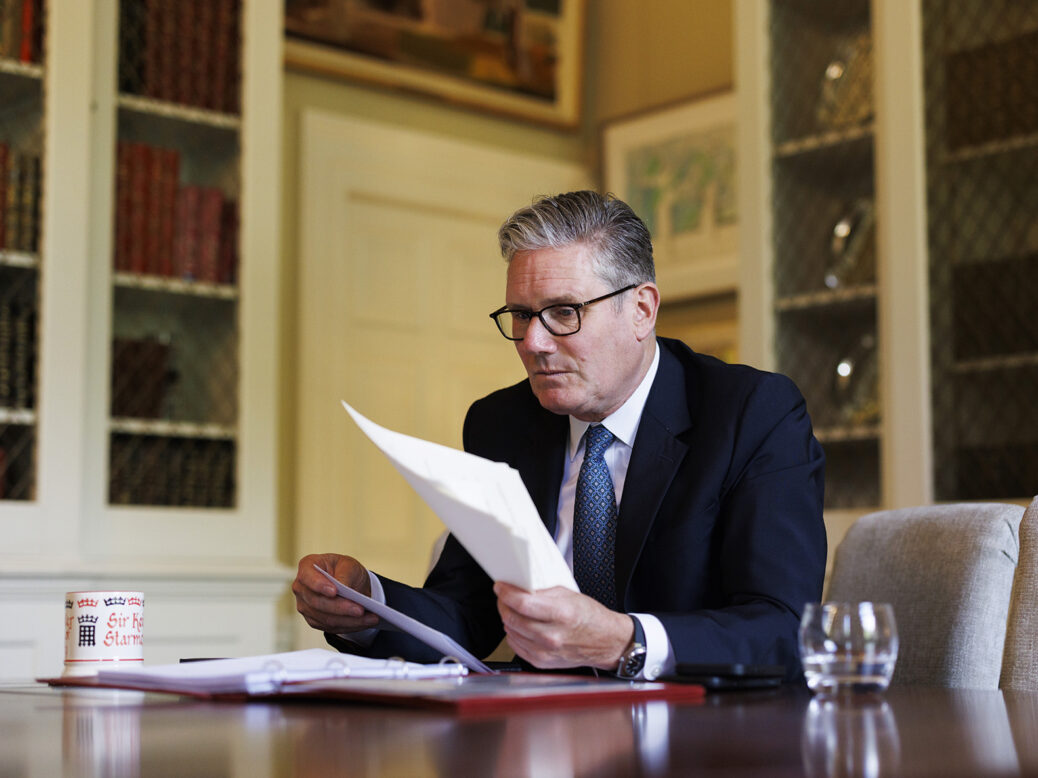
Neil Kinnock never said “we’ve got our party back”. After Ed Miliband’s election as leader in 2010 he in fact declared: “We never lost it! Don’t forget, the Labour Party has leaders, not proprietors”.
Both sentiments capture the mood inside the party after Rachel Reeves’s tax-and-spend Budget. It was, one Labour source remarks, “more Tribune than Progress”.
The soft left, sometimes deemed by its own members to be “incapable of organising its way out of a paper bag”, has now won a succession of internal victories. It led the revolt against the means-testing of winter fuel payments, forced a U-turn over welfare cuts and secured the abolition of the two-child benefit cap (though Bridget Phillipson, who privately pushed Reeves to act, was also central).

That a government led by Keir Starmer has bolstered the soft left would once have been unsurprising. This is, after all, the Labour leader’s own tribe. But a first year marked by foreign aid cuts, the “island of strangers” speech and ruthless party management alienated many of his natural sympathisers. Now, as he decries the racism of the far right and the austerity of the Conservative years, Starmer has rarely looked more like his 2020 self: socially liberal, economically progressive.
Yet any talk of an uncomplicated soft left victory is overstated. As Starmer will emphasise in his speech today, he has asked Alan Milburn, the Blairite former health secretary and bête noire of Gordon Brown, to lead a review of youth inactivity, offering a potential route to new welfare cuts.
On immigration, too, the soft left is hardly making the weather. Only a fortnight ago, Shabana Mahmood unashamedly confronted liberal taboos and vowed to introduce one of the strictest asylum systems in Europe.
Some might struggle to make sense of a government that has drawn fervent applause from John McDonnell and Maurice Glasman in the same month. But they shouldn’t. This is an administration that has, in broad terms, moved left on the economy and right on culture.
Yet this is a combination under increasing challenge. Soft-left critics eyeing Andy Burnham warn that Starmer’s government has done too much to repel natural progressives to recover now. Blairites sympathetic to Wes Streeting, meanwhile, accuse the Prime Minister of betraying his original mission of growth by squeezing business. Blue Labourites embrace Mahmood as a more natural champion of economic interventionism and social conservatism.
Wherever you turn, this is a party craving more ideological definition. Confronted by this, and Labour’s poll ratings of 18 per cent, Starmer pleads for more time to finish the job. The danger is that his assorted critics unite around one conclusion: Labour can’t afford to wait.
This piece first appeared in the Morning Call newsletter; receive it every morning by subscribing on Substack here
[Further reading: Your Party votes for collective leadership]
Content from our partners


Related

Join the debate
Subscribe here to comment