
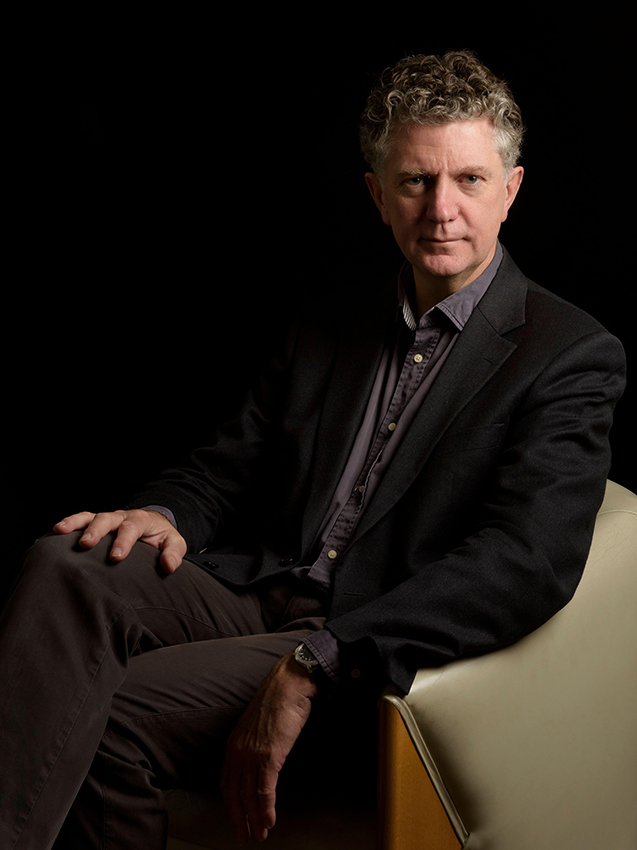
He appears at almost every moment of consequence in the Tony Blair decade – the death of Diana, the Good Friday agreement, Bernie Ecclestone, fuel strikes, the euro debates, the Peter Mandelson resignation, the TB-GBs, the second Peter Mandelson resignation, Iraq and the dossier, the Kelly affair, 7/7, ID cards and Blair’s “long goodbye”. He was even there for the Millennium Dome debacle. In the official documents so far released and in the informal crisis meetings held in the Downing Street “den” that have been recorded for posterity by Andrew Rawnsley and other chroniclers of the period, he is always in the room. He was there on 11 September 2001, watching the planes hit the towers of the World Trade Center and then sending a junior member of staff to the Trafalgar Square Waterstones to buy every book they had on al-Qaeda.
Now Jonathan Powell, chief of staff to the prime minister from 1997-2007, has returned to the right hand of power as Keir Starmer’s national security adviser to witness the third Mandelson resignation, the second go at ID cards, and much else. That’s one reason critics of the China spy case collapse are so sceptical of claims Powell was not at the centre of events, and instead left the decisions to his deputy Matthew Collins, as the government has claimed. He now faces a crisis over these questions. Yet he has also received glowing praise from Donald Trump’s world negotiator Steve Witkoff for helping to secure the Gaza peace deal.
Where did Jonathan Powell come from? He and his older brother Charles rose from the impeccably upper-middle-class origins of the Whitehall insider: military father, a minor public school (Canterbury), followed by Oxford and then sparkling early careers in the Diplomatic Service.
Charles served as the foreign policy adviser to Margaret Thatcher for the final seven years of her premiership. That was the Gloriana Imperatrix phase – her biographer Hugo Young’s phrase – when, after vanquishing foreign and domestic enemies, she became one of the half dozen most important world political figures.

The elder Powell pronounces the surname to rhyme with “mole”, just like Anthony the novelist (and he gives the impression of being about as posh as the characters in the Dance to the Music of Time books). Jonathan was younger, more left wing, collected rock LPs and pronounced the same surname to rhyme with “towel”, like a man at the factory gate. He was a child of the Sixties in the superficial ways, like his former master the guitar-playing Anthony “Tony” Blair.
There were some similarities in the brothers’ approach. Both rubbed Whitehall up the wrong way. Charles, because despite being a civil service appointment on a two-year limited posting, he hung around in No 10 for years on Thatcher’s instruction and became immensely powerful. Likewise, Jonathan got into immediate conflict with the cabinet secretary after the 1997 general election. He had special orders in council granted so that he and Alastair Campbell could give instructions to civil servants, despite the rigid convention that ministers can do this but not politically appointed advisers. He also installed himself as both chief of staff as well as the PM’s principal private secretary in all but name.
Both also understood that an adviser’s level of influence over the prime minister was inversely proportional to the level of their media profile. Like Charles, Jonathan had a strict rule against cosy relations with the press, leaving such dirty work to Campbell and the communications team. He was so elusive that newspapers would render him in their pages as a silhouette. Confused Fleet Street picture desks would sometimes print a portrait of Jonathan Powell, the TV producer. There was eventually one photo taken, kept on file by the papers. It was a brief glimpse of Powell turning his head towards a telephoto lens as he crossed the street. Blair thought it made him look like a wanted man on the run. Explaining his anti-media policy, Powell once wrote: “It is only possible to do the job properly from behind the arras.”
This is in stark contrast to some of the figures who have succeeded him in the chief of staff role under various prime ministers since, and perhaps an explanation as to why he lasted so much longer than any of them. Elaborating on the theme he also wrote: “Loyalty and confidentiality are therefore the first requirement of any member of a court. If that is ever in doubt, those courtiers are of no further use.”
After a long career at the top, there is much to learn about Jonathan Powell and how he thinks, not least from the series of books he has written about politics. Perhaps the most interesting is The New Machiavelli (2011), his handbook to wielding power in the modern world, which was inspired by the mores of the Renaissance-era Florentine diplomat Niccolò Machiavelli.
What emerges about Powell is that he is a man with a deeply thought-out theory of power. His conclusion after decades as a diplomat and then as the pre-eminent adviser in No 10 was that “power, like the crock of gold at the end of the rainbow, is never there when you arrive”. He has argued that power is held by a network of elite individuals who operate across institutions, not by institutions themselves. “Political power does not reside in Number 10,” he wrote in The New Machiavelli.
That is not to say Powell is apolitical. He once wanted desperately to be elected as a Labour MP. He also had strong convictions in some areas, for example he was a forthright proponent of the liberal interventionist foreign policy pursued by Blair and later wrote another book on the subject. He was dubbed “the one true believer” around Blair during the road to war in Iraq. But, like Blair, or at least the Blair we know today, he has shown short shrift for idealism – hence the easy ability to work with ideological strangers like Donald Trump and his acolytes.
His theory of power is neatly summed up by the story of his rise to political influence. After starting out as a civil service diplomat, in the early Nineties Powell got the gold-star posting: Washington DC. And how does an ambitious young diplomat get a foothold in the greasy-palmed world of Capitol politics? Powell ingratiated himself with the coming man, Bill Clinton, who was just starting out on the road to the White House. Powell later described Clinton as a “long-shot candidate” for the presidency and explained that they got in touch “because he had been at my college at Oxford”. It was a modest understatement of his own perspicacity.
The Clinton relationship helped to form the more important one with Blair. Powell helped to orchestrate the important visit Blair and Gordon Brown made to Washington in 1993, while they were in opposition. The pair met then-president Clinton, thanks to Powell, and fleshed out their notion of a “third way” brand of politics for Britain.
When Blair became Labour leader soon after, Powell flew to London to be interviewed for a role at the top of the party. “I said I would, as long as the job was a big one like chief of staff,” he reflected. Powell got his way, and the distinctly American job title duly upset the mandarin class. Later, in a clever fold back, Powell’s in with Clinton proved invaluable during the negotiations for peace in Northern Ireland in the late Nineties (the Americans, with Clinton in the White House, were the key arbitrators).
His list of credits, or discredits, depending on your view, stretch from Northern Ireland to the interventions in Iraq and Afghanistan to, today, the Chagos deal, the rapprochement between Trump and Volodymyr Zelensky after the Oval Office bust-up and finally the Gaza peace deal, with a leading hand in the ceding of Hong Kong and arms control talks with Russia along the way. He is widely described still as a brilliant “operator”, a term of political admiration cut with ice.
This depiction is borne out by his relationship with Blair. Despite working with him on a daily basis for 13 years, Powell later said “I never, however, became a friend”. Nevertheless their relationship was strikingly intimate, to the extent that Blair would pass his used shirts and ties to Powell as hand-me-downs. They “didn’t do hugs”, even at their moments of greatest triumph. But likewise they never really fell out. There was one occasion, during the 2005 general election campaign, when Powell told Blair to “stop limping” at campaign events. The PM proceeded to give him down the banks about how he had a slipped disc and was in immense pain. The message was received and, following Powell’s Machiavellian rule that the prime minister could never show public weakness, they kept the illness concealed.
It is worth noting that while Powell and Blair have both been intimately involved in the Gaza peace plan, they were not operating in concert. Instead, their closely aligned thinking about power (“over time I grew to think a bit like Tony,” he admitted in the Machiavelli book) has independently led them to the same place.
The decade in Downing Street was followed by a lucrative job with Morgan Stanley bank, work with the Tony Blair Institute, and an abortive attempt to launch a centrist alternative to the Labour Party during its Jeremy Corbyn years.
Before his return to No 10 last November, Powell was in and out of Labour HQ while Starmer was in opposition, advising on the leadership’s Gaza position and helping out with its plans for government. In the months before he was appointed as national security adviser, Powell could be seen lunching with old friends and new in that favoured Westminster eatery Osteria dell’Angolo. A stone’s throw from parliament, it’s the kind of joint that draws diners for the scenery and the background chatter more than the food. Spiritually and physically, he never left Westminster, and he won’t be giving up his second act at the right hand of power without a fight.
[Further reading: Has Netanyahu won the war?]
Content from our partners



Related
Join the debate
Subscribe here to comment