
From the outbreak of tuberculosis at an Amazon warehouse in Coventry to the spread of meningitis B in Kent, England’s public health system has come under greater scrutiny this year. We thought we were past the days of contact-tracing and mask-wearing and vaccine rollouts – a classic case of the “pandemic amnesia” phenomenon – but policy questions raised during the Covid days are still going unanswered.
Six years ago, as the UK prepared to lock down, the then health secretary Matt Hancock made an admission. No, he admitted to a Question Time audience, he could not live on statutory sick pay, which was £94 a week at the time.
Nor could many others, it turned out. The UK’s miserly rate of statutory sick pay – one of the lowest in the developed world – thus became a factor in the spread of Covid-19.
There was once a hope that Labour would change all of that. Keir Starmer promised in 2021 to increase sick pay. But after what I hear was a “vexed issue” and the subject of much haggling over the precise wording, the 2024 Labour manifesto stopped short of this – pledging to introduce “basic rights from day one” to sick pay, instead.

This means that, from 6 April, we will no longer have to wait three days of unpaid sick leave to begin receiving sick pay, and it will be extended to part-time and low-wage workers.
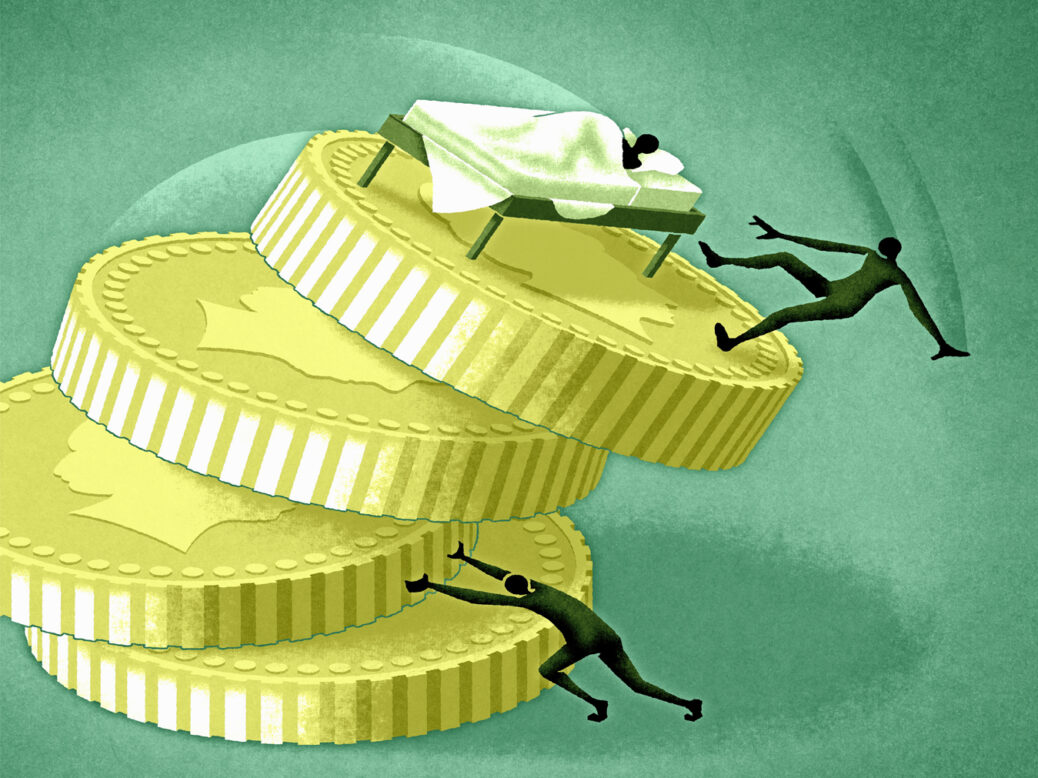
But lesser-spotted in the government’s flagship workers’ rights reforms is that the rate has not actually gone above inflation. It is currently £118.75 a week, still one of the lowest among advanced economies. It is a stark omission, given the government’s focus on the huge rise in people dropping out of the economy because of illness. And it is a deliberate one.
During its first stage, the government-backed Charlie Mayfield review into economic inactivity, Keep Britain Working, found that higher statutory sick pay regimes correlate with lower levels of economic inactivity. But in its final report, the review dismissed the idea of raising the rate.
When I asked why, a Department for Work and Pensions (DWP) spokesperson said the review is “focused on the role of employers” and that statutory sick pay is “not in the employer’s remit”, and instead considered discretionary company-specific sick pay. This does not explain, however, why the discovery phase of the review featured international comparisons of sick pay regimes.
When the Labour MP Yuan Yang, a representative of the Living Standards faction of over 100 Labour MPs and member of the Treasury Select Committee, asked about this in parliament last week, she was given a slightly different answer. “While not the direct focus, statutory sick pay was considered as part of the Keep Britain Working review,” said the DWP minister Diana Johnson, who said the government would “explore how to best utilise occupational sick pay to generate the best outcomes for all”.
This omission comes in spite of data snuck out by the DWP itself earlier this year. According to analysis of that data shared exclusively with the New Statesman by the Centre for Progressive Change think tank, 10 per cent of the workforce – 3.7 million people – have worked through illness in the past year because they couldn’t live on statutory sick pay alone.
The analysis also finds that the majority of workers (58 per cent) reported working when they didn’t feel well enough, and a third of these cited sick pay as one of the financial reasons for working through illness.
Evidence suggests that low sick pay means workers battle on regardless of their symptoms, or return to work too soon – spreading disease and making themselves sicker. A union source noted this is what happened at the Amazon fulfilment centre in Coventry in January, where ten cases of tuberculosis were identified. “The workers were afraid to take time off, so they were feeling ill and still going into work.” (Amazon has been contacted for a response.)
The government itself calls sick pay “a safety net” that enables “people to have the time off they need to recover, so they can get better and remain in work rather than risk quitting altogether”.
Take the case of Graeme, a builder I spoke to who sliced two fingers off on a job and then – without adequate sick pay – returned to work days after his surgery. His wound became infected and he now has permanently limited use of his hand, restricting what jobs he can do and how much he can work. Or Amy, a school worker with multiple sclerosis, who lost some function in her hands after returning to work ten weeks earlier than her occupational therapist advised because she couldn’t afford to live or keep up with bills on sick pay alone. This led to lasting physical damage.
“The consequences for workers of poor sick pay can be devastating, causing worsening health conditions and hastening exit from the labour market,” said Tom Darling, director of the Safe Sick Pay campaign. “The changes in the Employment Rights Act are very welcome. But they must be the start of building an effective statutory sick pay system, not the end.”
The main reason for economic inactivity in the UK is long-term sickness – accounting for about a third of cases, which is a record high. But the lesser-told story is those millions of workers “soldiering on”, spreading their germs and making themselves sicker.
Back in the strange days of 2020, Hancock told MPs this culture had to change: “Why in Britain do we think it’s acceptable to soldier on and go into work when you have flu symptoms and a runny nose, thus making your colleagues ill? I think that is going to have to change.”
A clear route to facilitating that change has been quietly overlooked by Labour.
[Further reading: The meningitis outbreak and Britain’s long Covid problem]
Content from our partners



Related
Join the debate
Subscribe here to comment