
“If I asked you not to think of a pink elephant, you’d immediately think of a pink elephant,” says Dr Helen Brown. On cue, I start thinking of a pink elephant. I bet you are right now too.
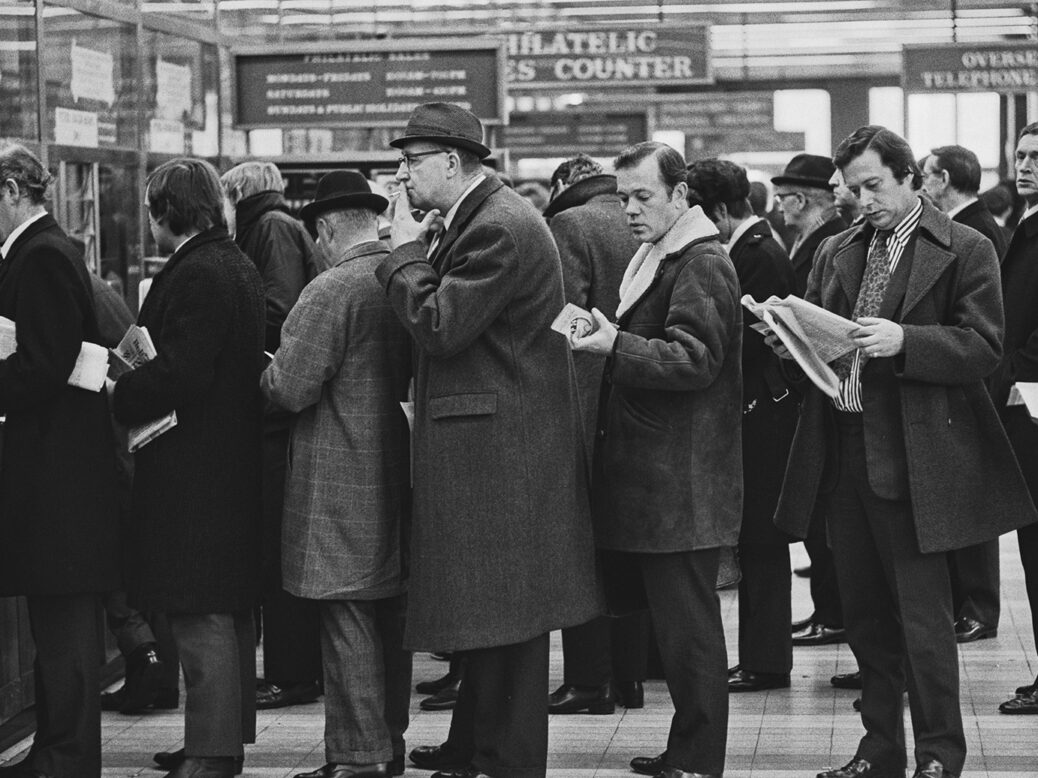
Brown is managing director of the Behavioural Insights Team – or, if you prefer, “the Nudge Unit”. Launched in 2010 within the UK government, the aim of the BIT was to take insights from the world of behavioural science – as expounded by Nobel laureate Professor Richard Thaler, co-author of the 2008 bestseller Nudge – and apply it to policymaking. From encouraging people to pay their taxes on time to increasing the rates of organ donation, thinking about policy challenges through the lens of human psychology has helped successive governments finesse their messaging and improve results.
I’m talking to Brown and other experts because I want to understand how the government should be thinking about the potential consequences of the ongoing conflict in Iran – and how the British public might respond. The BIT now sits outside the Cabinet Office, as part of the innovation charity Nesta. But it still works with governments, in the UK and beyond, and the civil service continues to consider behavioural science when advising ministers.
The effective closure of the Strait of Hormuz, through which one-fifth of the world’s oil supply is transported, is already having an impact on global energy prices. The price of crude oil has topped $100 a barrel for the first time since 2022, prompting warnings of a crisis worse than the 1970s oil shock. Experts are warning of shortages, as we saw at the start of the Covid pandemic when photos of empty supermarket shelves circulated on social media. There are fears of a petrol crisis in particular, akin to September 2000 when fuel protests caused havoc across the UK. There has even been talk of rationing.

In terms of government communications, this presents a huge challenge. The risk is that perceived shortages – say of petrol – prompt people to “panic buy”, driving an actual shortage as demand spikes. So how should the government be responding?
“‘Don’t panic’ is really not a good thing to say,” Simon Ruda tells me. “Definitely don’t mention the word panic!” Ruda was a co-founder of the BIT back in 2010, and is now a partner at Arch10, behavioural science consultancy specialising in security and defence.
Back when he worked at the Nudge Unit, the coalition government faced a similar challenge, when hauliers threatened to go on strike in 2012 and fuel shortages looked likely. The government was accused of making the situation worse, especially after cabinet minister Frances Maude advised drivers to store “maybe a little bit [of petrol] in the garage as well in a jerrycan”.
Ruda recalls turning to behavioural science to give them “some practical advice – and clearly the advice was not to tell people to fill up with a jerrycan”. But, counter-intuitively, telling concerned drivers not to fill up their tanks before they needed to also risked making the situation worse.
“When you say ‘don’t do this thing’, the signal is ‘by the way, there are some people doing this thing, that’s why we’re telling you don’t do this thing’,” he says.
This kind of signalling really matters. To use the behavioural science terminology, the issue can be explained by two concepts: the “scarcity heuristic” and “social proof”.
“We place much greater value on things that are limited, which then leads us to panic buy and stock up,” Brown explains. “We’re also victims of social proof. So if I see a queue at a pump, I immediately panic and think those in the queue know something that I don’t. That can then encourage us to join in with that behaviour.”
Both of these are exacerbated by social media. Every time a photo is shared purporting to show empty shelves or a queue at the petrol pump, the message is compounded: not only is there a shortage (which you should will naturally feel you should be worried about), but other people are getting in there first to ensure their access to scarce resources.
That has a term in behavioural science too, Brown tells me: “availability bias”. “If I can very easily conjure up an image of a problem, I tend to think it’s much more prevalent than it is.” (Think of the photos of migrants crossing the Channel in small boats, and the fact that nearly half of Brits think there are more foreigners living in the UK illegally than legally. In reality, there are around 14 times more legal than illegal migrants.)
This leaves politicians in a bind. Warning the public not to panic buy or to take other steps such as driving more slowly to conserve fuel sends the message that there is something to be worried about. But social media (and media reporting itself – including, potentially, this article) ensures the issue is front of mind for people, whether the government wants to talk about it or not. So how should those in charge be communicating with us in order to prevent a manageable challenge from snowballing into a full-on crisis?
There are lessons from the Covid pandemic, and work the BIT did in 2022 on panic buying in Australia. “There are two key insights,” Brown says. “The first is that reminding the public that most people are doing the right thing is incredibly effective.” She and other experts all stressed that the vast majority of people do not panic buy or stockpile – those who do are a small minority, but supply-chain logistics mean the impact of a few can become very visible very quickly.
“The second is informing people that by purchasing more fuel or food than you need, society’s most vulnerable are quite likely to miss out.” Combined, Brown says these messages led to a 40 per cent reduction in simulated panic buying behaviour. “Those pro-social messages, the thinking of others appeal, was particularly powerful – it reduced both the intention to panic buy and the behaviour itself,” she adds. “We can all conjure up an image of somebody that we would like to support and protect within society. So where we can draw that into people’s minds it can be really effective.”
This immediately makes me think of some of the messaging during the pandemic, and exhortations to follow the government rules in order to protect the most vulnerable. The Covid comparison is heightened when Brown starts to talk about the “messenger effect”.
“The particular things we’re looking for are authentic, credible and likeable. You need somebody who knows what they’re talking about – and I know they know what they’re talking about. They’re likeable, they can communicate in a way which is accessible and reasonable and feels relatable, but also they feel authentic. If we can find messengers that meet those criteria it greatly enhances our chances of success.”
I am struck by an image of Boris Johnson flanked by Chris Whitty and Patrick Vallance at the daily Covid press conferences. According to the latest Ipsos Veracity Index, politicians are the second least trusted professions (with only 9 per cent of people trusting them to tell the truth, behind only social media influencers (6 per cent). Unsurprisingly, healthcare professionals are right at the top (nurses on 92 per cent, doctors on 85 per cent); journalists at the bottom (26 per cent). But who would be trusted to deliver a message about how much fuel the UK had remaining?
The issue of trust makes Ruda slightly more sceptical that the British public is even ready to listen to this kind of messaging. There has been a steep decline in trust in institutions in the UK over the past few decades, and we rank low in international standards.
“Maybe in Sweden or Singapore it’s different,” he says. “But the point about messaging is it matters what level of trust people have in the institutions that is talking.”
Is there a way to increase people’s trust in message? Ruda talks about “operational transparency” and “procedural fairness” – the idea that if you explain to someone how a decision has been made and what is happening, such as why they have been breathalysed and how the process works, they are more likely to cooperate. “When you see the process and what’s gone into it and how you’ve arrived at this conclusion, you have better trust.”
Overall, though, he suggests it might be better to keep it technical, with “some sort of stability and resilience messaging, rather than telling people how to behave”. That means explaining clearly how much fuel we have and communicating government confidence that there won’t be a shortage. “You say everyone can have what they want, and the way to do that is by not overbuying.”
This is, essentially, what the government is doing so far. “They should do everything as absolutely normal because there is no shortage of fuel anywhere in the country at the moment,” energy minister Michael Shanks told the nation earlier this week when asked if drivers should reduce their speed or make other changes to their behaviour. Communities secretary Steve Reed took a similar line last weekend when he declared “There’s no need to ration fuel. People should go around and buy their fuel just like they always would.” He added: “If the situation were to change, then the government would look at what was required in that circumstance.”
If the situation does deteriorate to a point where some kind of restrictions are necessary, this approach becomes even more important. “We’re optimising for not panicking, so it’s important not to say ‘we’re rationing so the health service can just about keep the lights on’,” Ruda says. (If you do that, people immediate worry that the lights might turn off.) “It’s important to say ‘we have done all of this detailed modelling and this work and we know if we keep people to this, we’ll have plenty and we can go on infinitely like this’.”
It is possible, though, that the best thing the government can say right now is nothing. There is, I was told by an alumnus of the BIT who did not wish to be named, a misconception about what behavioural science can achieve and how it works. Its most effective results come not by subtly manipulating people or playing on their emotions, but by simply making it easier to make the choice the government wants you to make by reducing friction and tweaking what’s known as the “choice architecture”. The plastic bag tax introduced in 2015 (first 5p, then rising to 10p) is a great example: adding a very small obstacle to using a new single-use plastic bag led to a 98 per cent drop. Other successes include auto-enrolment in workplace pensions (so people must actively opt out rather than opting in) and automatically adding drivers to organ donation registries.
These techniques don’t really apply when it comes to changing how people feel about whether or not to buy extra petrol. The idea that nudge theory is some kind of magic spell (or if you have a more negative mindset, brainwashing) that can miraculously change behaviour just isn’t borne out in the science. There is even a risk that, if people feel a government they don’t trust is trying to tell them what to do, they will be inclined to do the exact opposite.
The best mitigation discouraging panic buying may in fact be the market. According to the RAC, petrol prices are up 16.6p per litre since the outbreak of the Iran conflict at the end of February, while diesel is up 33.4p. Politicians’ power to influence behaviour has its limits, but rising prices always have a tendency to focus minds.
“The size and speed of price rises will affect consumer behaviour more strongly than any type of messaging,” Ruda concludes. “A gradual and unsurprising price increase should naturally limit overconsumption without anyone having to say the word ‘panic’.”
[Further reading: The meningitis outbreak and Britain’s long Covid problem]
Content from our partners

Related

Join the debate
Subscribe here to comment