
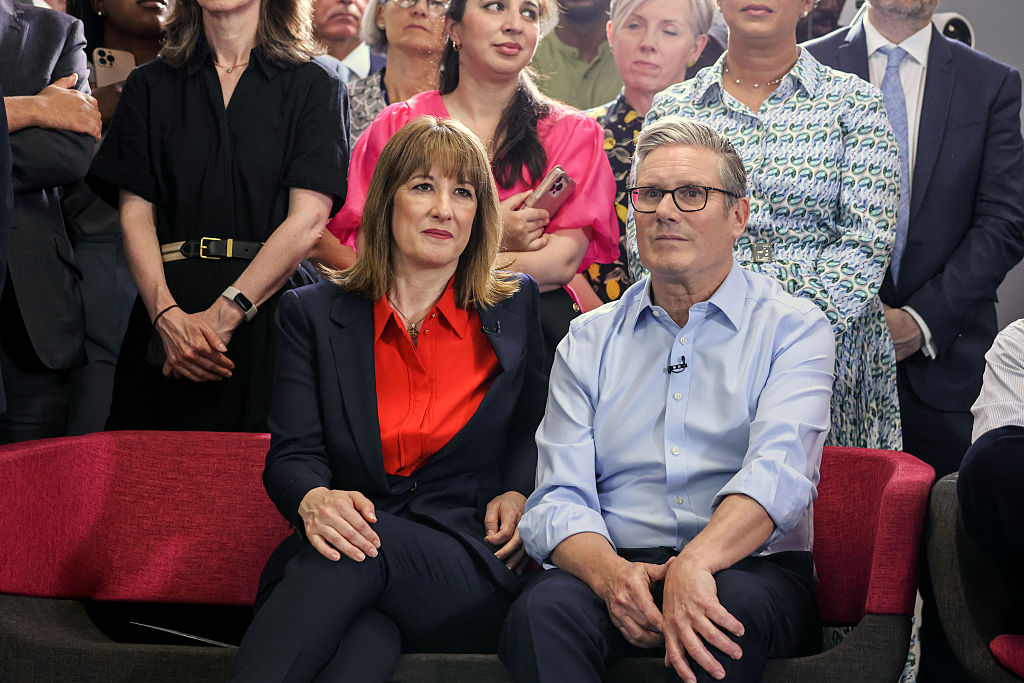
Many British governments enter office vowing “never again”. In Rachel Reeves’ case the promise was that the country would never again endure the economic turmoil that Liz Truss subjected it to. To justify this boast, one of her first acts was to pass a bill strengthening the powers of the (now maligned) Office for Budget Responsibility (OBR).
Yet the charge levelled at the Chancellor is precisely that Britain faces a return to Truss-style instability. This doesn’t emanate only from Conservatives desperate for political revenge on Labour.
“Our finances are precarious, we’ve seen that in the past few weeks,” Gary Smith, the general secretary of the GMB (Reeves’ own union), told me when I interviewed him for this week’s NS. “We are beholden to the bond markets; this could unravel very quickly.”
Helen Thompson, the Cambridge professor of political economy, who sits on the advisory board of the Labour Together think tank, warns that “there’s a real risk there could be a crisis quite quickly because of the situation with the bond markets”.

The air is thick with invocations of 1976 – the year when the plummeting value of the pound forced Jim Callaghan’s Labour government to accept a £2.3bn bailout from the International Monetary Fund. Is this justified?
Here are the facts: the UK, as the OBR recently warned, has the sixth-highest debt (96.3 per cent of GDP), fifth-highest deficit and third-highest borrowing costs among advanced economies. In June, the government recorded the second-highest borrowing figure since monthly records began in 1993 (exceeded only by the pandemic-afflicted month of June 2020).
The markets are tolerant of indebted states that have a clear plan to reduce their borrowing. But the question that bond vigilantes are asking is whether Labour does.
A one-year-old government with a landslide Commons majority has been forced to U-turn on relatively minor savings: £1.5bn from means-testing winter fuel payments and £5bn from cutting health and disability benefits (public spending stands at £1.3trn a year). In these circumstances tax would normally take the strain but Reeves has ruled out raising those taxes that account for two thirds of revenue: income tax, National Insurance (on employees), VAT and corporation tax. This leaves her with a much smaller menu of taxes on wealth – which investors fear will further depress economic growth. Here is the “doom loop” that critics fear Britain is trapped in.
Is there a route out? Reeves is increasingly confident in facing down those who argue that inflexibility is her greatest weakness and that she should loosen her fiscal rules. There is, she recently told the cabinet, “nothing progressive in paying £1 in every £10 to US hedge funds” (a message she repeated yesterday during her appearance before the House of Lords’ Economic Affairs Committee).
Reeves’ allies argue that her recent tears during Prime Minister’s Questions served an inadvertent purpose. “It was a reminder that she’s trusted by the markets for a reason because people think she is sincere about keeping a grip on the finances,” one told me of the negative market reaction to speculation over the Chancellor’s future.
But continued trust may come at a price: the narrow fiscal headroom of £9.9bn that Reeves maintained last time, bond vigilantes warn, is not enough: they would like something closer to £20bn. Yet Labour aides insist that “the manifesto stands” and will not be broken in pursuit of this goal.
Here, then, is the question that Reeves may be forced to answer at the Budget: what happens when the irresistible force of the markets meets the immovable object of her tax pledges?
This piece first appeared in the Morning Call newsletter; receive it every morning by subscribing on Substack here
[See also: Has Zarah Sultana already been sidelined from her new party?]
Content from our partners



Related

Join the debate
Subscribe here to comment