
Over the course of Andy Burnham’s 25 years in politics the man who is about to become prime minister has said little about foreign policy. Foreign leaders and diplomats tapping up contacts for information over the past few weeks have been left frustratingly short-changed.
Will he continue Keir Starmer’s cautious and quiet approach of edging the UK slightly closer to Europe and trying not to offend the US? Or does he agree with Canadian Prime Minister Mark Carney that Donald Trump has created a “rupture in the world order”?
Burnham’s first intervention, made in an article in the Times on 8 July, suggests the former. It describes the US relationship as “critical”, calls for an “even closer relationship with countries across Europe” and reiterates the UK’s unwavering support for Ukraine. It could have been written by Starmer himself – indeed, it would have almost certainly had input from Jonathan Powell, the Prime Minister’s national security advisor, who will be doing the same job under Burnham.
But his second intervention – an interview with the Guardian about Gaza – gives hope to those who would like a prime minister who thinks about values as much as interests. He apologised for Labour’s initial response to Israel’s military action in Gaza, said there was “increasing evidence that war crimes appear to have been committed”, and floated the possibility of more sanctions against those responsible for illegal West Bank settlements.

There is an easy political argument that Burnham has taken this position to win back progressive voters, and there may be some truth to that. But there is nothing opportunistic about Burnham’s position on Israel. Less than three weeks after October 7th, as the scale of Israel’s response had become clear and the death toll in Gaza was already in the thousands, he was one of the first senior British politicians to call for a ceasefire.
Over the following two and a half years, Burnham has witnessed the horror unfolding in Gaza – horror that has lead to more than 70,000 Palestinians killed by Israel, the indictment of Benjamin Netanyahu by the International Criminal Court for war crimes, and a UN commission of inquiry reporting that a genocide had taken place – and clearly thinks the UK should do what it can to bring it to an end.
From Gaza to Sudan, from rethinking international aid to rebuilding the rules-based order, there is an opportunity for a progressive prime minister to dramatically reshape Britain’s foreign policy – and ensure the country has a positive influence on the rest of the world.
Since Brexit, the UK has lost its way internationally. It has built borders with its largest trade partner while its closest ally has turned into a dangerous autocracy. Britain’s soft power has diminished, particularly after cutting its international aid budget by more than half.
All of this has happened during a period of global danger and uncertainty. We are living in a new age of impunity. Over the last five years the world has been reshaped by three wars and one election. In Ukraine, Gaza and Sudan, atrocities have been committed that the international community has been unable or unwilling to prevent.
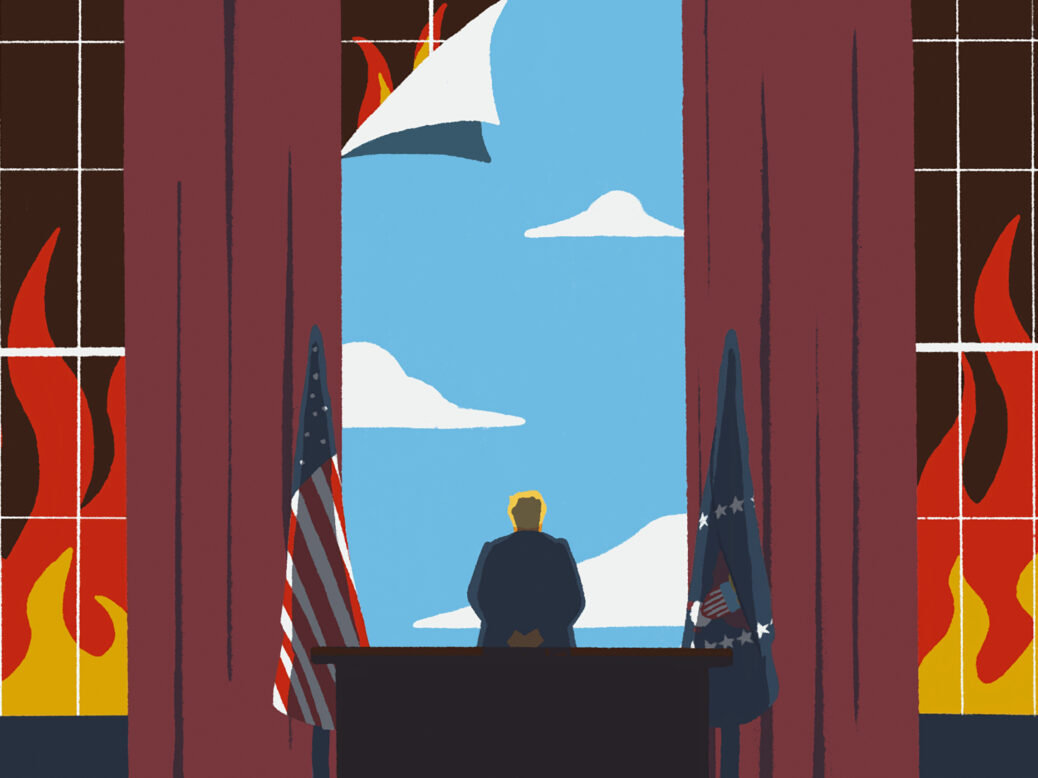
America is now led by an autocrat who has destroyed the multilateral alliances that provided some semblance of international order, started and failed to end reckless wars, and has consistently sided with Vladimir Putin’s Russia over Volodymyr Zelensky’s Ukraine. As his National Security Strategy makes clear, Donald Trump is determined to do whatever he can to reshape Europe in his ethno-nationalist mould.
Other leaders, like Carney, Pedro Sanchez and Emmanuel Macron have wrestled properly with the idea of how to deal with the new world order. Starmer, on the other hand, has muddled through.
All of this provides an opening for a new prime minister – liberal, centre-left, internationalist – who recognises the world has changed.
To counter an autocratic America and deal with an increasingly dangerous world, Britain needs to build new alliances, and retool an old one. In his speech at Davos in January, Carney eloquently laid out the challenge for middle powers and the need for them to come together. The old order, he said, was not coming back – holding on for January 2029 and a new US president was a fool’s errand. “Middle powers must act together,” he said, “because if we’re not at the table, we’re on the menu.”
Britain used to be part of a middle powers alliance. Building closer ties with Europe shouldn’t just be Burnham’s first diplomatic priority, it should be his primary economic, political, military and cultural priority.
He needs to scrap Starmer’s red lines and start a serious conversation about rejoining the single market and customs union. As well as providing a boost to the economy and improving Britain’s diplomatic standing, it would also be popular. Polling carried out for the European Council on Foreign Relations ahead of the ten-year Brexit anniversary in June showed that the majority of Britons favour the UK rejoining the European Union and accepting freedom of movement.
Improving European relations isn’t simply about EU membership. Europe is beginning to grapple with the idea of what an absent America means for its security.
Britain could play a key role in a new European Security Council, while it needs to work closely with its European allies on defence procurement. Europe spends far more on defence than Russia, but aside from the Nordic nations, most governments give little thought to how their spending joins up with their neighbours. Burnham should join the EU defence procurement programme, SAFE – it would be an early indicator that the UK’s future defence planning will be done jointly with its European partners.
However, Burnham should be aware that the window for building closer ties with Europe is small and closing fast. Within ten months, France may be led by Marine Le Pen or Jordan Bardella. Within three years – possibly sooner – Germany may have a far-right chancellor. If Burnham wants Britain to have a new relationship with Europe, far better to forge that with Macron and Friedrich Merz than Le Pen and Alice Weidel.
As well as building alliances, Burnham will also need to find a way to deal with the fracturing of the “special” one. Starmer struggled to deal with Trump, veering from sucking up to sticking his fingers in his ears. Burnham, having seen how others have fared, should find it easier.
New York City mayor Zohran Mamdani happily – and accurately – calls Trump a fascist but is also able to work with him on areas where they agree. Carney in Canada and Anthony Albanese in Australia took the risk of standing up to Trump and subsequently won elections they were predicted to lose.
As they have shown, standing up to Trump is not only morally right, it is electorally effective. Not only do voters understandably like seeing their prime minister defend the UK, it also allows Burnham to attack his Trump-friendly opponents. Both Reform and the Conservatives have mass deportation policies based on Trump’s barbaric immigration measures – the Tories even boasted they would introduce a “British ICE”. In a similar vein, taking on Elon Musk and his use of X to promote white supremacist ideology and stoke up race wars, has the benefit of both being morally right and electorally effective.
For now, these are all hopes rather than predictions. Burnham’s choice of foreign secretary, however, should give an indication of the scale of his ambition. Does he choose someone with a deep foreign policy background and strong convictions about the role Britain can play in the world? Or does he decide Parliamentary Labour Party management is more important and pick a politician who he needs to give a big job? There is a huge opportunity, ten years on from Brexit, for Burnham to carve out a new role for Britain in a fast-changing world. He has already laid out ambitious plans to reboot the economy and clearly wants to be a transformative prime minister. There is no reason why he shouldn’t be as ambitious about the rest of the world too.
[Further reading: Burnham’s Labour left allies call for a “progressive chancellor”]
Content from our partners


Related

Join the debate
Subscribe here to commentWhat we’ve learned in the US is winning against thump is not sufficient. Just start with Joe Biden who received over 10 million ballots than the former President Obama. And, everyone found out he was brain dead.