

For a long time, I found opera a little too daunting, a little too not me. Then I began to dabble, covertly, the warbling safely hidden behind my headphones. Apple Music began recommending different sopranos. From there, I discovered lieder and became obsessed. Finally, I decided to make a night of it and saw Don Giovanni for my 40th birthday. It was a romp. I texted a friend who was a buff on the subject. What should I see next? Something easy and enjoyable. “Wagner,” came the reply. Wagner! “Yes, start with the Ring cycle. It’s about power. You’ll love it.” I looked it up. Four operas. Fifteen hours. What?!
Wasn’t Wagner a bit, er, suspect? It all seemed fairly heavy going too. But my friend insisted. Forget Puccini; go all in on Wagner. For years I prevaricated, still too daunted to take the plunge. Finally, last week, I plucked up the courage: Das Rheingold, the first – and shortest – of his four-part epic, at a mere two and a half hours (without an interval). And the most surprising thing of all? I loved it.
I realise this makes me sound like a pretentious so-and-so. And perhaps I am. But my friend was right. Forget the music and the costumes: at its heart, this opera is a morality tale about power and the pursuit of it; how it destroys as much as it liberates. It is a story for the ages, not just for the 1850s in which it was written. Sitting in my seat, I couldn’t help but think of the latest political turmoil in Westminster.
The story of Das Rheingold is achingly familiar to anyone with the barest knowledge of mythology. Alberich, a deceitful dwarf, gains tyrannical power by stealing the Rhinegold and forging it into a magical ring. To do so, however, he must renounce love. The bargain is struck. Like Prometheus, he has stolen power, agency and free will, but in doing so has paid an eternal, inescapable price.

In Das Rheingold, Wotan – the king of the gods – eventually steals the ring from Alberich, whereupon the dwarf casts a curse: whoever possesses it will suffer anguish and death; those without it will be consumed by envy. And so we have the story of power and wealth on Earth. Wotan is ultimately forced to surrender the ring, but the curse endures. The gods depart for Valhalla, leaving the consequences to unfold below. Surely this was the inspiration for Tolkien’s The Lord of the Rings, my wife and I said to each other as we left. So we googled it. Apparently not. Really?
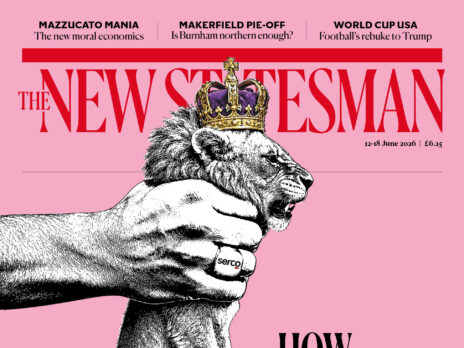
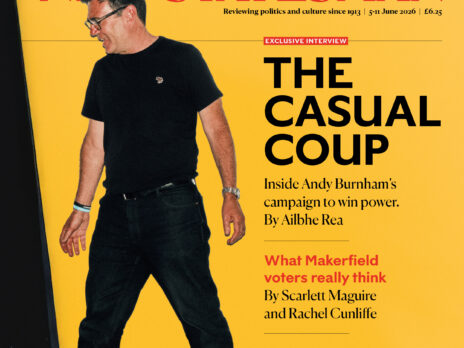
I watched the opera on Saturday as news began to drip out that Keir Starmer was considering his position. He had yearned to hold the ring. Within two years, it had consumed him. Now it is Andy Burnham’s turn, it seems. He too has sought the power of No 10 for much of his adult life, but the lesson of Wagner is that the costs of such ambition are inescapable. The bargain Alberich struck for power was to renounce love. Has Burnham come to terms with that deal, morphing from “our Andy” into that Burnham?
No prime minister in the past ten years has managed to hold the ring for long: Starmer is the sixth to stand outside No 10 announcing his resignation. My colleague Pippa Bailey noted that this was an uncanny repeat of Henry VIII cycling through six wives in ten years after breaking from Europe. Steal the ring and brace for chaos.
Enoch Powell – a Wagner obsessive, obviously – believed all political careers were destined to end in failure. Perhaps so, but they do not need to do so after two years. One lesson from Starmer’s time in power, and from the wider malaise in Western democracies, is that power without purpose leads nowhere. As I argue in an essay marking the tenth anniversary of the Brexit referendum on page 26, the architects of European unity knew what they were trying to do – and why. It is Burnham’s task now to set out why he wants to be prime minister. Many before him have failed this simple test. I leave you with a poem a friend sent me this week, which makes this point.
I wanna be the leader
I wanna be the leader
Can I be the leader?
Can I? I can?
Promise? Promise?
Yippee, I’m the leader
OK what shall we do?
Roger McGough wrote this in 1989. As Wagner understood, some things in politics are eternal.
[Further reading: The northern conquest]
Content from our partners



Related

Join the debate
Subscribe here to comment