
“This year will be harder than last year. On the other hand, it will be easier than next year”. Until recently this 1967 New Year message from Enver Hoxha, the Communist dictator of Albania, was seen as a punch line – a laughable form of Maoist rhetoric. Unfortunately, Keir Starmer’s No 10 have seen it more as a line to take. Fresh from his landslide 2024 election victory on a platform of “Change”, the Prime Minister gave his famous rose garden speech in which he said things “were worse than we ever imagined”, the Budget would be “painful”, there would be “tough action” and “big asks” of voters. To summarise: “Things can only get bitter.” And they did.
Optimism propels progressive governments and without it – even if it had avoided all its self-inflicted wounds – the Starmer government was doomed. An unnoticed side effect of this pessimism is how it has shaped the discourse about UK politics, with endless hand-wringing columns bemoaning the “ungovernability” of the country. It is absurdly suggested that the crisis of conservatism – as exemplified by the Tories’ 1 per cent support in the Makerfield by-election – is the responsibility of the Labour Party. All the issues cited in the “declinist” genre are failures of politics, plain and simple. The fact that we haven’t had a leader at ease with power and politics since Tony Blair is surely the reason we hang on his words when he makes one of his regular interventions.
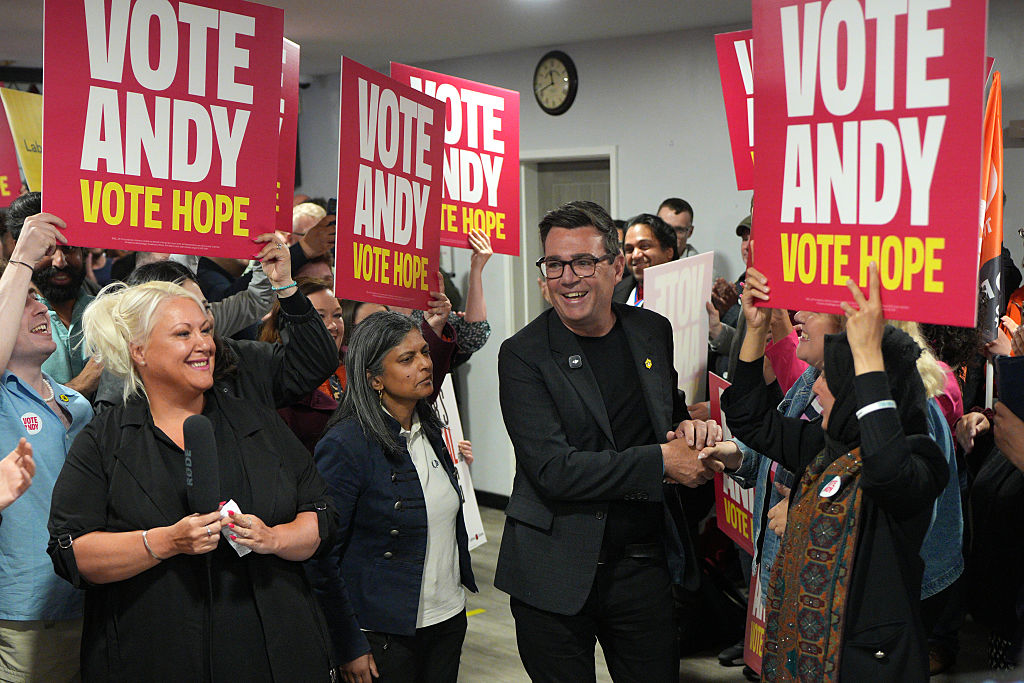
Which brings me to Andy Burnham, a politician who clearly discomfits political journalists by enjoying being a political leader and being comfortable in his own skin. A sign of how difficult it is to have an intelligent discussion about Burnham’s potential as a leader is the recurrent criticism that he is a “people pleaser”. Precisely which successful politician is a “people hater”? Smuggled into this critique is a corruption of early-era Blair. It started as the notion that fights with your own side – as over Clause 4 – showed strength, and curdled into the practice of Keir Starmer’s team repeatedly trying to bully Diane Abbott and silence backbench MPs. Voters notice closed-mindedness: if you ignore your own people, what does that say about your attitude to someone you’ve never met? There’s an analogous worry that as mayor, Andy Burnham built on the successes of his Labour predecessors. What was he meant to do? Torch them and build on the ashes?
It really amounts to a search for a “Gotcha!” moment, as was seen in the breathless attempt to turn a wise political observation about the Waspi women’s campaign into a “spending commitment”. At a hustings, Burnham commented: “So I stick by campaigners that I support. I stuck by the Hillsborough families, I’ll stick by the Waspi women because they deserve some recompense for the unfairness.” The important part of this statement is the first half – keeping promises that you make to voters. One of the deadliest criticisms in politics is “says one thing, does another” – you must be careful both with what you support and with delivering on it. The Victorian Labor Party in Australia won three elections in a row, becoming one of the most successful 21st-century social democratic parties, by adopting the novel practice of delivering every single one of their manifesto pledges – and then telling the public what they had done.

These are signs of the extent to which the current political discourse has narrowed. Burnham’s attack on “neoliberalism” led to endless questions about why he worked with the private sector. The long-term framing of economic issues as a choice between turbocharged late capitalism, which voters have repeatedly rejected (in Brexit, in surging for Corbyn, and in giving consecutive landslides to Boris Johnson and Keir Starmer), or some form of state socialism obscures real debate and actual choices. The state taking control of Thames Water – whose case to the regulator is that it can’t afford to pay fines it has incurred – is simply a way of punishing one, educating a thousand. It would be a crowd pleaser, and it would show actions have consequences.
The “return of the state” is both the most compelling case for Andy Burnham and the reason journalists still struggle to understand “Burnhamism”. New Labour’s aversion to nationalisation is now as out of date as Old Labour was in the 1990s. The records of both Margaret Thatcher and Tony Blair show the case for having a clear ideology, and the first two years of this Labour government have tested to destruction the idea that having no guiding political philosophy benefits a government. An activist state with the “Green transition” at its heart, with a commitment to municipal enterprise and council-house building, one that shapes the economy rather than blowing in the wind and earns “royalties” from its investments and the IP it supports, is a break with past decades. And so it should be – Thatcher and Blair were the bookends of the long late seventies. This is the second quarter of the 21st century – we need to make it new.
It’s time for a real change. A rejection of the glum politics of “like it or lump it – we’re taking away your Winter Fuel Payment, because!” Time to try a leader who enjoys their job, makes a persuasive case for changes and works to create a coalition to support his actions. The 2029 general election will be as definitional for the country as 1979. The end of neoliberal governance opens a new era – for progressives, one that is resolutely upbeat and optimistic.
[Further reading: Does Andy Burnham understand neoliberalism?]
Content from our partners



Related


Join the debate
Subscribe here to comment