
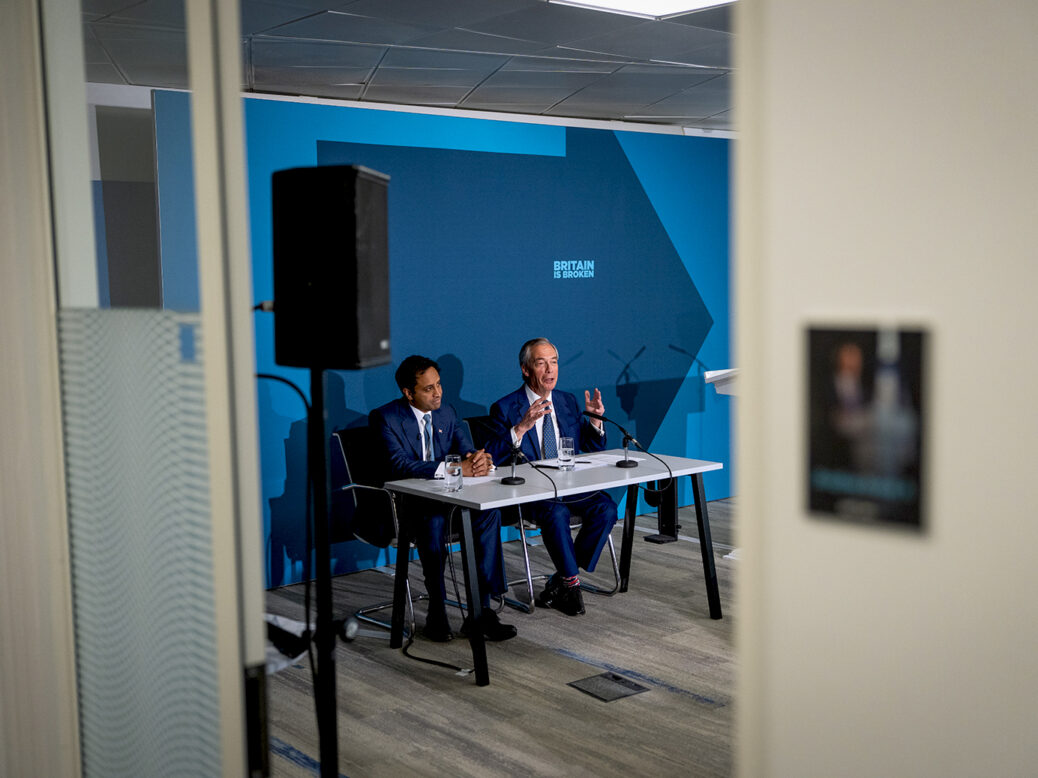
They say never interrupt your enemy when they are making a mistake – but they also say there is only one thing in life worse than being talked about, and that is not being talked about. It is the latter of these overquoted adages that seems to have captured Nigel Farage’s instincts.
In a week when the only story in Westminster is the string of marmalade-droppers regarding Peter Mandelson’s appointment as UK ambassador to the US and exactly who in Downing Street was informed that he had not passed his security vetting (and when), the Reform leader was out and about today to remind the nation that other political parties are available, replete with their own controversies. Controversies like issuing a rallying call to “reverse the invasion of our country” by migrants on the exact day when, 58 years ago, Enoch Powell made his “Rivers of blood” speech.
The timing, Farage was keen to stress to assembled hacks, was a complete coincidence. The date had been chosen for “no specific reasons… It just happens to be a Monday”. A Monday two and a half weeks out from local and national elections, of course. Not that the Reform plan to review and potentially undo five years’ worth of successful asylum grants has much to do with voters deciding who should oversee their bin collections. But it does get Farage’s name back in the headlines, in case anyone had forgotten he existed.
What did we learn from Reform’s big intervention? Not content with proposing to uproot people who have legally lived and worked in the UK for decades by scrapping indefinite leave to remain, the latest plan is to take a retrospective look at the asylum system and deport anyone who came to Britain illegally (regardless of what threats they might have been facing or whether any legal routes existed), overstayed their visa or came from a country which is now deemed safe by the UK government. This would, naturally, require Britain leaving the European Convention on Human Rights and scrapping the Human Rights Act. Farage was eager to stress that this would include refugees from Afghanistan (a country he noted had generously agreed to take back the desperate people who fled there after the return of the Taliban), and that France would also be on board just so long as the National Rally’s Jordan Bardella becomes president next year.

In terms of numbers, Reform says 400,000 could be liable for deportation, with 600,000 forced removals over five years. Miraculously, it would apparently not require any additional civil servants to oversee such an endeavour, as Home Office caseworkers would simply have to check existing records to determine someone’s status. According to Zia Yusuf, the non-MP Reform insists on calling its “shadow home secretary”, “We could clear the entire backlog and get through of all of this very quickly.” As for how much it would cost, Farage bandied around some vague figures for potential savings before asserting, “We’re actually talking telephone numbers in the long term.” That’s in the region of either billions or tens of billions, depending on whether or not you count the zero at the start of the number. Farage did not elaborate.
Details on other aspects – which incentives might be offered for people to leave, how the policy would impact children – were hazier. When Farage handed over to Yusuf “to put some more flesh on the bones”, the Reform chair began by informing the room: “Almost 200,000 people have turned up on our beaches uninvited over the last eight years. That’s more than stormed the beaches of Normandy on D-Day.” He paused for effect, with the smile of a five-year-old who has just told you his favourite fact about dinosaurs.
Quite what the D-Day landings have to do with the policy of revoking the immigration claims of people who have already proved their status as genuine asylum seekers, was not explained, but we did get lots more rhetoric about “invasions” by people who “broke into our country”. As with so much of politics these days, it’s all about the vibes, and Reform takes its vibes from the 1940s. Just not the bit of the 1940s in which Britain took in tens of thousands of Jewish refugees fleeing the Nazis.
The questions continued. Did the UK public really want US Immigration and Customs Enforcement-style deportations? “The British public wants to see fairness,” came the retort. OK, but what about the suggestion that anyone – British citizen or not – could be stopped by special deportation agents and forced to give their fingerprints to prove their immigration status? This would apparently only happen in “hot spots” where there is “reasonable suspicion” that illegal immigrants might be lurking, we were told. This, from the party leader who warned digital ID cards would be a “tool for suppression” and heralded the government’s U-turn on it as “a victory for individual liberty against a ghastly, authoritarian government”.
In news completely unrelated to today’s press conference, Reform’s support appears to be stagnating. More in Common’s latest MRP projections for a general election suggest a “Reform plateau”, with the party on track to win 324 seats, 57 fewer than the pollster’s January model. Other polls have found similar. Many factors may be relevant to this dip, from Reform’s initial enthusiasm for the Iran war and closeness to Donald Trump, to the rise of the Green Party as an alternative for discontented voters. There’s also the emergence of new initiatives on the party’s right flank to consider, led by the likes of ex-Reformer Rupert Lowe who believe Farage’s positions aren’t hard line enough. This isn’t an electoral threat in itself, but could siphon off enough support from the right to deny Reform victory in some seats, just as Reform did to the Tories in 2024.
In short, there are lots of reasons why Reform might be eager to make some news and burnish its anti-immigration credentials at this particular moment. Alas, the press conference earned only a tiny mention on the GB News homepage, squeezed out by the clamour over Keir Starmer and Mandelson. It didn’t make the Telegraph splash at all.
The New Statesman can reveal one fascinating news line though. When asked about the relevance of raging against immigration on the “Rivers of blood” anniversary, Farage deflected by decrying the racist abuse that ethnic minority candidates standing for Reform were suffering on social media. “X is now becoming a very unpleasant and a very dangerous place,” lamented the Reform leader and erstwhile ally of Elon Musk, even while Farage continues to make thousands of pounds off the platform formally known as Twitter. File that under “I never thought leopards would eat MY face”.
[Further reading: Should Keir Starmer resign]
Content from our partners



Related

Join the debate
Subscribe here to comment