
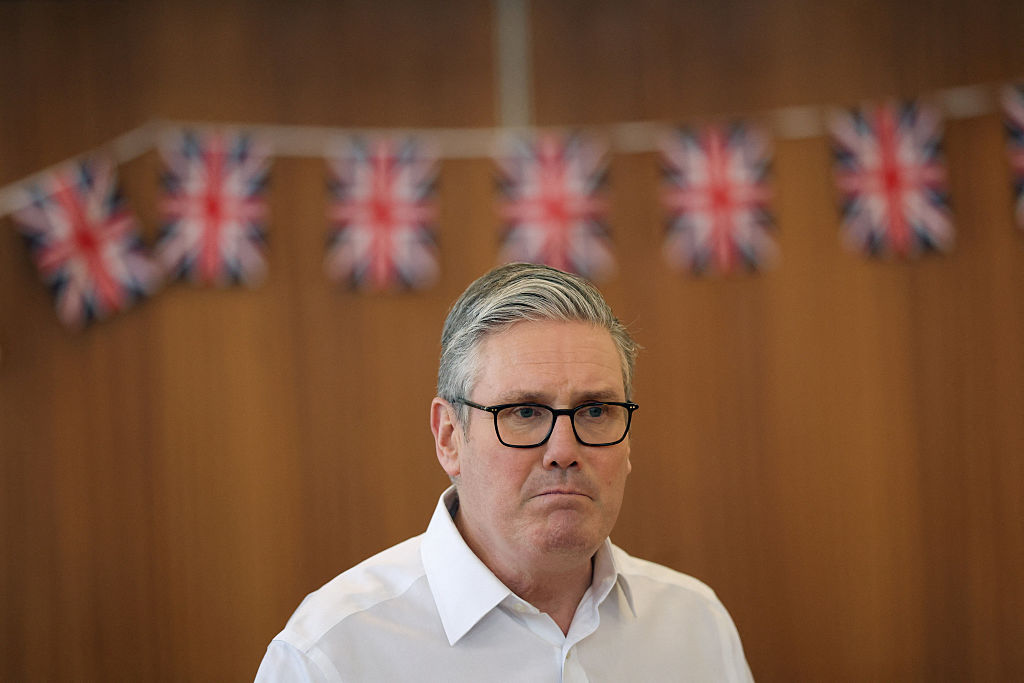
Should he stay or should he go? The short answer is that he should go… but not yet, because a transformation is possible. As so often in these political crises, the final decision about the future of the Prime Minister rests not with his media critics, his grandstanding enemies in politics, the analysed intricacies of a fiddly Whitehall plot – or, indeed, with the voters.
All these groups will have their time. But there are only two people who will make the final decision. One is the person who shaves Keir Starmer’s chin in the morning, brushes his teeth and drinks his coffee. The other, perhaps more important, is a Labour-supporting lawyer called Victoria Starmer. She knows the almost impossible pressures of the job and the pain, frustration and anger her husband increasingly feels.
Once this crisis is over, there is an urgent conversation to be had about whether we have made the job of leading Britain impossible – loading too many problems onto too flimsy a centre – whether we are talking about Tory, Labour or in the future, perhaps, Reform politicians.
That’s for another day. For now, let’s look at the case for Starmer deciding to go. However strange it might seem to say so right now, Peter Mandelson’s vetting is a side issue. As a people we face horrendous problems lack of growth, threats from abroad, lack of hope and self-belief. Starmer did well to keep us out of the Iran war but, across the rest of the picture, his government isn’t working.

Starmer is honourable, not a liar and in politics for the right reasons. But he is overseeing, and responsible for, a system that is letting Britain down.
This was supposed to be a government “laser-focused” on growth. That was what we were promised. But the Prime Minister did not intervene enough over, or interrogate sufficiently, the Angela Rayner workers’ rights package. He did not ask how it would mesh with Rachel Reeves’s national insurance hike, fast-rising health-welfare claims and the latest rise in the minimum wage.
Take them one by one, and they are mostly good ideas. Put them all together when the economy is already weak, and they destroy employment, particularly for the young. It was the job of No 10 to see the wider picture, remember the growth promise, and intervene on the side of caution: Starmer was too incurious.
Defence is an even clearer case of failure. George Robertson and his colleagues on the Strategic Defence Review produced coherent, urgent proposals last year for a very dangerous time. Starmer’s words had been consistent. Here he is more than a year ago in the Commons: “We must change our national security posture. Because a generational challenge requires a generational response. That will demand some extremely difficult and painful choices.” The repeated delays to the defence investment plan, bland talk of a ten-year strategy and a lack of new or urgent money told the world, including Moscow and Washington, something very different.
Robertson, someone I’ve known a long time, is a loyal, mostly cautious Labour veteran and he was driven to absolute distraction before he decided to speak out against his government’s “corrosive complacency” earlier this month. The Treasury has blocked extra spending, even at this perilous moment, and the Prime Minister has not been strong enough to intervene.
Again, I insist, Starmer is a decent man, but he’s a deliberator not an arguer, a prevaricator not a persuader. Yet this is not simply a question of one individual’s judgement, no matter how much he is the focus of this week’s hysteria. The system itself is bust. He knows it. Whitehall is simultaneously too strong and too weak. It is strong enough to paralyse and stymie energy and innovation around the country, in the private sector and in the public; and it is too weak to make fast, clear decisions on difficult subjects.
People around the country, at some level, understand this fully well: perhaps the solution to the conundrum of why Starmer, nobody’s idea of an offensive man, is so hated, is that he represents what everyone feels is national failure.
Let us look at the case for a resignation this week. The Prime Minister will be under pressure to explain why he threw a respected public servant, Olly Robbins, under the nearest bus for doing exactly what he expected him to – approve the most important diplomatic posting Starmer had made. Knowing the huge risks involved, Starmer had taken an uncharacteristically bold and dangerous decision to make Peter Mandelson US ambassador.
The system understood. The system knew its job. The system, therefore, in the person of Robbins, appears to have ignored the vetting verdict. The system understood that it was important that the Prime Minister was not told in plain terms that he was going against the advice of intelligence officers.
But do we believe that Robbins, who knows his way around Whitehall, made no quiet, either personal or telephonic, communication with Downing Street before taking this extraordinary decision?
We do not. There probably isn’t a handwritten note or WhatsApp or email to be uncovered. But I believe the communication was made. If it comes out, either because Robbins talks or the recipient does, then the Prime Minister is finished. If he believes it’s likely to happen, then I would expect him to resign before that moment.
Yet the political case against an early resignation is enormous. It would be another insider-Westminster scandal laid before the public, just before those able to vote in Scotland, Wales and the English local elections, had their say. There is, below the surface, a big, well-organised centre-left plot for a change of leader. But anyone inside Labour who moves publicly against Starmer now will share blame for results next month everyone expects to be terrible. As a matter of honour and to protect Labour’s future, I am afraid the Prime Minister needs to stay in power and take his medicine.
Until this latest episode of the Mandelson affair, Starmer was hoping to stay on for at least another year, seeing the impact of the Iran war recede, and the economy begin to recover. He might then have handed over to… (drumroll)… Manchester’s Andy Burnham, with whom he has been rebuilding relations. If things were still very bad in the polls, this would have allowed him an orderly, head-held-high, transition.
That was the theory. That is what this latest scandal robs from him. The deep problem here is less to do with whether he consciously or unconsciously deceived parliament (I am in the unconscious camp) but with the much wider failures of government since the election. What Britain needs is not either an exhilarating political decapitation, nor continuity; but a radical shift.
That’s a hard message for those inside the cabinet, biding their time – John Healey, say, or Wes Streeting – and for Angela Rayner. If they believe that Starmer thinks it will soon be time for “Manchesterism”, which you could define as the death of neoliberalism, then they might move to keep Burnham out. A cabinet fist fight is exactly the kind of mayhem which, if you were Kemi Badenoch or Nigel Farage, you’d be most hoping for. It did for the Tories under Johnson, Truss and Sunak. Today’s opposition, split between Tories, Reformers and Greens, has a vested interest in a chaotic and bloody transition; which is one of the reasons I hope Labour MPs will hold their fire, whatever happens this week.
Burnham himself is keeping his cards annoyingly close to his chest. But I don’t believe he would come back, via another very difficult by-election, unless he believed there was a substantial, determined group in the Commons of Labour MPs who wanted him and agreed with his politics. This would have to go beyond the obvious Manchester loyalists.
That is for the Parliamentary Labour Party to wrestle with. But Britain needs a decisive break – more emphasis on democracy, a more ruthless approach to growth and, above all, a coherent political philosophy. Looking towards 2029, Burnham, a big supporter of electoral reform, would be a far likelier ally to the Liberal Democrats, for a coalition of the centre left against Reform. We are facing a ragged and sordid political week. But beyond it, there still is a lot to play for.
[Further reading: Left-populism is here to stay]
Content from our partners


Related

Join the debate
Subscribe here to comment