
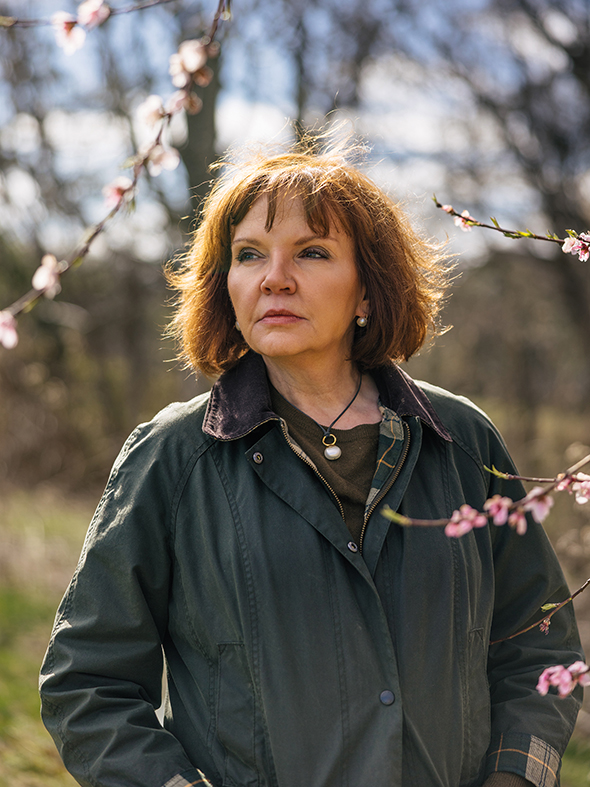
Alfreda Bikowsky’s favourite time of day is the hour between 5pm and 6pm. She and her husband, Michael, call it their “relax hour” – a pocket of time set aside for reading, a glass of wine and easing into the evening. In Virginia’s Rockbridge County, in the Shenandoah Valley, where they live, winter is a welcome reprieve from the hot, humid summers that settle over this fold of eastern America.
Sometimes they put on Waylon Jennings or Billie Holiday. She might talk about the mystery novel she’s engrossed in; he might share thoughts on a podcast he’s enjoyed. Afterwards, they might cook something: she thinks their homemade macaroni and cheese is “amazing”, though she’ll happily defer to a “proper chef” when she believes someone else can do it better. In those cases, it’s usually Tex-Mex, Thai, Indian takeaway – or, if she’s feeling nostalgic, Afghan food, extra spicy.
To the clients of her women’s life coaching business, YBeU Life Coaching, she is Freda Scheuer. For $397 for three sessions or $597 for six, you can “feel heard, understood and supported as you get clear on exactly what you want, what is holding you back, and how you will overcome it”. A lot of the women who want to work with Bikowsky are from similar career backgrounds – some law enforcement or military officers.
For both business and personal reasons, it makes perfect sense for Bikowsky, now 61, to no longer use her birth name. That name and various other pseudonyms she has been known by over the years – Frances (her middle name), deputy chief of Alec Station, or as she was referred to in the New Yorker, the “Unidentified Queen of Torture” – carry some weight.

As the former deputy and head of Alec Station – a specialised CIA unit that was dedicated to tracking Osama bin Laden and his associates between 1996 and 2005 – and later the global jihad unit, Bikowsky has been widely reported to have been among the senior officials associated with the development, implementation and defence of what the CIA described as “enhanced interrogation techniques”. This was a programme of systematic torture of detainees by the CIA, the Defense Intelligence Agency and components of the US Armed Forces at remote sites around the world, authorised by the George W Bush administration. While waterboarding remains the most recognised element of the programme, the ferocity of the torture far exceeded that single technique.
Although her identity has never been publicly acknowledged by the CIA, Bikowsky confirmed that she held high-level roles at Alec Station over the course of our four interviews, across several months. She was eager to speak: she seemed keen to cast light on her new venture. She was unfailingly polite, even emailing me in January to wish me a happy New Year. Yet what emerged from my time with her was a profound dissonance – her unshakeable confidence in her contribution to public, if not global, affairs, set starkly against America’s shame and injury associated with the war on terror today.
When Bikowsky began her career in 1988, her world bore little resemblance to the era of motivational slogans and self-help books that would shape her decades later. At 24, she had just completed a master’s degree at the Fletcher School of Law and Diplomacy in Massachusetts, specialising in security studies focused on South-West Asia and the Middle East. She spent her summers interning at the CIA’s counterterrorism centre. The late 1980s marked the emergence of global Shia terrorism, funded and coordinated by Iran’s post-1979 revolutionary regime. Bikowsky has cited attacks such as those on Rome and Vienna airports, and the 1985 bombing of the US embassy in Beirut, as formative in her decision to join the agency. This was not, she recalls thinking, about preparing for Soviet tanks rolling across the Fulda Gap. This was going to be an American law-enforcement problem.
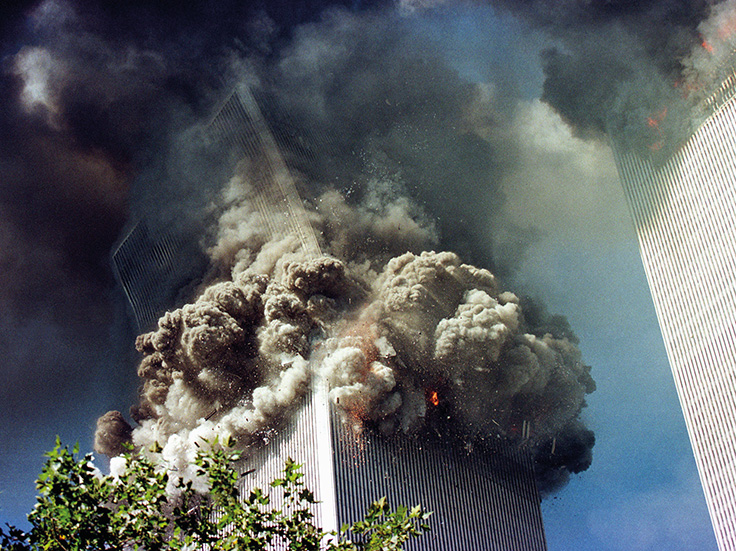
Photo by Thomas Nilsson/ Getty Images
By the summer of 1990, she was a full-time staffer in counterterrorism. In 1993, Middle Eastern terrorism reached American soil with the first World Trade Center bombing, which the FBI has described as “a deadly dress rehearsal for 9/11”. Sunni extremism, most notably al-Qaeda, moved to the forefront, and that was when her unit “started to take that group very seriously, and for good reason,” she told me. Still, much of her work involved writing intelligence assessments at a desk, a role that “didn’t feel like a good fit”.
In 1999, she transferred to the Directorate of Operations, as the agency pioneered a new form of tradecraft. The CIA was creating “targeters”. As Bikowsky puts it, this meant “figuring out who the bad guys are, who they’re connected to, where they are, what they’re plotting, and then what the heck we’re going to do about it”. The approach recast jihadist groups as transnational networks with identifiable hierarchies. Then, before the millennium, she joined the newly created Bin Laden Issue Station.
In the journalist Liza Mundy’s 2023 book The Sisterhood: The Secret History of Women at the CIA, Bikowsky is described at this time as having a combined steel-trap memory and restless manner. She had an aggressive approach – one that some of the other women argued with. According to Mundy, a former colleague described her as “not warm and fuzzy”.
But she knew “more about al-Qaeda than virtually anyone else at the CIA”, John Maguire, a former senior CIA officer told NBC in 2014. “She has a caustic personality, but she is frighteningly intelligent… She wasn’t afraid to make mistakes.” (“We’re not personal friends, and I’m trying to even remember who that is, to be honest. But it’s a nice compliment,” Bikowsky told me when I put the comment to her. She said she had never heard it before.)
As Bikowsky recalls the swelling of transnational jihad before the 9/11 attacks, she maintains that the unit had anticipated an impending strike. “We spent the whole summer before 9/11 knowing that a big attack was coming,” she says. “This was not a bolt from the blue. Anyone who says that is misinformed or just not telling the truth. Everyone was expecting something big.”
When something big did happen, it seems to have shifted something inside of Bikowsky. On 11 September itself, she was at CIA headquarters, where all employees were evacuated except her team. “I remember being so in awe of my teammates. A lot of them were women… Women were really drawn to this mission,” she says. After the attack, she was appointed deputy chief of operations at Alec.
In discussing what became the most traumatic day in the modern American psyche, Bikowsky is notably serene. Nearly 25 years after the cataclysm, she appears so familiar with the granular details, the depth of the trauma and suffering, that she speaks with a phlegmatic ease. It is a story, it seems, she has told many times.
It wasn’t until years later that Bikowsky watched the news coverage from that fateful, transformative morning on 11 September 2001. She was in “execute mode” in those early days of the war on terror. “I was so very saddened that that had to happen, and glad that I could try to be part of the solution,” she says. “I could try to make it better, to make sure that never happened again.”
Long before the 11 September attacks, Vice President Dick Cheney and his chief of staff, David Addington, had sought to recreate, as the political scientist Branislav L Slantchev described it, “the imperial presidency of the Nixon era”. They believed that the executive branch was constrained by a “meddlesome Congress, overbearing judiciary, pusillanimous bureaucracy, manipulative journalists, and a stupid and inattentive citizenry that simply did not understand what was best for it”, Slantchev wrote. In that feverish time immediately after 9/11, they were finally in a position to put their extreme principles into practice.
Two days after the attacks, the then director of the CIA’s counterterrorism centre, Cofer Black, promised Bush that “when we’re through with al-Qaeda, they will have flies walking across their eyeballs”. By November 2001, the CIA’s general counsel had begun examining the legal boundaries of coercive interrogation, and by the following April, the agency had its first major detainee, Abu Zubaydah, in custody. Interrogators subjected detainees to sleep deprivation and constant white light before receiving formal authorisation from the Justice Department.
But by August 2002, the Justice Department had approved what would become known as the “torture memos”, providing legal justification for a range of coercive techniques – including prolonged sleep deprivation, stress positions and waterboarding. The government paid $81m to a firm run by two psychologists to develop a “menu” of 20 “enhanced interrogation techniques” (EITs). According to a 2014 Senate Intelligence Committee report, neither psychologist had any experience in conducting interrogations before the CIA hired them.
In the years that followed, accounts from CIA black sites – secret prisons set up for the interrogation of terrorism suspects – revealed that detainees had been subjected to practices including rectal rehydration and feeding (the slow infusion of fluids and electrolytes into the rectum and colon), mock executions, extreme waterboarding, and sleep deprivation for up to 180 hours, as well as dietary and temperature manipulation, wall slamming, prolonged shackling and a host of other dehumanising abuses. In some instances, this resulted in bone fractures, and even hypothermia leading to death. When FBI representatives visited one of the black sites, they reported that they had “never been in a facility where individuals were so sensory deprived”. By 2005, the narrative around EITs had changed. “This country does not believe in torture,” President Bush told a press conference that year.
In 2008, media investigations into torture suggested one female intelligence agent, now understood to be Bikowsky, was a key figure in shaping the agency’s defence of its detention and torture programme. Its strength, this female intelligence expert reportedly wrote in 2003, was that potential terrorists were happy to be arrested by the US, because they got a “show trial” in America, compared to how they were treated by other foreign governments. They “never counted on being detained by us outside the US and being subjected to methods they never dreamed of”.
This unnamed female intelligence agent appears, under pseudonyms, throughout several accounts of the most violent chapters of the torture programme. Jane Mayer’s The Dark Side, a book about the war on terror, features a “redheaded former Soviet analyst who had been in the Bin Laden unit during [Bikowsky’s future husband] Michael Scheuer’s supervision”. This was widely believed to be Bikowsky. After the capture of the principal architect of the 9/11 attacks, Khalid Sheikh Mohammed (KSM), in March 2003, the CIA maintained that the use of torture was an effective and proportionate measure. Yet “according to two well-informed Agency sources”, Mayer alleges, one unnamed, particularly over-zealous female officer had to be reprimanded for her role in KSM’s interrogation.
The Dark Side claims that this officer was so eager following KSM’s capture that she flew to the black site in Poland where he was held so that she could personally observe his waterboarding. The officer – whose identity remains unconfirmed – was not an interrogator, but “thought it would be cool to be in the room”, a former colleague told Mayer. The CIA waterboarded KSM a total of 183 times.
The officer in The Dark Side had misconstrued intelligence from another detainee that there were African-American Muslim terrorists already in the US. To confirm this, interrogators repeatedly slammed KSM into a wall and then waterboarded him, leading him to say that he had sought to recruit black Muslim al-Qaeda operatives in Montana. Though it was false, US officials went on a wild-goose chase around the state.
Bikowsky does not set much store by The Dark Side. Asked to comment on Mayer’s redheaded agent, she told the New Statesman: “I can only say how very disappointing [it is] that a journalist of her repute would portray someone she has never spoken to based solely on the hearsay of two so-called well-informed sources who refused to go on record.”
The unravelling of the torture programme was accelerated by the 2014 release of the Torture Report – the colloquial name for the Senate Intelligence Committee’s 6,700-page investigation of the Detention and Interrogation Program. The report was published with the names of key CIA figures redacted. The “deputy chief of Alec Station” appears at least 26 times. The report details the torture programme, which occurred between 2001 and 2009. Bikowsky confirmed to the New Statesman that she became deputy chief in “circa 2001”, and went on to head the unit at some point in 2003. In 2005 the unit closed, but she remained in the CIA’s counterterrorism centre until 2018. When asked to confirm whether she is the deputy chief in the report, Bikowsky told the New Statesman: “You have my correct job titles.” Of the report, she added: “I did not study it then and have no interest in re-litigating its politically motivated and biased conclusions now.”
The report asserts that the officer in question repeatedly told superiors and others – including members of Congress – that the torture was yielding valuable intelligence when it was not. The officer authored what the report describes as “the template on which future justifications for the CIA programme and the CIA’s enhanced interrogation techniques were based”.
According to the report, the deputy chief of Alec Station sent an upbeat cable back to CIA headquarters in 2003, anticipating the pain interrogators planned to inflict on KSM to get him to confirm a claim made by another detainee. “Mukie [KSM] is going to be hatin’ life on this one,” the cable read.
When I asked Bikowsky whether she “gleefully” – Mayer’s word – participated in the torture of KSM and other detainees, she replied: “I don’t know who that phrase is even attributed to, but obviously it was not someone who was present on site and had any sort of first-hand information, is all I can say. So, they can believe that, if they want, and they can just be wrong.”
The deputy chief of Alec Station sent an email summarising intelligence attributed to KSM, in which they asserted that “Khalid Shaykh Muhammad’s information alone has saved at least several hundred, possibly thousands, of lives”. It further suggested that “after the use of enhanced [interrogation techniques], [Abu Zubaydah, the CIA’s first major detainee] grew into what is now our most cooperative detainee”, and that his information “produced concrete results that helped save lives”.
The former chief of the Abu Zubaydah Task Force disputed this characterisation. Zubaydah “never really gave ‘this is the plot’ type of information”, had discussed several key figures in al-Qaeda before torture was used and “never really gave us actionable intel to get them”. In one instance, Zubaydah was waterboarded for so long that he became “completely unresponsive, with bubbles rising through his open, full mouth”. When he regained consciousness, he expelled “copious amounts of liquid”. In January 2026, the UK government paid “substantial” compensation to Zubaydah, due to the fact that the British intelligence agencies MI5 and MI6 passed questions to the CIA for use during his interrogations despite knowing of his extreme mistreatment.
In February 2007, Bikowsky accompanied the recently appointed CIA director Michael Hayden in his testimony before the Senate Intelligence Committee. According to the New Yorker, Bikowsky testified: “There’s no question, in my mind, that having that detainee information has saved hundreds, conservatively speaking, of American lives.”
The Torture Report identifies several major claims the unnamed female operative made during the hearing and provides evidence that each is inaccurate. It further states that the agent misled the CIA inspector general and other senior officials about the effectiveness of torture.
The CIA disputes this characterisation. The agency stands by all but one of the agent’s assertions, arguing that her statements reflected a broader institutional understanding rather than an individual fabrication. “The representations as to the value of the information derived from detainees subject to EITs were representations made by the agency, not one individual. Suggestions to the contrary only serve to distort the record,” the agency said in 2015.
When I spoke with Dan Jones, who served as the senior staff lead on the Torture Report, he told me that the internal belief in the agency is that “what is good for the agency is good for the United States”. “The ultimate goal is protecting the agency first, and the country is second,” he said. “For the people who were engaging in torture, there was a psychological need to suggest what they were doing was producing something they didn’t know at the time.”
The report also revealed divisions within the US national security community over the effectiveness and morality of torture as an interrogation method. In 2004 FBI agents were told by the Bureau not to take part in joint interrogations with the CIA where techniques it prohibited, namely torture, were used. The prevailing view within the Bureau was that EITs produced compliance rather than genuine cooperation. The FBI did not challenge the report’s findings, whereas the CIA objected, alleging partisan bias.
Bikowsky told me that she “hasn’t really thought about” whether it was a mistake for the CIA to discontinue the use of torture, which it did in 2009. But she does not think waterboarding is torture. She declines to comment on whether it is an effective way of obtaining information but maintains that “the information that we acquired from the detainees absolutely helped us to thwart future attacks and to save lives”.
When waterboarding is conducted, the victim is immobilised on an inclined board, often with their feet raised and head lowered. A towel is placed over the nose and mouth, and water is poured on to it, saturating the material and restricting airflow. This triggers an immediate gag reflex and produces the overwhelming sensation of suffocation. The procedure is repeated: the detainee, instinctively, believes they are dying.
Bikowsky has never been waterboarded. She never considered trying it. When asked about the waterboarding of KSM, and the subject of what constitutes torture, she repeats the same line: “In all instances, the agency has never asked me to do anything that I thought was unethical or unlawful or immoral.”
When she answers these questions, her head is cocked to one side, her mouth slightly ajar. Her voice is perpetually hoarse. When pressed on matters she prefers not to discuss, she responds sharply: “I wouldn’t talk about it. Thank you, though.”
Yet even after we have discussed the most unpleasant corners of her career, Bikowsky is always willing to speak to me again. She is remarkably hard to rattle. She bristles only when I relay remarks from former colleagues; the charge of having a “caustic personality” draws the faintest flicker of an eyeroll, the slightest change of tone. The abrupt lurch from discussing her work as a life coach to the question of her involvement in KSM’s waterboarding seems more uncomfortable for me than it is for her.
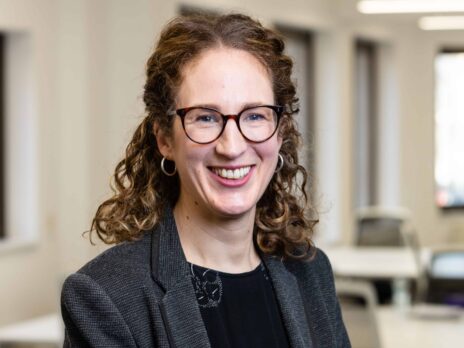
I found it difficult to reconcile the two images of Bikowsky. The more I read about her role in the torture programme, the more baffling the dissonance became: that this woman – dressed in a lilac jumper, seated in a room of warm-wood furniture and motivational posters – could possibly have been capable of such things. At times she made me nervous. It seemed as though her immaculate American manners could be masking something colder. Perhaps enduring what she did, sustaining the resolve America demanded to avenge the 2,977 lives lost on 11 September, required a temperament so steeled it bordered on suppressing natural human empathy.
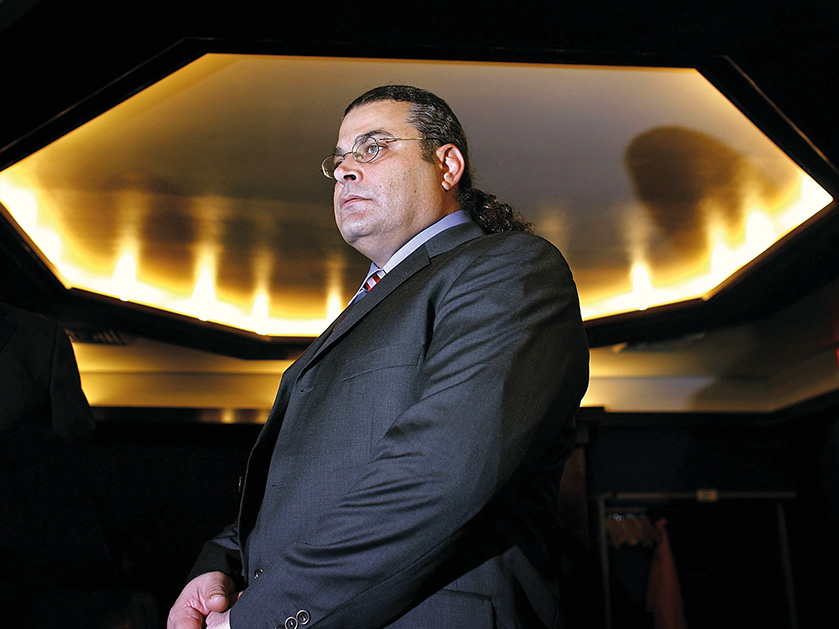
where the German-Lebanese citizen was pursuing a lawsuit against the CIA for unlawful rendition.
Photo by Chip Somodevilla/Getty Images
When Khaled el-Masri first learns that Alfreda Bikowsky is now working as a women’s life coach, he leans back in his chair and releases a brief, incredulous laugh.
On New Year’s Eve 2003, el-Masri was on holiday, travelling through Skopje, Macedonia. A German-Lebanese citizen and a car salesman, he was pulled aside by border guards at the Tabanovce crossing between Serbia and Macedonia and separated from his tourist bus. His name, as it happened, was a variant transliteration of Khalid al-Masri – the name of a man linked to the Hamburg al-Qaeda cell, which was instrumental in the planning and execution of the 9/11 attacks.
For 23 days, he was detained in a hotel and interrogated about his movements, his acquaintances and the local mosque he attended in Ulm, Germany. The Macedonian authorities alerted the local CIA station, which then contacted agency headquarters in Langley, Virginia. According to Mayer’s book, the head of the al-Qaeda Unit there – “the same hard-driving woman who had been reprimanded for her voyeuristic trip to watch the waterboarding” of KSM – pressed for the CIA to take custody of el-Masri, believing him to be a terrorist. While she rejects Mayer’s reporting, it is widely believed this agent is Bikowsky. She had been in the Bin Laden unit that failed to connect the dots before 9/11. She was not going to let another terrorist slip through her hands.
This agent authorised el-Masri’s rendition to a CIA black site north of Kabul, Afghanistan. Within the agency, doubts quickly emerged about whether they should wait for German officials to confirm the authenticity of his passport – there was, after all, no evidence that he was anything other than a tourist. The agent dismissed the concern, arguing that the German authorities were far too lenient on terrorism suspects. On 23 January, Macedonian officials released him to CIA officers, who stripped, hooded and shackled him. His captors forcibly inserted an object into his rectum. “Of all the acts these men perpetrated against me, this was the most degrading and shameful,” he later wrote.
El-Masri was taken to the Salt Pit – an isolated, clandestine hell site the CIA opened in 2002. This was a former brick factory that Guantanamo Bay detainees referred to as the “dark prison”, with curtains permanently drawn over the windows and the exterior walls painted to block out light. Loud music played incessantly. Prisoners were confined in complete darkness and isolation, provided only a bucket for waste and received inadequate heating during the winter months. Nude inmates were forced to stay in a central area and paraded around as a means of humiliation. In 2002, Gul Rahman, a suspected Afghan militant, froze to death on the floor of one of the cells.
By the time they had landed, the head of the rendition team sent word to the CIA that something was not right – this man did not seem like a terrorist. But the agent maintained that she thought he seemed “suspicious”. For the next 149 days, el-Masri was beaten and subjected to repeated interrogations. He was confined to a bare, filthy cell, given rotten chicken bones to eat and foul, undrinkable water. “You are in a country with no laws,” he was told. They repeatedly asked him about the Islamic cultural centre in Ulm; they did not accuse him of any specific crime. One female American interrogator, he recalls, shone a light into his eyes repeatedly. El-Masri began a 36-day hunger strike, demanding to speak with senior German, American or Afghan officials. A tube was stuck down his nose, and he was force-fed.
One man who identified himself as the prison director told him repeatedly, “I really think that you don’t belong here.” The director had written to Washington to say as much. “I’m going to write again and tell them that I think you’re the wrong guy,” he said.
Yet even after el-Masri’s passport was conclusively authenticated, the agent argued he should remain in custody. “She just looked in her crystal ball and it said that he was bad,” a former colleague recalls in The Dark Side. The agent claimed he had “made phone calls to people who were bad. Or to people who knew people who were bad.”
By late March, the agent agreed to his release – but only on the condition that German intelligence services agree to monitor him. They refused; he was a German citizen facing no charges. On the evening of 27 May, a German-speaking official entered el-Masri’s cell. “You are going back to Germany, but there will be no proof that you were ever here,” the official told him. “You won’t get anything in writing from the Americans that you were ever here.”
The next day, el-Masri was flown, blindfolded, to Tirana, Albania, and driven to the mountains on the border with Serbia and Macedonia. Start walking and don’t look back, he was instructed. He eventually made his way home to Germany, where he found his apartment ransacked and his wife and children gone. Without a phone or forwarding address, he sought help at the cultural centre in Ulm – the very place he had been accused of using to foster ties with al-Qaeda. It would take several days to establish contact, he tells me, blinking back tears. His family had been worried that they too might have been taken prisoner. They had fled to Lebanon.
In 2007, a US court dismissed a lawsuit el-Masri had filed against the CIA and three private companies he alleged were involved in his rendition, ruling that a public trial would “present a grave risk of injury to national security”. The Court of Appeals upheld the dismissal. The same year, the Supreme Court declined, without comment, to hear el-Masri’s appeal of the lower courts’ decisions. In 2012, the European Court of Human Rights ruled that el-Masri’s account of his abduction, rendition and torture was proved beyond doubt and held Macedonia responsible for his mistreatment both in the country and after his transfer to US authorities.
More than 20 years later, el-Masri bears the marks of a man who has endured profound physical and psychological torment. His large, drooping eyes fill with tears as he recalls his time in the Salt Pit, and his voice wavers and falters when he speaks of his children and the suffering they have endured. He suffers from polyneuropathy – a disease of the nervous system that causes tingling, burning, stinging and can lead to paralysis and organ disorders. He is no longer able to work. He struggles, he says, to find his way back into normal life.
“I have become very easily angered, very quick to anger,” he tells me, dragging from the cigarettes he chain-smokes. “I am often scared that I’m going to lose control, because I know that I have this anger inside me.”
In May 2007, el-Masri set fire to a store in Neu-Ulm after a dispute over a malfunctioning iPod, causing nearly €500,000 in damages; he was arrested and later given a suspended sentence, with his lawyer citing trauma from his CIA detention as a contributing factor. He also faced charges for allegedly attacking a truck driving instructor in a separate incident. In September 2009, el-Masri attacked the mayor of Neu-Ulm, striking him and throwing a chair in his office, for which he was sentenced to two years in prison.
Over the years, he has found himself searching for Bikowsky online. “She was rewarded for her work, and I have been punished as a victim,” he says. He wrestles with the stark contrast between their lives, grappling with the fact that his has been “ruined” while hers has been, by comparison, an unbroken “success”.
In my interviews with Bikowsky, her stance on el-Masri remains steadfast: “I’m not going to get into the specifics of his case. But I would not say it was the case of just mistaken identity at all.”
For el-Masri, this is a particularly painful point. “It’s not enough to just say, well, it wasn’t simply mistaken identity. If she has an accusation, she should make it. I am not content for her to just say, well, there were other things going on.” He lives in Austria now – he feels abandoned by the German state. He was difficult to track down. Several people warned me of his reluctance to speak. In the aftermath of his rendition, the German tabloid press had repeatedly used him as fodder for anti-Islam rhetoric. He is struggling to collect his pension, struggling to leave the house. He finds it difficult to accept that there was no public exoneration or even private apology. He describes it as the “cloud living over my head”.
Remarkably, though, he empathises with the position she was in. “Everyone makes at least one mistake in life. You can’t get through life without making a mistake,” he says.
But this was not an isolated incident during the early days of the war on terror. The CIA made a similar mistake in September 2002 – when Bikowsky has confirmed she was deputy head of Alec Station. A Canadian citizen, Maher Arar, became the subject of an extraordinary rendition after a senior agent mistook him for an al-Qaeda operative whose name sounded similar in English but differed entirely in Arabic. Arar was sent to a black site in Syria, where he was tortured and held for nearly a year. The Syrian government later declared him “completely innocent,” and the Canadian government publicly cleared him of any links to terrorism, paying him $10.5m in compensation. Commenting on the Arar case, Bikowsky told me that this was not a case of mistaken identity either.
El-Masri adds that it would be “1,000 times better” if, rather than Bikowsky facing trial as some critics demand, she simply apologised. “It’s really insulting that she caused all this to happen to me and is not willing – either publicly or personally – to even apologise for it.” The CIA’s inspector general launched an investigation and concluded in 2007 that there had been no legal basis for el-Masri’s rendition – a startling confession. While the inspector general does not issue formal legal rulings, the agency’s watchdog was effectively declaring the CIA had acted unlawfully.
The CIA director nonetheless decided that no further action was warranted against the deputy chief of Alec Station in the el-Masri case because “[t]he director strongly believes that mistakes should be expected in a business filled with uncertainty and that, when they result from performance that meets reasonable standards, CIA leadership must stand behind the officers who make them”. The investigation’s report also stated that “with regard to counterterrorism operations in general and the el-Masri matter in particular, the director believes the scale tips decisively in favour of accepting mistakes that overconnect the dots against those that underconnect them”.
The investigation’s findings have never been made public, but they were summarised in the Torture Report. The investigation was sharply critical of the deputy chief of Alec Station, noting that they had been warned about uncertainties regarding el-Masri’s identity. He was never informed about the investigation officially, and neither he nor his lawyer have been given access at any point.
As el-Masri was picking over the pieces of his broken life, Hollywood was creating its own version of events. In 2012, just one year after Osama bin Laden was killed, the director Kathryn Bigelow released Zero Dark Thirty. In the film, Maya, a red-haired CIA analyst portrayed by Jessica Chastain, visits a black site, where she watches a colleague waterboard a screaming al-Qaeda detainee before confining him in a box. It has long been understood that Chastain’s character is based on Bikowsky – something she disputes.
The film was a source of controversy within the agency. The CIA had granted the filmmakers unprecedented access to officials, a decision some argued risked exposing sensitive information so soon after Bin Laden’s death. As a result, the film prompted two internal investigations and a guidance report at the CIA. Zero Dark Thirty also implies, incorrectly, that torture played a crucial role in finding Bin Laden.
The Washington Post reported that several CIA officers said the on-screen portrayal of Maya captured the real agent’s dedication and combative temperament. “She’s not Miss Congeniality, but that’s not going to find Osama bin Laden,” one associate remarked. The attention from filmmakers, they added, sent “waves of envy through the agency’s ranks”.
“I saw that years after it was released,” Bikowsky said. “That is not based on me at all. It’s definitely a composite of a lot of really talented female officers; if I’m among them, great.” Bikowsky says the real-life moment on 2 May 2011, when Bin Laden was killed, brought only “short-lived” relief. “The killing of Bin Laden was absolutely necessary, quote unquote, to ‘win’ the war against al-Qaeda – but it wasn’t sufficient. We had to make sure their ability to attack was decimated,” she says. “I don’t ever recall that we would pause and feel this great sense of relief. It was always: ‘All right, good. Now what’s the next step?’”
She was promoted repeatedly in the years following 9/11. In 2018 she shifted from the front lines of counterterrorism to become the deputy chief of operations for homeland and strategic threats. When she chose to retire in 2021, after 33 years, she received the Medal of Merit and the Distinguished Intelligence Medal – the CIA’s highest honour, short of those reserved for personnel who come under direct fire.
CIA decorations are sometimes dubbed “jockstrap medals” because they are awarded in secret. Recipients are advised not to display or even publicly acknowledge them. Bikowsky keeps hers by her desk. When I ask about it, she holds it up to the camera and reads aloud from the inscription: “In recognition of 33 years of outstanding service at the Central Intelligence Agency, the story of the CIA’s greatest counterterrorism successes since 9/11 cannot be told without Alfreda as a central protagonist. Hollywood has tried to imitate but has never come close to replicating the formidable combination of substantive expertise, leadership, and indefatigable tenacity that has made Alfreda a cornerstone of US government counterterror efforts for years.
“Alfreda mentored, empowered and inspired generations of CIA officers and US and foreign partners alike, imbuing counterterrorism with an ethos that our best defence against another attack on our homeland, our people and our allies, is always to stay on the offensive.
“‘Never again’ became the mantra after 9/11. Few lived it like Alfreda, or did nearly as much to keep America safe and to empower others to carry on that responsibility.
“Alfreda wields influence far beyond her formal authority by virtue of her experience and her relentless drive to leave no stone unturned. Few officers can claim to have had such a definitive and tangible impact on our national security. She is a national treasure.’”
When Bikowsky launched her business in 2021, she didn’t lead with her past. Instead, she tried to build a brand around beauty, naming the venture “YBeU Beauty Personal Coaching”. She admits she wasn’t “prepared to talk about my past and career”. So, she recommended sheet masks, a $295 skin “serum” infused with human stem cells and reusable bags printed with slogans such as “Wine is basically fruit salad”. She shared close-up photos of her pedicures. She posted selfies several times a week, her head always tilted the same way, a slight smirk sliding across her face. In April 2022, internet forums had caught wind of the venture, sparking a deluge of mockery. By May, she had quietly rebranded the business as YBeU Life Coaching.
“I was hiding… so I didn’t have to talk about myself as much,” she tells me. “It was a hard transition when you live for decades deliberately never speaking about yourself – ever – or your past. It takes a little while, I’ll be honest, to get used to that.”
Today, YBeU’s online footprint is small: four Google reviews, three five-star and one one-star. One reviewer, whose profile picture features an American eagle against the Stars and Stripes, writes that Bikowsky “has a way of helping you uncover truths about yourself that you didn’t even know were there”.
She offers me a complimentary session. The theme (my choice) is how to interview reluctant subjects: how to steady yourself when the person across from you knows far more than you do. “What does confidence feel like for you?” she asks. “Remember: you owe it to yourself to show up. The only thing in your control is how you choose to prepare.”
She repeats, five separate times, the question I should be asking myself: “Is this serving me right now?” At one point she asks whether I ever use ChatGPT to get ready for interviews. She encourages me not to be intimidated by the expert I’ll be interviewing – whom she refers to exclusively as “she”. I find myself recounting, almost verbatim, how I had prepared to interview her. The exchange becomes unsettlingly meta, the roles quietly inverting: the interviewer transformed into the interviewee. She spends much of the time nodding and jotting notes in her notepad.
The session loops in circles: I describe the anxious, underprepared feeling I have occasionally felt before interviews; she counters with, “Could you have done more?” or, “What will you do with that frustration next time?” By the end, when she asks what my favourite part of the session was, I struggle to recall anything specific at all.
If Bikowsky hoped her new career might give her a clean slate, her personal life complicated the picture. Her husband and former boss, Michael Scheuer, whom she refers to as “Mr YBeU” online, has had an equally storied past. He headed Alec Station during the early days of the war on terror, naming it “Alec” after his son. He left the agency in 2004 after being outed as the author of Imperial Hubris, a book that was published anonymously and is highly critical of many of the US’s assumptions about Islamist insurgencies, particularly regarding Bin Laden. He contends that al-Qaeda was pursuing a martial strategy far more rational than Western politicians generally acknowledge. “If you would like to get to know some of the reasons for your losing your war against us,” Osama bin Laden said in a September 2007 video address for an Islamic militant website, “then read the book of Michael Scheuer in this regard.”
In January 2014, Scheuer published a blog post on his website that could be interpreted as endorsing the assassination of Barack Obama and David Cameron. (Scheuer later denied endorsing the assassination of both leaders.) In September that year, the Islamic State (Isis) issued a propaganda video featuring the British hostage John Cantlie, in which they quoted Scheuer: “Eighteen years into our war with the Islamists, the US government has given no public sign that it has the slightest awareness of what its enemies are fighting for.” This was a point “solidly made”, they claimed. Three months later, he married Bikowsky.
“I just thought he was this very nerdy, crazy smart person with this crazy Buffalo [New York] accent,” she says of their early days together at the agency. “If anyone had ever said that we would end up married 20 years later, I would say that you’ve got to be crazy.”
Five years into their marriage, Scheuer called upon “those millions of well-armed citizens who voted for Trump” to be ready to kill “a long and very precise list” of those who opposed the president. He blogged that “those who do not believe QAnon will be mighty surprised”. He insisted there was “so much accuracy, and well-proven accuracy” in the theory that JFK Jr, who died in a plane crash in 1999, is alive. In 2023 he said Jewish Americans “must be stopped and then scoured from the continent”.
Bikowsky and Scheuer do not have children together, but she is a “stepmom and step gran” to his children and grandchildren. On her Instagram, she shares photos of the couple’s trips to Colonial Williamsburg, their anniversary spent at the local movie house for a private showing of Casablanca (“Here’s looking at you, Mr YBeU”). They share sour cream maple cake, visit vineyards in the Virginia Highlands, take road trips to Buffalo for the local delicacy of weck sandwiches, washed down with some Canadian beer. Last year they did some renovations on their Georgian home.
She won’t, however, talk about the public perception of him. “What people choose to think about him is their business,” she says.
Bikowsky lives comfortably. No one will compel her to answer for the choices she made during the CIA’s war on terror. Under her new name, she can simply disappear into the Shenandoah Valley, the Blue Ridge Mountains rising to the east, the Alleghenies hemming her in from the west. She is allowed to be forgotten. She can sit and read her mystery novels, sip her wine, relish in her “relax hour”.
For Dan Jones, who spent six years investigating the CIA’s use of torture, the most unsettling truth is not that mistakes were made, but that those mistakes were met with refusal. “Even when presented with black-and-white facts – this was not grey – [the CIA] could not accept responsibility,” he says. “They were unable to accept those facts and correct the political record. There has been no recognition, there has been no accountability, people were elevated to senior positions within the CIA.”
Alfreda Bikowsky, for all it’s worth, does not dwell on this. “I certainly don’t mean to imply that everything we did, that I did, was flawless,” she says. “But I don’t know what I would have done differently if I had the chance again… I don’t spend a lot of time thinking, ‘Oh, gosh, I wish I had done that or tried this.’” In her coaching, she tells me, she encourages her clients to remember that “someone could look at Jesus Christ walking on water and come away criticising him because he wasn’t juggling at the same time”.
The Salt Pit shut in 2021 – large sections were demolished by the departing personnel before the Taliban gained control of the site. Flies walked across the eyes of Osama bin Laden. Dick Cheney is dead. Khalid Sheikh Mohammed putrefies in Guantanamo Bay. The bases the CIA used to fly into are all shuttered. America has left Afghanistan. Al-Qaeda is defeated. The US is bombing the Middle East once again. A new generation of remorseless agents are heading into combat. Bikowsky is free to pursue a career in wellness, topping up her pension recommending skin serums. She appears to bear no scars. Khaled el-Masri will never get his apology.
[Further reading: The new world war]
Content from our partners

Related

This article appears in the 25 Mar 2026 issue of the New Statesman, Easter Special
Join the debate
Subscribe here to commentIt is sickening that the crimes and blunders of the CIA and its “Legacy of Ashes” continue to be covered up. Torture is a crime, and those involved should be prosecuted, not given secret medals.
god this woman sucks. she deserves that insane moron husband.
As a 9/11 injured survivor, I am furious at this monster who is responsible for having done nothing to prevent the murder of 2,977, the injuries of 6,000 and the utter failure of a Guantanamo trial and therefore justice because of having extracted ‘confessions’ under torture. She and her husband Michael Scheuer, a conspiracy theorist are made for each other.
George W. Bush bears rthe main esponsibility for not taking the Al-Queda threat seriously, but he has certainly skated.