
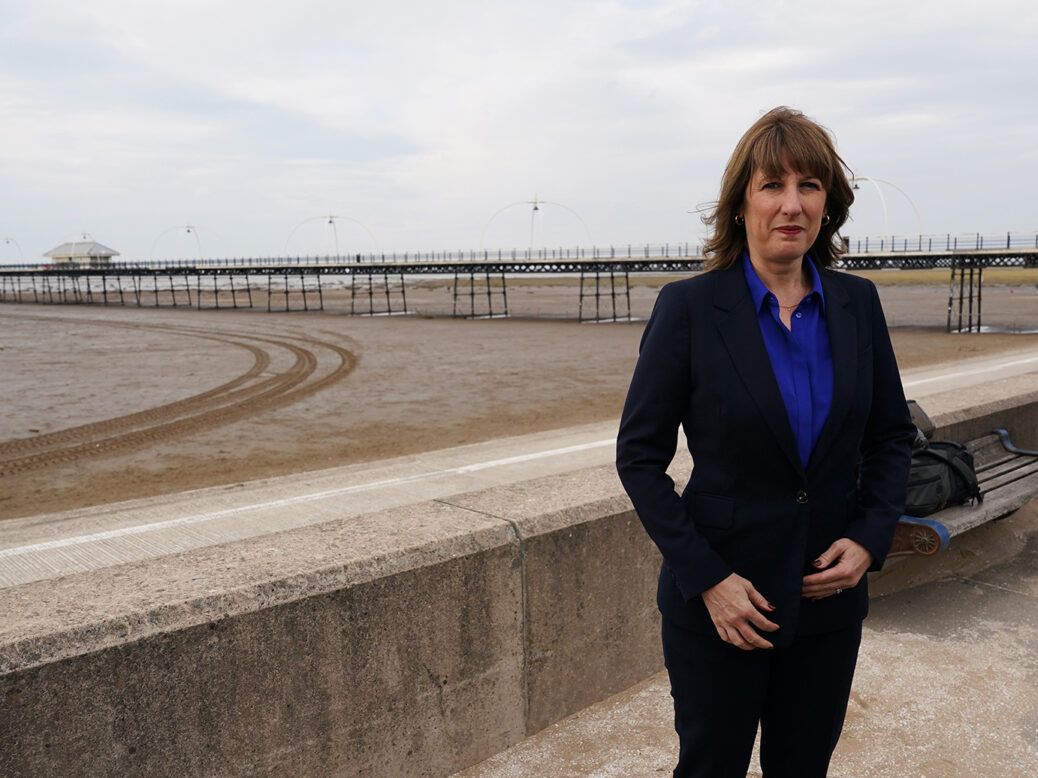
TThe US’s difficulty is the UK’s opportunity. That’s the approach Rachel Reeves is taking as she arrives at Davos (where Nigel Farage, who once derided “people deciding our futures in Swiss ski resorts”, is among the other attendees).
Last autumn Donald Trump dismayed US tech firms when he signed an executive order adding a $100,000 (£74,000) fee for applicants to the H-1B visa programme for skilled foreign workers. Reeves, by contrast, will announce that she is reimbursing visa fees for “trailblazers” in sectors such as AI, quantum computing and biotechnology, while also cutting the time it takes to qualify as a sponsor of migrant workers. “This government is making sure Britain is home to the stability, talent and capital that businesses and investors want and that drive greater growth,” she will argue.
But what’s perhaps most notable is the reaffirmation by Reeves of the government’s wider drive to reduce immigration. The Treasury hails the replacement of “a broken immigration system built on cheap overseas labour with one that welcomes the world’s brightest and best” while noting that net migration is now at its lowest level in half a decade (204,000) having fallen by more than two-thirds.
That represents a sharp break with that department’s traditions. In his book The Road to Somewhere, David Goodhart recalls an encounter with Gus O’Donnell, the former cabinet secretary (known in Whitehall as “GOD”), who told him: “When I was at the Treasury I argued for the most open-door possible to immigration… I think it’s my job to maximise global welfare, not national welfare”.

When former home secretary Suella Braverman used to push Rishi Sunak to cut net migration he would tell her: “You realise that’s going to cost us £3bn? That’s the same as a cut to income tax.”
Such warnings are now being heard again as talk of the UK reaching “net-zero migration” fills the air. Further changes announced by Labour include a ban on overseas social care worker recruitment, another increase in the salary threshold to £41,700 and a 32 per cent rise in the Immigration Skills Charge.
For Reeves the headache is the Office for Budget Responsibility’s modelling, which assumes a reduction in net migration of 100,000 costs the Chancellor around £7bn. In short, if numbers continue to plummet, most of Reeves’ £22bn headroom would be wiped out, necessitating tax rises or spending cuts to maintain the government’s fiscal rules.
The Home Office, incidentally, is dubious of “net-zero” predictions, dismissing the projections on which they are based. But the next year will test its apparent rapprochement with the Treasury.
This piece first appeared in the Morning Call newsletter; receive it every morning by subscribing on Substack here
[Further reading: Trump’s threat to Greenland must be a wake-up call for Britain]
Content from our partners



Related
Join the debate
Subscribe here to comment