
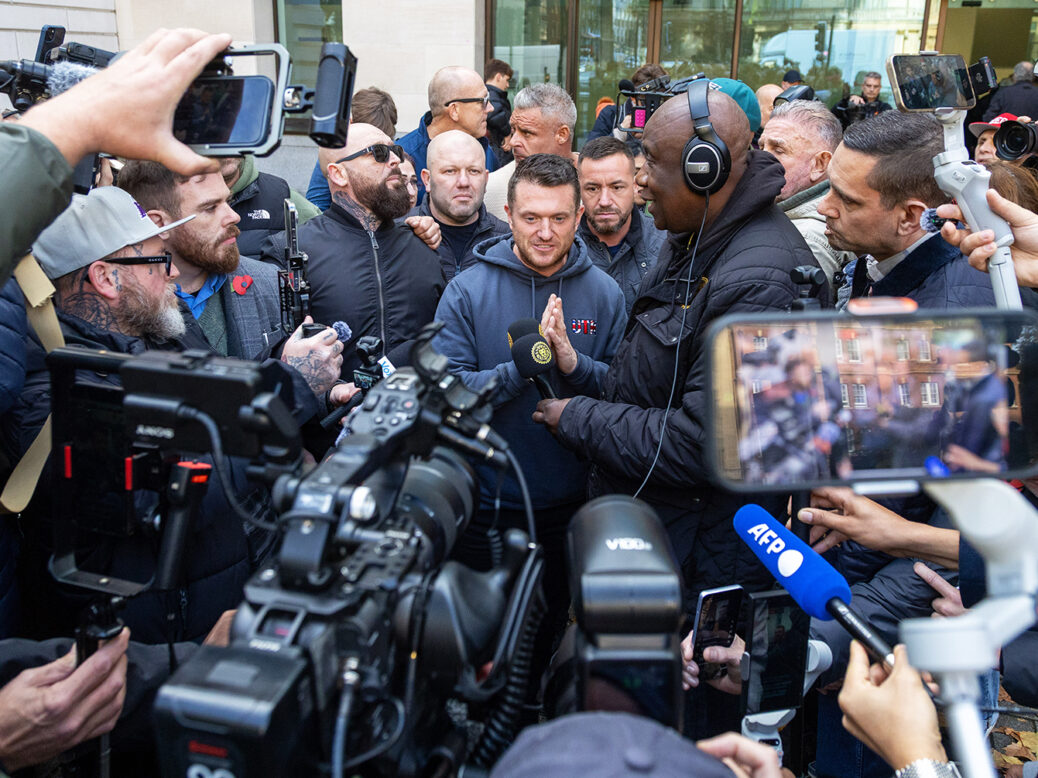
Tommy Robinson was today cleared of the terror offence of refusing to provide police with the code to his mobile phone after a judge found that the decision to stop him was based on his political beliefs.
Robinson (real name Stephen Yaxley-Lennon) had been charged under Schedule 7 of the Terrorism Act 2000, which allows police to stop people passing through UK ports to determine whether they are involved in terrorism and obliges detainees to provide the pins for electronic devices. If found guilty, Robinson could have been jailed for up to three months or fined up to £2,500.
However, he was cleared after District Judge Sam Goozee found that the police’s decision to stop him was based on a “protected characteristic”. According to reports from the trial, DJ Sam Goozee said: “I cannot put out of my mind that it was actually what you stood for and your political beliefs that acted for the principle reason for this stop,” the judge said.
PC Mitchell Thorogood of the Channel Tunnel policing team said he believed the driver was Robinson before stopping the vehicle. “What I find troubling is that PC Thorogood had already identified you,” the judge said. He said this gave the impression of an “arbitrary stop”, and that his detention “lacked rigour”. Under the Equality Act 2010, “belief” is a protected characteristic, meaning people cannot be discriminated against for their philosophical or religious beliefs.

Previously, Robinson claimed he withheld the passcode to protect his contacts, including victims of grooming gangs. In a post, on X today he said: “I was arrested and prosecuted under counter terrorism legislation for being Tommy Robinson.”
[Further reading: Why is Tommy Robinson being charged under the Terrorism Act?]
Content from our partners



Related



Join the debate
Subscribe here to comment