
“Eye of newt and toe of frog, wool of bat and tongue of dog.” These are, if you remember Macbeth, some of the ingredients that, when stirred in your cauldron correctly, will alter the future and shape reality. They are also, minus the dog, things that might be shaping your reality right now – if you’re desperate to get on the housing ladder, or staring at your electricity meter in despair, or wondering what happened to the promise of travelling from Manchester to Birmingham in 40 minutes (the time it took, incidentally, for Puck to put a girdle ’round the Earth).
When it feels like everything in Britain is fundamentally broken and trust in our politicians and institutions is at a disturbing low, it’s worth taking a moment to identify good news when we find it. Good news if you’re a human, anyway. It’s probably less good if you are a newt, or a bat – or any of the other species whose protection has to date been an integral part of the process for getting anything built in the UK. Rachel Reeves is reportedly considering reforms that would alter that assessment. The changes would not involve taking the well-being of newts and bats out of the equation completely, but would alter how their needs are weighted – compared to the needs of humans for, say, critical national infrastructure, or new homes.
This is going to be contentious. It is going to provoke fury – from environmentalists, who really want to save the newts, and from people for whom saving newts isn’t high on the priority list but is a very useful argument for opposing a new development that might spoil their view. The inconvenience of not having enough homes, power stations or reservoirs, is rarely factored in to the calculation until their absence becomes too pressing to ignore. At which point everyone – including the newt-savers – demands to know why the government didn’t do something about it sooner.
This isn’t meant to be a column about newts. It’s meant to be a column about abundance, as envisaged by Ezra Klein and Derek Thompson in their book of the same name, published in March 2025. The book, described in the New Statesman at the time as “a left-liberal manifesto for deregulation”, is mostly focused on America, and why advancement in areas such as affordable housing and clean energy has stalled, particularly in states run by Democrats. But the lessons – for the Labour government, and for the British left in general – aren’t hard to translate. Reeves let it be known that Abundance was on her summer reading list around the same time she declared: “I care more about the young family getting on the housing ladder than I do about protecting some snails.” One wonders if the Chancellor had already started reading.

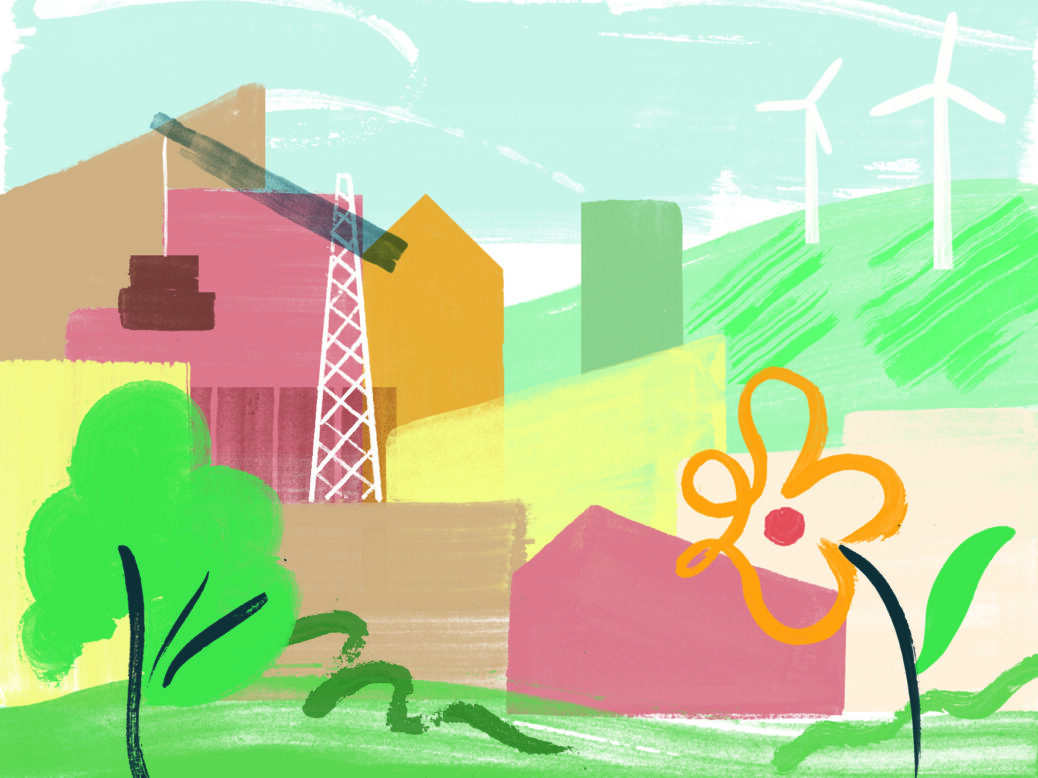
The point is, politics comes with trade-offs: snails or homes, bats or high-speed rail, unspoiled views or wind turbines (unless, like me, you find the physical articulation of clean renewable power a beautiful and uplifting sight to behold). There are no perfect policy solutions that will please everyone: to govern is to choose, and choosing means upsetting someone. The good news is the upset cohort may be smaller than the government assumes. New polling from the research agency Public First finds that 55 per cent of people support building in their local area, while 33 per cent oppose it. It’s just that the opposers are noisier.
There is a political prize here, as well as an economic one, for any politician that dares take it. The problem is they rarely get any credit in the moment: the downsides of deregulation and new development are immediately obvious, while the upsides – from cheap, clean energy, to the growth powered by homes where people want to live and transport routes to take them where there are jobs – take years if not decades to become apparent. So, this will be a column that seeks to redress the balance, that looks forwards with a flicker of optimism, that highlights what is being done – and even suggests a few ideas of my own – to build a better future.
[See also: Keir Starmer seeks to grip his government]
Content from our partners



Related


This article appears in the 03 Sep 2025 issue of the New Statesman, The Age of Deportation
Join the debate
Subscribe here to comment