
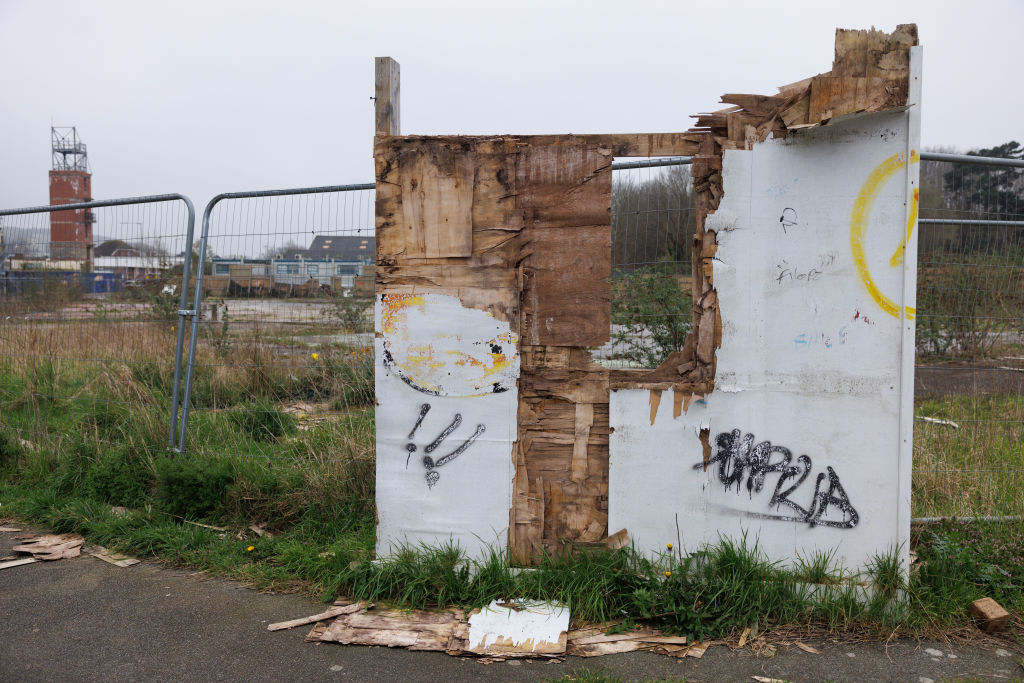
Where is the best place to build the 1.5 million homes that Labour has promised as a big, if insufficient, step towards solving the housing crisis? Should we put them on the previously developed “brownfield” land, which is just sitting there looking sad and empty? Or should we put them on the beautiful rolling fields of the countryside, concreting over the flowers and murdering the entire cast of Watership Down?
The answer here is surely obvious: that, at least, is the implication of the Campaign for the Protection of Rural England (CPRE)’s “State of Brownfield 2025” report. It’s the latest instalment in a series that has been in production since Constable, when your house was probably greenfield, too. The CPRE found, using the old trick of literally just asking councils, that last year England had enough previously developed land to contain 1.48 million homes at locally defined “minimum net dwelling” standards. That is within touching distance of the government’s 1.5 million target – and all without endangering a single rabbit. How convenient!
There’s more good news. Over a third of this total (535,000) could be built on land in London, where demand is highest. Over half (55 per cent) is on land that already has planning permission, “meaning over 800,000 new homes could be built rapidly”. And because brownfield sites – which include abandoned factories, offices and shops – are a “constantly renewing resource”, the total is actually up 15 per cent on the 1.29 million recorded in 2023.
Whether a sudden upsurge in abandoned commercial properties is entirely a good thing is not something the campaign has stopped to consider. And there are other questions the CPRE does not ask. Chief among them: if there is so much brownfield land available in the middle of a housing crisis, then why on Earth aren’t we already building on it?

One possible answer, strongly implied by both the report and a sympathetic write up in the Guardian, is: developers are greedy. Building on greenfield land is easier and more profitable, and developers have little reason to care about either urban regeneration or fields. Boo.
That giant construction firms care more about bonuses and shareholders than they do about nature is no doubt true; we are none of us pure under capitalism. But there are rather a lot of other reasons brownfield sites rarely sprout houses. Firstly, it is a label that’s both simplistic (it tells you nothing other than that it was previously developed) and misleading (not only are there bits of brownfield now functioning as important wildlife sites, but less than two decades ago the category included actual gardens).
Actually, plenty of brownfield is in the wrong place, either in the sense of being in the wrong towns and cities to meet demand, or just being in locations where no one in their right mind would want to live (in industrial parks, say, or unnervingly close to motorways). Some sites are simply better suited to commercial or industrial uses – and since we do need those things too perhaps we should reserve them for such.
Then there’s the fact that lots of brownfield sits empty for years because it is quite literally toxic, thanks to the run-off from previous industrial uses. That can be fixed – the creation of London’s Olympic Park involved removing 2.3 million square metres of soil, and scrubbing a third of it in giant soil-cleaning machines before putting it back. But such interventions are expensive, and while you can argue that government, developers or both should put their hands in their pockets to increase housing supply without damaging nature, it should be abundantly clear by now they’re not going to.
Sometimes in life, if you spot a blindingly obvious solution to a long-standing problem, it’s because you’re a genius. More often, though, it’s because you haven’t thought enough about that problem. Yes, it would be lovely if we could do everything through brownfield, simply by forcing developers to sacrifice a bit more of their profits and still build enough homes. But they’re not going to. Demanding otherwise may make you feel righteous; it won’t deliver those homes.
The CPRE, of course, doesn’t have to worry about these trade-offs. More than that, by pretending they don’t exist the organisation can attract headlines and public attention. But a brownfield-only housing plan would mean missed housing targets and not enough homes, with all the damage to family finances, fertility rates and the economy that entails. In politics, as in life, there is usually a reason why something seems too good to be true.
[Further reading: Will broken windowism save Labour?]
Content from our partners


Related



Join the debate
Subscribe here to comment