
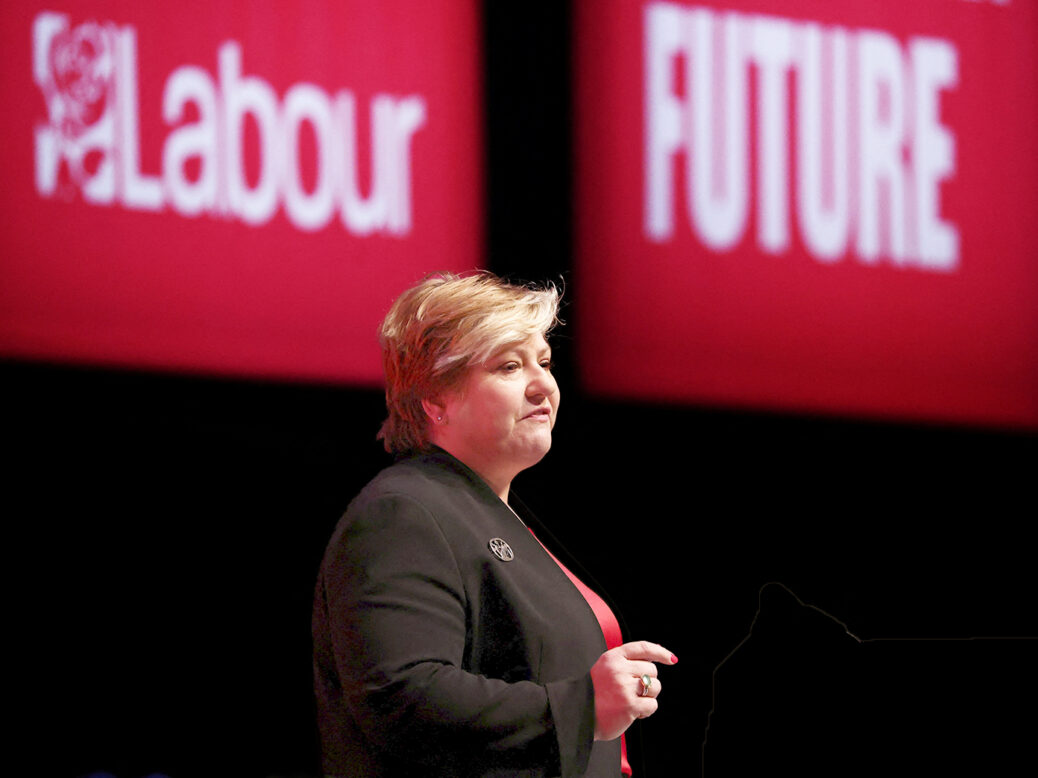
Angela Rayner was not a popular politician. Labour activists would be kidding themselves if they argued otherwise. Rayner’s ratings never eclipsed Keir Starmer’s. In fact, her approval numbers never once reached positive territory. In August, she was less liked than Jeremy Corbyn, and no more liked than Kemi Badenoch. Which is to say: Angela Rayner was not well liked.
She was, however, the least disliked of Labour figures among Labour’s own supporters. Starmer and Reeves annoy almost half of the Labour base these days. Rayner did not. If not much else, she was the members’ candidate.
Her replacement will have to be popular in both ways. First inside the party, then outside it. Deputy leader of the Labour Party is not some shrouded, internal office hidden within the party machine. Rayner was high-profile. She elicited an opinion from three quarters of voters. This vacancy gives Labour an opportunity to reset.
Who are the runners and riders? Let’s assess the confirmed candidates.

Emily Thornberry
Emily Thornberry, of “Image from Rochester” fame, might not obviously speak to the party’s needs. Another London lawyer for a party beset by the Faragistas north of the Watford Gap?
But is background a solid qualification? It doesn’t seem to be. Rayner, whose seat and, frankly, background, was most at risk from Reform, polled only 3 per cent favourability among Reform voters. That is less than Corbyn.
Thornberry’s pitch to the PM is barbed. It’s critical friend, without the friend. And it speaks to a Labour membership that is now irate with a leader it had always tolerated rather than embraced.
Thornberry is not guaranteed to receive the support of enough MPs – 80 – and then Constituency Labour Parties to make the members’ ballot. But if she does, I expect her to do well among the its faithful. If elected, London lawyer attacks might sink her. But find me another Labour politician who has more hits than misses during a broadcast round. Capable. Strong. A lawyer yes, but a charismatic lawyer. Now that’s different.
But Labour members might plump for a Reform-facing northerner. Appreciably, that’s where they’re losing most. Which brings us to…
Bridget Phillipson
Phillipson’s rise to cabinet status, as Education Secretary, has been meteoric. And, of the candidates to declare thus far, she is the one who appears to have attracted the most endorsements from colleagues: the route to 80 seems easiest for the Sunderland MP. She will make the ballot.
Philipson’s pitch is less critical than Thornberry’s, and that difference may prove crucial. Because she’s a cabinet member, she would surely defend the government by default. She is the members’ star. She polls well in the cabinet rankings taken by Survation. In June, when Starmer was in net negative territory among Labour members, and Rachel Reeves at rock bottom, Phillipson had a net favourability score of +31.
You don’t often lose with numbers like the above. But “well-regarded cabinet member” is not synonymous with “preferred choice for deputy leader”. Angry Labour members may be looking for a rabble-rouser. Which brings us to the third of the declared thus far…
Bell Ribeiro-Addy
A backbencher, and briefly a shadow minister under Jeremy Corbyn, Ribeiro-Addy is the candidate of the Socialist Campaign Group (SCG) of Labour MPs. Richard Burgon, the Leeds MP, was initially fingered as the group’s standard bearer in this leadership race, but quickly endorsed Ribeiro-Addy instead.
With a dozen endorsements from SCG members, Ribeiro-Addy has stood to represent her wing, restore the whip to punished colleagues, and serve as an ear for those disgruntled with the leadership. Her chances at reaching the required 80 nominations, however, feel low. The SCG numbers 21 in the Parliamentary Labour Party. I’ve yet to see a non-SCG MP publicly endorse her. She sits as their protest candidate.
But party members are looking for a candidate who appeals to the left more than the present leadership. If Ribeiro-Addy were to reach the threshold, a surprising result might follow:
But she’d likely lose. Labour members are annoyed with Starmer, with the government, with a lot of things. But few of them are first-preferencing the most left-wing alternative they can find. The June Survation poll for instance finds that, combined, support for Clive Lewis and Diane Abbott made up just 6 per cent of the party faithful. It wouldn’t surprise me if Ribeiro-Addy polled just a little above that.
Lucy Powell
Hot off the press is Lucy Powell, recently sacked from the cabinet as leader of the House of Commons. Her announcement was quickly followed with an endorsement by northern MPs, including the also-recently-sacked Greater Manchester parliamentarian Jim McMahon. The Manchester mayor Andy Burnham suggested she was his preferred candidate.
Burnham’s mention of her in his shopping list of preferred candidates is important here. Because party members, when asked who they would most prefer to succeed Starmer, say Burnham by a canter. His praise should push her up the preference list of the rank and file.
The problem for Powell is that, of the former cabinet, her ratings among party members are not amazing. She is less liked than Starmer. And though she is admittedly one of the lesser known former ministers, her media form is less than clean.
Can she reach 80 MPs? As one of the recently reshuffled, she will attract members who are sympathetic to Starmer’s politics but frustrated with his governance. That should put her slap bang in the middle of the party.
Phillipson in the east, Powell in the west, two northerners battling it out? This could happen.
But being a northerner is no qualification to seeing off the Reform threat there. Background can always help, but it’s no guarantor of sound strategy or attitude. Geography is not Labour’s problem right now. It’s connection. Labour needs a good communicator as its deputy leader.
Phillipson’s hope is that she can coast off her regard as a cabinet member and win as the inoffensive candidate. Powell’s is to coast off Burnham’s favour. Thornberry’s approach is to be anything but inoffensive. These three are the most likely to make the members’ ballot.
[See also: Will Labour crown Bridget Phillipson deputy leader?]
Content from our partners


Related

Join the debate
Subscribe here to comment