
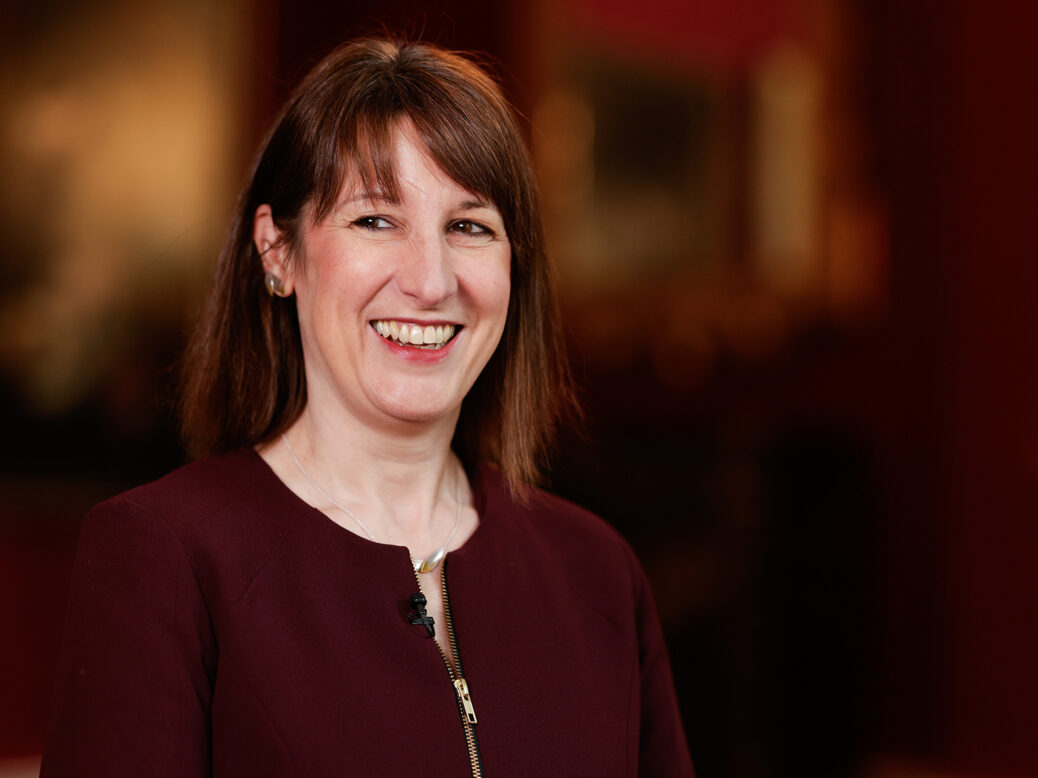
After becoming Chancellor, Rachel Reeves replaced a portrait of Nigel Lawson, the economic architect of Thatcherism, with one of Ellen Wilkinson, Clement Attlee’s education minister. It was a signal that the Treasury was under new management – “Red Ellen”, as she was known, was a founding member of the British Communist Party.
Reeves is not now, nor has she ever been, a communist (the Chancellor likes to describe herself as a social democrat). But she is moving policy in a more leftwards direction. “We’re a Labour government of the left, we’ve had 14 years of trying the right-wing approach,” a Reeves aide told me.
“It’s more left wing than the last Labour government, that’s for sure,” remarks a senior Starmer adviser of an administration that has revived public ownership and defied calls from businesses to dilute its workers’ rights bill.
Faced with a choice between relying on large tax rises or spending cuts to meet her fiscal rules, the Chancellor has chosen the former (albeit with a helping hand from the PLP). It’s a decision that will move UK tax levels, already heading for a postwar high of 37.7 per cent of GDP, even closer towards the European social-democratic norm.

“It would of course be possible to stick with the manifesto commitments,” Reeves told BBC Radio 5 Live yesterday, making explicit what was implicit in her speech last week. “But that would require things like deep cuts in capital spending.”
That line was denounced by free-market economist Julian Jessop as “gaslighting” on the grounds that a different rule applies to infrastructure investment. Yet there’s an alternative explanation: Reeves may well be in danger of overshooting that too. Unlike so many of her predecessors, though, the Chancellor has chosen not to take an axe to capital spending at the first opportunity. Doing otherwise, she fears, would only deepen the UK’s productivity crisis.
But the most important political signal that Reeves sent yesterday was that she intends to abolish the two-child benefit cap, introduced almost a decade ago by George Osborne, rather than tapering it as originally anticipated. “I don’t think that it’s right that a child is penalised because they are in a bigger family, through no fault of their own,” she said.
As a policy decision it is an unavoidable choice. Why? Because Labour has made it an explicit aim to reduce child poverty and no other measure does more to create it. Over 630,000 children, the IFS estimates, will be lifted out of absolute poverty by the cap’s abolition. That’s why Bridget Phillipson, Lucy Powell and Gordon Brown (revisit his NS guest-edit here) have all demanded action, and why Keir Starmer, as Andrew first reported, has privately described it as his personal priority.
But the politics remain far more fraught than the policy. No 10 has long been mindful that the two-child cap is highly popular with the public, around 60 per cent of whom favour it, including Labour voters.
Expect Starmer and Reeves to now be assailed by the right for allowing “unlimited benefits” for “workshy” families (Nigel Farage’s Reform would abolish the cap but only for working couples). Confronting this charge will require Labour to do something the government wasn’t good enough at in its first year: fighting and winning arguments.
This piece first appeared in the Morning Call newsletter; receive it every morning by subscribing on Substack here
[Further reading: Dick Cheney’s bastard]
Content from our partners


Related
Join the debate
Subscribe here to comment