
Multiple factions of the governing party are calling for change, even the Prime Minister himself. But none can provide a serious alternative to Tony Blair’s radically Atlanticist, AI-focused, deregulationist, lobby-funded agenda. The problem here is not just “Treasury Brain”, or worries about bond vigilantes, but Labour Brain itself. Its stultifying conformity in thinking about the condition of our four nations and what might be done is at the root of our present crisis.
Labour Brain has the superordinate goal of the restoration of economic growth, even if it recognises the need for what they call “growth for all” or “good growth”. Different factions in the party are competing to produce economic recipes through the selection and recombination of a standard set of ingredients. They include cuts in existing taxes and benefits, deregulation of planning and or business and labour, public investment in infrastructure and training, and of course innovation. Those on the left now add new taxes on wealth or capital gains, and on the right they will add anti-net zero and anti-immigrant policies.
Contradictions are smoothed away by piling up abstract nouns in binary oppositions. Thus, we have Burnham’s trope about “business friendly socialism” or Streeting’s claim that “Labour succeeds when it combines dynamism with fairness, wealth creation with wealth distribution, enterprise with solidarity, ambition with security.” But none of the Labour change-makers confront the issue that no combination of the standard policy levers will deliver sustained growth of 2 per cent or more. We are living through a low growth period, one punctuated by successive shocks from geo -political instability and climate change.
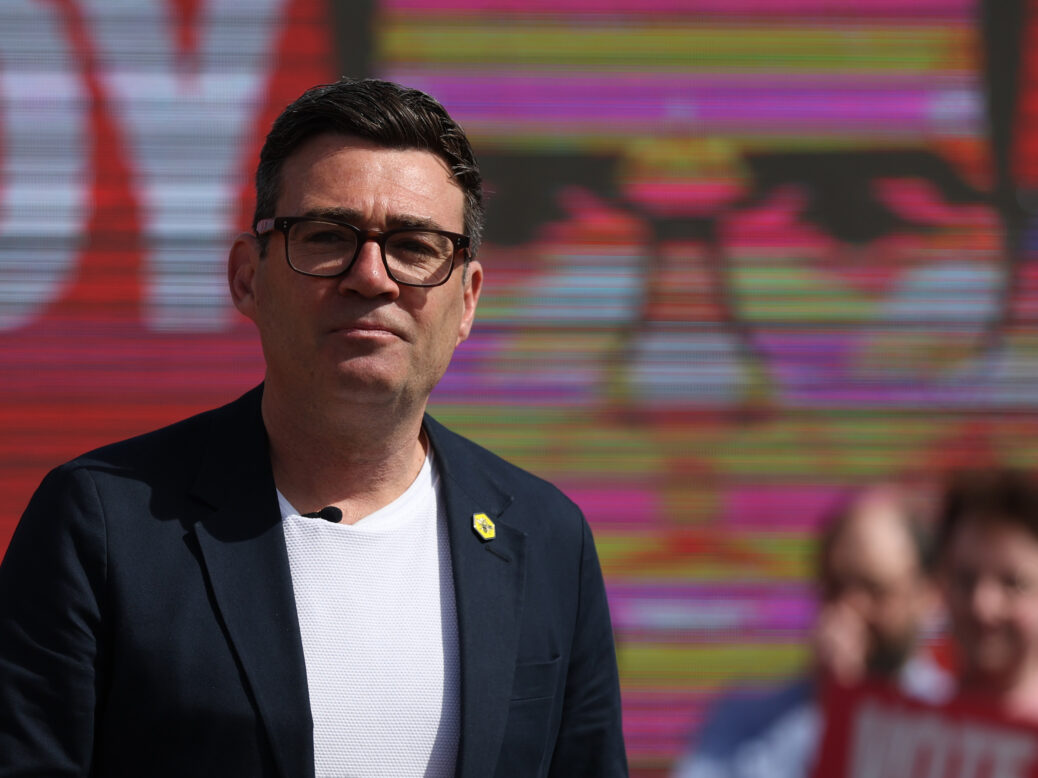
Burnham does deserve credit as the most ambitious and serious of the competing essayists. Burnham promises a break with “40 years of neoliberalism” and sees that this requires a new kind of active state intervention which would not be countenanced by “the London set [who] have run Labour for too long”. Building on his mayoral stint, Burnham (and supporters like Mathew Lawrence) present their programme as “Manchesterism”, arguing that what Manchester has achieved in its public control of buses and reindustrialisation plan should inspire “the whole country”.

But the problem is that Burnham’s policy programme is not new Manchesterism but old Londonism. His key Manchester success is bringing local buses under public control and subsidising low flat fares in buses run by franchised private operators. This is welcome and long overdue (right across the UK bus privatisation made transport for the non-motoring poor, old and young increasingly unaffordable and inaccessible). But Manchester public control mirrors London practice without any attempt to get beyond integrating public transport. Burnham proposed and then ducked congestion charging (which London has) for Manchester.
Under Burnham the Greter Manchester Combined Authority claims to have “a concrete plan to reindustrialise”. But the titles of its five development clusters give the game away: advanced materials and manufacturing; digital, cyber and AI; health innovation and life sciences; creative industries; and low carbon. It is a policy of supporting what is already supported – indeed privileged – through existing policies, and through central government priority and funding. There is no new thinking here, just doubling down on policies which have not delivered without asking what can be done to close the gap between the central city and disadvantaged outer Manchester boroughs – or, more generally across the UK, how such policies have not worked to close the gap between periphery and centre. Recall George Osborne’s “march of the makers” and its finance of Manchester’s graphene invention, which has hardly transformed the city, let alone the country.
Furthermore, what does this do to solve the problem identified by the Green Manchester MP Hannah Spencer? In her acceptance speech she said that “things have changed a lot over the last few decades, because working hard used to get you something. It got you a house, a nice life, holidays, it got you somewhere. But now, working hard, what does that get you? Because talk to anyone here and they will tell you, the people work hard but can’t put food on the table, can’t get their kids school uniforms, can’t put their heating on, can’t live off the pension they worked hard to save for, can’t even begin to dream about ever having a holiday, ever…”
The solution lies partly in Burnham’s ambitious call for “rolling back some of the worst aspects of the 1980s”, such as privatisation of basic utilities and selling off council homes. He has called for (more) public control of energy, water and transport. Supporters like McVitie and Lawrence rightly focus on the need to reduce the cost of basics supplied by these foundational systems. Our major and novel problem is the cost of household living, which is not about the level of individual income but about the balance between household income and expenditure. And the acute issue since about 2022 has not been about income moving fractionally up or down but about the high cost the four market essentials – housing, utilities, energy and transport – are pressing on disposable income. Consequently, low-income households have had to make choices between heating and eating, and middle-income households cannot afford to trade the car or take a holiday, all while access to public services like the NHS has become much more difficult.
Our government is aware of these problems, which promise to get much worse, but so far has been ineptly tinkering, as with the proposal for freezing the prices of basic foodstuffs which the supermarkets quickly shot down. The only firm decision sems to be for some form of selective assistance on energy prices because the public finances will not allow a general subsidy of the kind offered when prices spiked after the 2022 invasion of Ukraine.
How to go further? Burnham does not say much beyond more public control, and perhaps a measure of public ownership. But public control, public ownership or making investment easier will not solve these problems. Reducing costs of energy, water and transport is difficult, because high prices are not just the result of the current lack of effective public control, or indeed because of irresponsible extraction by private investors. Bond-financed, not for profit Network Rail and Dŵr Cymru are in trouble because they operate in highly capital-intensive utilities where there is not enough revenue to cover necessary physical investment and a return on (public or private) borrowed capital. The issue is who pays for more physical investment. Because the poor can’t pay, the only options are much increased public subsidy and radical reform of the regressive billing systems in electricity and water. None of this has been addressed by Burnham or his team.
In any case, growth, or the creation of better jobs with higher incomes, will not be achieved by Burnham’s programme for reindustrialisation, which goes no further than longstanding existing policy. Even if it starts working, by some miracle, a programme focused on start-ups and high tech will do very little for those who are now in low-wage employment in the outer boroughs of Oldham, Rochdale and Bury. At a national level it is self-deluding to imagine that UK innovation can produce a world-leading position when the UK accounts for just 2 per cent of global R&D and has no major world players in most fast -growing industries. Most likely, any Manchester inventions will, like graphene, be commercialised elsewhere.
The same goes for the detail of Andy Burnham’s programme. That is the encouragement of foreign investment, whether to build flats in Manchester or build infrastructure. This is not cost free, either in terms of the subsidies required, or the flows of income out of the site of investment and indeed the country. What we have is more of the same, with added vibes, plus a reversal of policy in certain areas, at the limits of what Labour radicalism will permit. It represents something more like political rhetoric than political change: because Margaret Thatcher and Tony Blair are associated with the free market, competition and private finance, it is argued that a small reversal in perceived policy will itself improve things.
We need new thinking which breaks with a political economy that is almost designed to avoid having to understand specifics, let alone act on material realities. We need to think about awkward cases. We have had extraordinary investments in rail infrastructure. But we need to understand that HS2 did not go wrong because irrelevant sums of money were to be spent on a bat tunnel. The whole thing was boondoggle based on delusions of grandeur about having to have the highest speed trains, and because of a failure to see there were much better ways of spending what is now more than £100bn. We need to understand that the huge investments partly funded by this government in Carbon Capture and Storage are not the best use of scarce investment funds aimed at decarbonisation. The problem has not been lack of public control, or indeed public funding, but what it has been directed to.
And we can and must do better in dealing with the cost of living. And the starting point is that serious innovative policies require much more public funding than can be generated from the existing tax system. Our tax system remains stuck in the 1940s when PAYE was introduced to tax the individual male bread winner. Today we should levy income tax on household income, which would also allow us to institute progressive charging for utility services, a precondition for paying for the physical investment needed. Improving household life should be the focus of expenditure. This should include making essential market goods affordable, ensuring foundational services work and are accessible, and integrating policies around the goals of preventing social harm and promoting environmental responsibility and social solidarity. We need to think about expansion of domestic food production as well as reforming food distribution and consumption.
This will require relearning how to plan, coordinate and control (as was possible in the past) – how to, for example, move water from the west to the east of the country or develop a proper infrastructure plan for electrification. And it will require making fewer mistakes. We cannot afford, financially and in terms of wellbeing, to put our health services into the hands of parasitic private contractors, or social care for the old and children in the hands of private equity. But thinking expertly and locally will also be vitally important as knowledge of a local economy will lead people to start from where we are and what we need to change rather than fantasies about leading the world in AI or green tech or life sciences. For example, a local perspective will lead to policy focus on small firms, many with mediocre productivity and no interest in flashy innovation, because micro firms provide useful services and income for the better part of half the families in the communities they serve. At the same time, we need to recognise that commercial development will not rejuvenate high streets increasingly occupied by barbers, vape stores and fried chicken shops.
If we have policies for addressing the cost of living, grounded in real economies and deploying specific knowledge, we can achieve so much more. But what we don’t need is a Manchesterism that apes London, or delusional policies for easy growth.
[Further reading: Andy Burnham’s door-knock to Downing Street]
Content from our partners



Related


Join the debate
Subscribe here to comment