
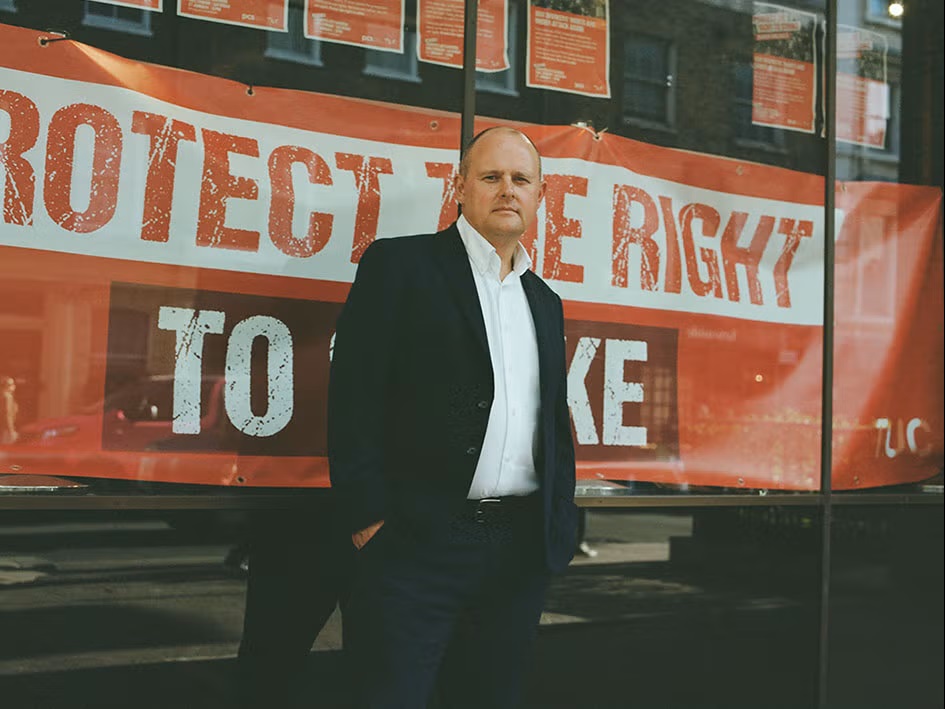
Paul Nowak, the secretary-general of the Trades Union Congress (TUC), has defended Labour’s U-turn on its manifesto pledge to give workers protection from unfair dismissal from their first day of employment, calling the government’s decision to instead introduce a six-month threshold a necessary “compromise”.
In its manifesto, Labour pledged to deliver a “New Deal for Working People in full”, which would include introducing “basic rights from day one” to sick pay, parental leave and barriers against unfair dismissal. Now in government, and following a consultation between some unions and industry groups, the latter – which would have replaced the current two-year wait for protection – has been quashed.
“Clearly, a six-month qualifying period isn’t [the same as] a day-one employment protection against unfair dismissal,” said Nowak when asked whether the concession amounted to a manifesto breach. The backtracking is necessary, Nowak argued, as “Lib Dem and Tory Peers” have been “blocking rights for millions of low paid workers” since the bill reached the upper House in March.
“If that ping-pong process continued into the new year, what we’d see is the timetable around the Employment Rights Bill slipping away,” Nowak continued. “[Meaning] some really important things – including the right to sick pay from day one – which will benefit 8 million workers, [and is] due to take effect from April next year, would have been lost.” He is “confident” this latest concession would be enough to get the Bill through the Lords, and that no further row-backs will come.

Nowak added: “Listen, it’s a compromise. Like all compromises, there’s been give and take, and not everybody is in agreement. And there will be some unions in different places… but the broad sense amongst our unions was that we needed to get the legislation on the statute book before Christmas.”
Angela Rayner was the public face of the plans to bring a new wave of workers’ rights – both when Labour was in opposition, and in government. She had vociferously defended the bill from many quarters – including a very public fallout with Sharon Graham, the general secretary of Unite – until she resigned from the Cabinet over her tax affairs in September.
Would she have been able to save the bill from the concessions it currently faces? “I don’t think we would have got to this place if it wasn’t for the work that Angela and others did,” said Nowak, “but we would still have hit this bottleneck in the Lords, without a doubt.” When asked if Rayner’s absence would leave a hole in the cause of the unions during future consultations on the bill and its secondary legislation process, Nowak replied, “I think Angela Rayner has left a big void in British politics – full stop.” He added: “She’s an authentic working-class woman who speaks the language of millions of Labour voters, and stands up for the values of people who go out and vote Labour.
“I’d love to see her back in the front line of British politics. That will be important in terms of employment rights, but it’d be important for a whole range of other reasons, as well. I don’t think anybody could doubt the impact that she’s had on British politics, and no doubt will have going forward.”
[Further reading: What Angela Rayner will do next on workers’ rights]
Content from our partners



Related

Join the debate
Subscribe here to comment