
There is a simple and increasingly popular adage being used to describe the dilapidated state of modern football: “game’s gone”. The phrase has become shorthand for the game’s new-age ills. It captures everything from the little grievances (low socks and tiny shin pads), as well as medium-ranking pains (VAR and xG (expected goals)), to the more existential issues facing the game – the spectre of a European Super League; foreign public investment funds owning clubs; the staging of World Cups in rogue states and the handing of a “Fifa Peace Prize” to a president that has, on questionable legal grounds, staged an incursion on foreign land to capture a fellow world leader.
“Game’s gone” has become a bit of an ironic coping mechanism. But the underlying angst of many fans has a real basis: the emergence of negative by-products to the insatiable business-like streamlining, optimisation and profiteering of football in recent years. Nobody in the game is exempt from these effects.
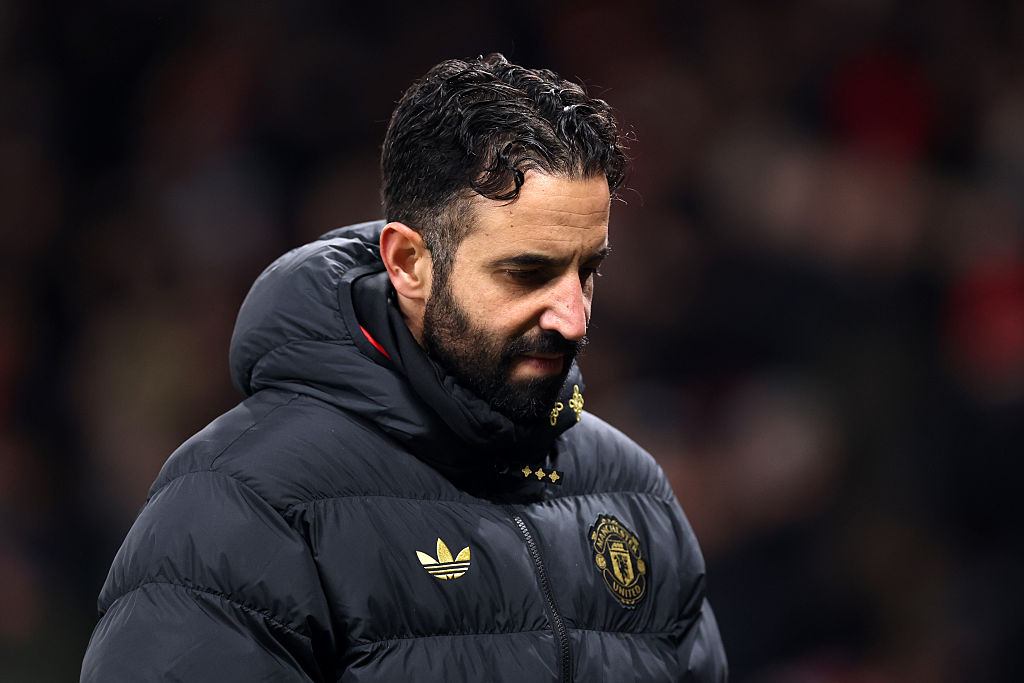
Ruben Amorim and Enzo Maresca are the latest victims of this shift. Amorim was relieved of his duties leading Manchester United on 5 January, while Maresca lost his Chelsea job on New Year’s Day. But, unlike most sackings of this kind, each dismissal had comparatively little to do with objective measures of performances. United sit sixth and Chelsea fifth in the Premier League table. This was actually about power, in the changing way that football clubs are run.
The emergence of the “game’s gone” world-view correlates with the declining influence of the football manager. Once, the prevailing idea was that one person could be the de-facto face and representative of a club. Great autocrat gaffers included Alex Ferguson at United, as Bill Shankly with Liverpool, and Arsène Wenger with Arsenal. (I can’t have been the only zillennial to have assumed, for a time in their youth, that Arsenal renamed themselves after Wenger?)

That world is all gone now. We don’t have football managers any more; we have “head coaches”. Many of the roles and responsibilities of a proper gaffer – over transfers, infrastructure, even playing style and formations – have been outsourced to a supporting cast with asinine-sounding titles: sporting director, technical director, head of football. Fans now have to keep their eye out for a new cast of characters – not Galácticos, academy starlets or scouted South American wonderkids, but the overzealous technocrats who run their clubs.
It was a hill Amorim in particular seemed fated to die on. “I came here to be the manager of Manchester United, not to be the coach,” said Amorim – who was officially announced as “head coach” of United in November 2024 – after Sunday’s tawdry 1-1 draw at Leeds. He was pushing back against Man United’s hierarchy – overseen by the Ineos founder and billionaire Jim Ratcliffe – and its resistance to his tactics and transfer demands. Maresca’s disagreements with the Chelsea top brass over transfers was also a big factor in his departure. Amorim’s comments on the weekend were, the Athletic writes, the “first time he turned his sharp tongue on the powers above”. It was also his last time.
There is a power struggle for the soul of football – and managers are not exempt from it. Football is going through another period of change – as it did when the game was first professionalised, or when the breakaway Premier League was launched in 1992, creating a multibillion-pound behemoth. There is a lot of money to be extracted, financially, from the game – mostly at the expense of the every day, working-class fans that give the game its essence – and the by-products are, largely, not pretty. The game’s earnest roots and average fans feel like a footnote in the priorities of the institutions that run world football. The decline of the “football manager”, of course, pales in comparison with other contemporary footballing ills: lower-league clubs disappearing, Super Leagues, soaring ticket prices and World Cups being hosted in nation states with lamentable human rights records and equally contemptible leaders. But these seemingly disparate conditions are symptoms of modern football’s maximalist excesses. Perhaps, as we once knew it, the game really is gone.
[Further reading: Leah Williamson on the rapid changes in women’s football]
Content from our partners



Related


Join the debate
Subscribe here to comment