
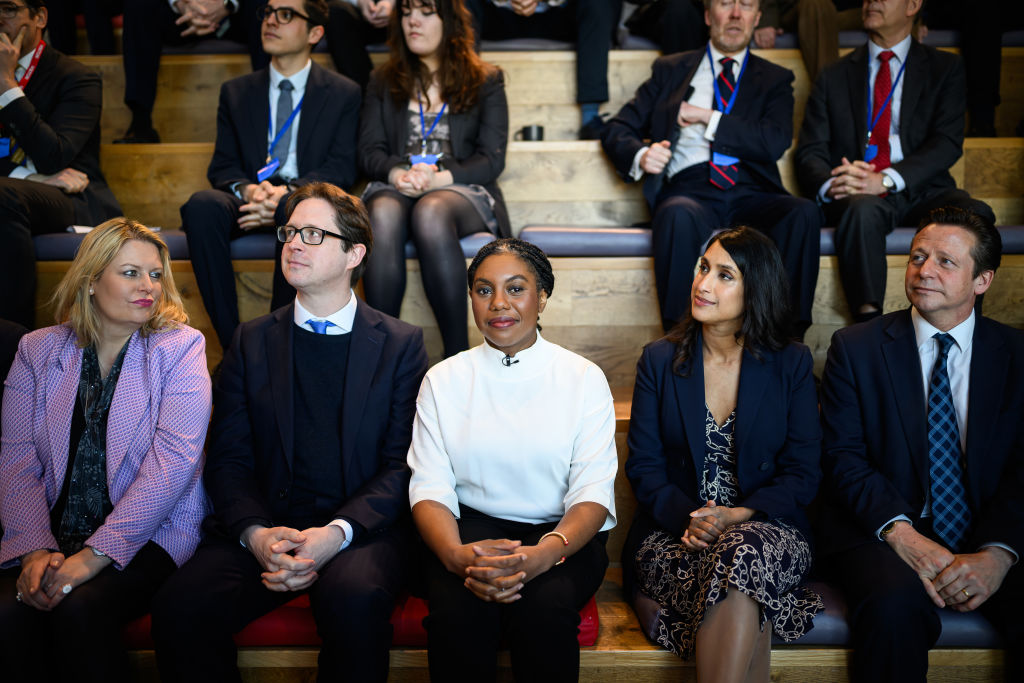
A reshuffle, as the former Tory chief whip Simon Hart recently told me, is “like having a jigsaw with the wrong number of pieces”. It’s never an easy nor a straightforward process, and should therefore be attempted only with extreme care.
The first question a reshuffle-curious party leader should ask is: what’s the point? There’s the obvious answer, which is to fill gaps left by a resignation – on personal grounds, or due to some kind of failure or misconduct. But whether it stops there or becomes an opportunity for a wider shakeup depends on the situation the party is facing and what message the leader is hoping to convey.
Despite previously insisting that her top team would be in place until the next election, Kemi Badenoch has long been expected to make tweaks this summer. Indeed, so has Keir Starmer. Usually opposition leaders wait until the prime minister has done their own reshuffling, so as to match frontbenchers to the ministers they’re meant to shadow. But today Badenoch decided to go first – whether out of impatience at Starmer’s hesitation, or because the decision of shadow health secretary Edward Argar to stand down after a health scare meant the status quo wasn’t an option.
What was an option was keeping the whole thing fairly low-key, centred primarily around replacing Argar, to maintain a sense of stability. There was also an option to go big, bringing in extra firepower and ruthlessly chopping and changing the Tory frontbench to demonstrate an acknowledgement of the party’s dire slide in the polls and a change of direction. With the changes she has made over the course of the day, Badenoch has tried to do a mixture of both, succeeding in neither.

The headline announcement is the return of James Cleverly to the shadow cabinet, covering the housing and local government brief where he’ll be up against Angela Rayner. This makes sense on a number of levels. Cleverly is one of the Tories’ top Commons and media performers – his absence on the morning broadcast rounds over the past eight months has been palpable. Whatever the state of play of the shadow leadership race to replace Badenoch, having someone with a bit of charisma will be a welcome addition to an opposition party struggling to make an impact (even if it does somewhat hamper the attempts to argue the party has moved on from its record from 14 years in government).
But what of the rest of the reshuffle? Cleverly’s predecessor, Kevin Hollinrake, has become party chairman, replacing Nigel Huddleston who is going to culture, leaving former shadow culture secretary Stuart Andrew free to step in Argar’s shoes at health. Other appointments include Richard Holden to shadow transport (the reshuffle dragged on all day because he was uncontactable on a trip to the Pentagon) and Julia Lopez to shadow science and technology (farewell Alan Mak). It’s all very neat, very contained – and a bit, well, bland.
Badenoch has repeatedly rejected internal pressure to invigorate the party by advancing Robert Jenrick – described by some as the “vigilante” shadow justice secretary with evident leadership ambitions – to the position of shadow chancellor. She has also refused to demote shadow foreign secretary Priti Patel, whose past record – as Boris Johnson’s home secretary and architect of the points-based immigration system that triggered the so‑called “Boris wave” – remains a frequent reminder on the Tory frontbench of what former supporters who have defected to Reform regard as the party’s greatest failure.
And she has resisted calls to bring in new blood by looking to the 2024 intake. This is the safe choice for a leader worried about upsetting her already disheartened troops by promoting newbies over long-serving foot-solders. But is it the right choice for a party facing the existential challenge embroiling the Conservatives? As one Tory MP quipped, “If 18 per cent in the polls isn’t the right time to be bold, when is?” Prior to today, you could ask any Conservative what they thought of the shadow cabinet and get a list of names considered below par. And yet, some of those names remain. “Weak” and “delusional” was the assessment of another party insider.
The most noteworthy changes for avid Westminster watchers are happening behind the scenes. Lee Rowley, Badenoch’s chief of staff and the driving force behind her leadership campaign, is “stepping back.” He has been integral to the entire Badenoch project, and CCHQ’s insistence that his departure was “always envisaged” only underscores how significant this shift is. He is being replaced by Henry Newman, once a protégé of Michael Gove (as, indeed, was Badenoch). This may fascinate those trying to divine the future from the entrails of the Tory party, but in terms of the party’s self-professed “mission of renewal,” it all feels a bit anticlimactic.
Part of the dismay may stem from a failure to manage expectations. Right-wing media outlets like GB News and Guido Fawkes have been speculating about a reshuffle for a week, with rumours of underperformers being ousted and fresh talent brought in. This isn’t just the product of journalists’ fevered imaginations: this morning, a party official briefed that the reshuffle would “reflect the next stage of the party’s policy renewal programme and underline the unity of the party under new leadership.” It’s hard to reconcile that level of ambition with the modest changes that have been announced.
leadership contenders under one tent (though there’s still no word on Tom Tugendhat). And yes, big thinker Neil O’Brien has been promoted from his shadow education brief to a broader role focused on policy renewal and development. But are these really the kinds of changes that should take 12 hours to iron out – even if one of the individuals involved had their phone switched off? Do they reflect the urgency of a party that, within a year, has gone from running the country to being jostled out of opposition space by an insurgent upstart? Do they suggest a leader who fully grasps her party’s perilous state – and has a clear plan to turn it around?
The Tory shadow ministers now settling into their new briefs will no doubt answer with a resounding “yes, yes, yes.” But for the rest of us, it feels like a few key pieces are still missing from this particular jigsaw.
[See also: Inside Robert Jenrick’s New Right revolution]
Content from our partners



Related

Join the debate
Subscribe here to comment