
A minor casualty of the decline of the great British pub is the decline of the great British pub name. I’m not talking about the faux-funny sniggerdom of the Cucumber & Aubergine or the Big Cock but of historic, unusual names with stories attached. London favourites include Notting Hill’s the Sun in Splendour (a nod to the royal House of York); Camden’s the Good Mixer, named after a cement mixer accidentally trapped in the pub during its construction in the Fifties; and, best of all, the Defector’s Weld in Shepherd’s Bush, an arch reference to the “Cambridge Five” spies who used to drink and bond there.
Revolting ambition
Speaking of defectors… There are two obvious categories in politics: the giant characters who feel themselves too big for their old parties, and swell till they bust the system apart, and the lesser woodland creatures. The big beasts included Joe Chamberlain, who managed to split both the Liberal and Unionist parties; Winston Churchill, who famously ratted and then “re-ratted”, Tory to Liberal and back again; Oswald Mosley, the brilliant socialist thinker who ended up a strutting fascist bore; and Roy Jenkins, launching the SDP as a deadly threat to Labour in the Eighties.
Most of the others, from Woodrow Wyatt to Chuka Umunna, and from Shaun Woodward to Luciana Berger, may have been students of the political wind and hoped to be politics-changing beasts. But they end up as answers only in pub quizzes – see above.
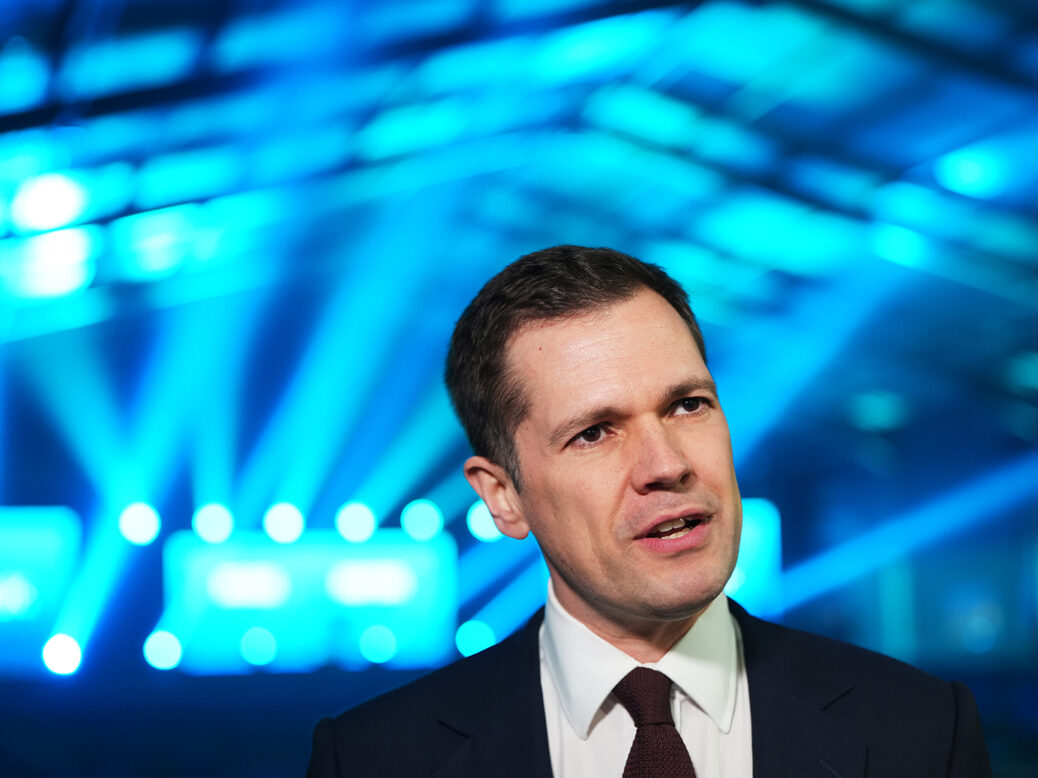
In which category will Robert Jenrick find himself? Chamberlain, Mosley, Churchill and Jenkins were all politicians who expected to lead parties and nations. Jenrick has the same wild light in his eye. But Reform is not a democracy, and in Nigel Farage it has a leader with the same scale of ambition and charisma of those big guys of old. I was watching his face as Jenrick gave his well-rehearsed defector’s speech – a mildly disdainful poker; and I heard him pointedly reminding the former Tory that he’d arrived in the room wearing “sackcloth and ashes”. And I thought: trouble ahead.

Commanding heights
If the wider world is slipping back to earlier times, into an age of emperors and princelings, then old-fashioned judgements come back into fashion too – like, how big are they? Lenin famously asked, “Who, whom?” – as in who will dominate whom? At summits such as Davos this week, it’s more about who looms over whom: the body language of male dominance and power is back. Both Donald Trump, at 1.9m, and Xi Jinping, at 1.8m, are big men. Keir Starmer and Emmanuel Macron, at 1.73m, are normal sized, but Germany’s Friedrich Merz is a 1.98m photo-dominating beanpole. You might take that as a sign that the Holy Roman Empire is coming back – but Merz has no nukes and little Kim Jong Un (just over 1.6m) has lots. Boys, it’s not all about size.
Polar bear necessity
What does Greenland need to save itself from Trump? The answer’s obvious: Philip Pullman’s armoured bears, please, at speed, with Lee Scoresby the good American, at their side. Time for a bit of crowdfunding?
Tell me about your motherboard
In all the discussions about the jobs being destroyed by AI, there’s one that’s been relatively overlooked. A couple of friends who had been spending a pile of money on therapists tell me they’ve now found AI chatbots are good at empathetic, detailed life advice. No armchairs in north London, no leather couches, no wall hangings, cut flowers or large fees… just tap your angst or dilemma in to ChatGPT or Claude and wait for a second or two.
Reheated rivalry
Until I opened my best Christmas present, the brilliantly annotated The Poems of Seamus Heaney (Faber), I hadn’t appreciated quite how important the New Statesman was in winning him a public. Our then literary editor, Karl Miller, was famous for his feuds with rivals. There are many stories, but I heard a good Millerism recently from the novelist Andrew O’Hagan. When he was a new boy in the London Review of Books office, then under Miller’s rule, O’Hagan heard the phone ring. He made to pick it up. Miller barked: “If it’s Frank Kermode – don’t answer it.”
Inter-missing in action
I’ve had a wonderful time with films and plays recently. All My Sons by Arthur Miller at the Wyndham may be the best play I’ve ever seen, and One Battle After Another is as good as everybody says. But when did the intermission vanish? Breaking halfway through wasn’t just about relief for the bladder, an overpriced gin and tonic or an ice cream; it was always the moment when we could talk about the first half and speculate on what was to come. Insisting on running long films and relatively long plays without a break may play to the vanity of the director, but it doesn’t make the evening any more enjoyable.
[Further reading: Trump’s threat to Greenland must be a wake-up call for Britain]
Content from our partners

Related
This article appears in the 21 Jan 2026 issue of the New Statesman, Europe is back
Join the debate
Subscribe here to comment