
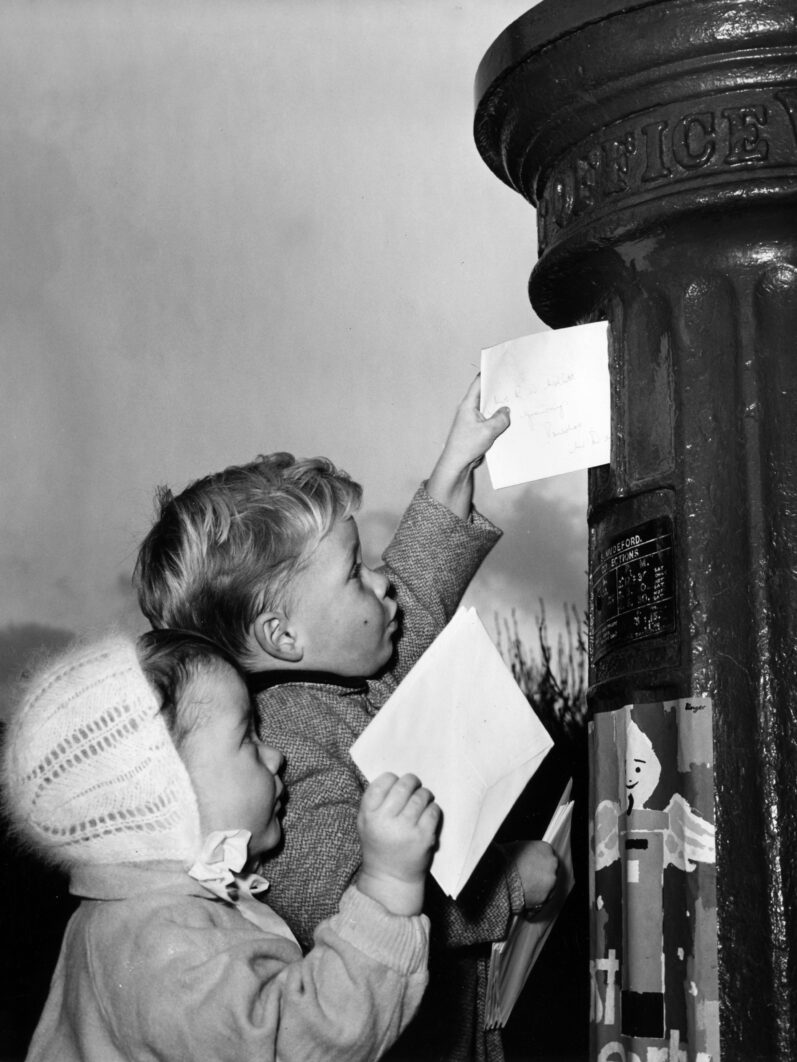
Your Editor’s Note (28 November) recalled my youthful membership of the Labour Party during Harold Wilson’s tenure when, like many others, I was inspired by Labour’s ambition for a new Britain. Wilson won the 1964 election with a majority of four seats, compared to Labour’s present luxury of about 160, and “calm down” might well have been his response to the current leadership’s struggles and a media made feverish by the Brexit years. As a witty orator, Wilson would have been scathing about the farce of Your Party. He might have compared this Budget to the 1967 devaluation crisis and found it straightforward, emphasising the patriotic imperatives of doubling defence spending and saving the NHS. Who wants to give way to Putin, or lie on a trolley in a hospital corridor for hours? Kemi Badenoch? Nigel Farage?
Unfortunately, Wilson’s governments didn’t reap the economic benefits of the North Sea oil and gas industry. He would have been concerned about the decline in North Sea tax receipts and the loss of about 1,000 jobs a month in the sector. We’ll see the political consequences of this in next May’s Scottish elections.
Peter Sheal, Fyvie, Aberdeenshire
Balancing act
Megan Kenyon’s interview with Jeremy Corbyn and Ailbhe Rea’s Cover Story (28 November) lead me to believe the UK seriously needs to get its act together. The alternative is an inept, corrupt far-right Reform government in 2029, followed by a Tory version of it in 2034. Can somebody – anybody – act with both compassion and vision? Answers on a ballot paper.
Kev McCready, Uffculme, Devon
Saints or sinners?
Ethan Croft writes about Blue Labour’s “calls for reindustrialisation and lower migration, inspired by Catholic social teaching” (Politics, 28 November). Whatever inspiration might mean, these calls are certainly not in line with that teaching: on migration, at least, Blue Labour’s policies are completely at odds with the teachings of the Church as expounded by popes Francis and Leo XIV. As the New Statesman pointed out earlier this year, Maurice Glasman was a guest at Donald Trump’s inauguration.
Ashley Beck, course lead, MA in Catholic social teaching, St Mary’s University

Divine intervention
Will Dunn describes a scandal on the River Cherwell (The Sketch, 28 November). The river has a long and illustrious history of hazardous material dumping, possibly the earliest example being recorded around 1440 in the illuminated manuscript “BL Harley 2278”. This recounts, with several pictures of the miscreants, how three virgins left the martyred body of St Fremund by the banks of the river, marking the spot with a willow branch. When they returned to the site the body was gone, but an angel appeared to the virgins out of a tree that had grown on the spot. It seems monitoring has declined in recent centuries, but one might expect divine agency to be more effective than an environmental agency.
David Dobson, professor of Earth materials, Department of Earth Sciences, University College London
Moved to tears
My husband and I enjoy reading the papers and the New Statesman in bed, with our dogs and cats on the duvet, on a Saturday morning. I read the magazine first while my husband catches up on business news. He was concerned to find me crying while reading Oleksandr Mykhed’s Diary (28 November). At the end of the article, when Mykhed unexpectedly turns his focus from the demise of his beloved dog to the burning alive of women and children by Russian rocket fire in Ternopil, we gasped.
Our beloved pets are safe and well cared for. Having to part with them, even through the natural ravages of age, is heartbreaking. How, then, does anyone process watching a child, parent, husband, or friend die –violently and in unimaginable pain? How are we all processing this happening to our fellow humans, in real time, just a short distance from the UK?
One little dog’s death, and Mykhed’s insight in associating this with the human tragedy playing out on his doorstep, will help us to ask those questions of ourselves, to forget the warmongering rhetoric and the vested interests of the few. Do we really have to have the same DNA as the mothers, fathers, children, friends and neighbours dying in this war to cry for them and to beg for the carnage to end?
Patricia Palmer, Wiltshire
But a number
In her letter last week, Amy Hammond queried whether these pages heard enough from young, working-class men (Correspondence, 28 November). Perhaps we should sign off with our age rather than our district – that would be interesting!
Sally Litherland, 75
The politics of faith
Dan Hitchens is correct to remind us that “a traditional faith does not automatically give rise to a rigid and authoritarian culture” (The New Society, 28 November). To the impressive list he provides of “social and political experiments” to which the 20th-century Roman Catholic Church gave birth should be added the genesis of liberation theology, led by Latin American theologians, such as Gustavo Gutiérrez, following the liberalising impetus afforded by the Second Vatican Council in 1963. Churches have long incubated a tension between legitimising established political orders and channelling a critique of their authoritarian and oppressive practices.
Paul Thomson, Mobberley, Cheshire
Not on the same page
It appears that Terry Eagleton’s critique of Iris Murdoch (The New Society, 21 November) remains “garbled” and “ill-informed”. He cannot resist a classist sneer at an author whose parentage, unlike her husband’s, was in fact anything but haute bourgeois. Murdoch’s father was not a “CEO” who sent her to public school but a low-grade civil servant whose daughter relied on a scholarship for her education. It is hard to describe a social liberal who protested against Section 28 as “ferociously right wing”, but Murdoch’s views on selective education and Ireland can be attributed to her upbringing as the daughter of lower-middle-class Protestant Irish immigrants, not to any ruling-class reactionism. Eagleton suggests that the “Murdoch industry” has produced too many books about the author. Perhaps he should read some of them.
Tom Allen, London, NW11
Terry Eagleton’s claim that “poetry is an art, not a record of one’s emotional life” is a simplistic generalisation. Of course, poetry, being a discipline that stretches back millennia and across continents, can be either or both. As contrary evidence, I refer you to Autumn Journal, one of the finest literary works of last century, in which Louis MacNeice works out his emotion through art, and tries on different emotional hats in a scientific method towards his own thinking and feeling.
Fionnbharr Rodgers, Rostrevor, County Down
Boomers on the brink
Rachel Cunliffe is right, the term “young seniors” could catch on (Future Perfect, 28 November). There are, however, differences of perception in that she and her informant are thinking of “50-somethings” in or out of the workforce. I would use the term to describe the army of “active citizens”, who staff the charity shops, run lunch clubs for elderly people, help in school classrooms, lead “health walks”, serve on committees, to say nothing of leafleting and door knocking at elections. Boomers are not universally wealthy, self-interested and on the brink of, or already supporting, Reform. Many of us “young seniors” play a part in maintaining the workforce by caring for grandchildren.
Les Bright, Exeter
The courage of candour
I write in praise of your regular columnists Nicholas Lezard (Down and Out) and Pippa Bailey (Deleted Scenes), who have both bravely shared the ups and downs of their lives this past year in unsparing detail. Their writing provides a perfect counter to the rather solemn world of national politics.
In recent months they have a rival in the form of Tom McTague’s Editor’s Note. His personal anecdotes and stories have made page 3 something to look forward to each week. I can even forgive him for looking like Prince Harry in his byline portrait…
Terry Fairhall, Chessington, Surrey
It doesn’t surprise me to learn that Pippa Bailey feels she is at once incapable of being “normal” and perfectly capable of resilience (Deleted Scenes, 28 November). Her powerfully honest columns perfectly encapsulate this tension, and make for enthralling reading. I hope she keeps ploughing this furrow because we remain a profoundly grief-blind society. We need to get better at this. Her work points the way.
Freddie Baveystock, teacher of English literature, Harris Westminster Sixth Form
Write to letters@newstatesman.co.uk
We reserve the right to edit letters
[Further reading: Donald Trump is making peace in Ukraine harder]
Content from our partners

Related
This article appears in the 04 Dec 2025 issue of the New Statesman, Books of the Year
Join the debate
Subscribe here to comment