
We now have the text of the new US-Russian “peace plan” for Ukraine and the bewildering array of concessions, vague assurances, and strange provisions for American profit-making it involves.
Twenty-four hours after reports of its existence first surfaced, a US military delegation presented the 28-point proposal to Ukrainian president Volodymyr Zelensky in Kyiv on 20 November along with an “aggressive timeline” for him to agree to it. He has reportedly been told that Washington expects him to sign the agreement before Thanksgiving, which is next Thursday (27 November). If he does not, the US has threatened to cut off weapons supplies and stop sharing intelligence.
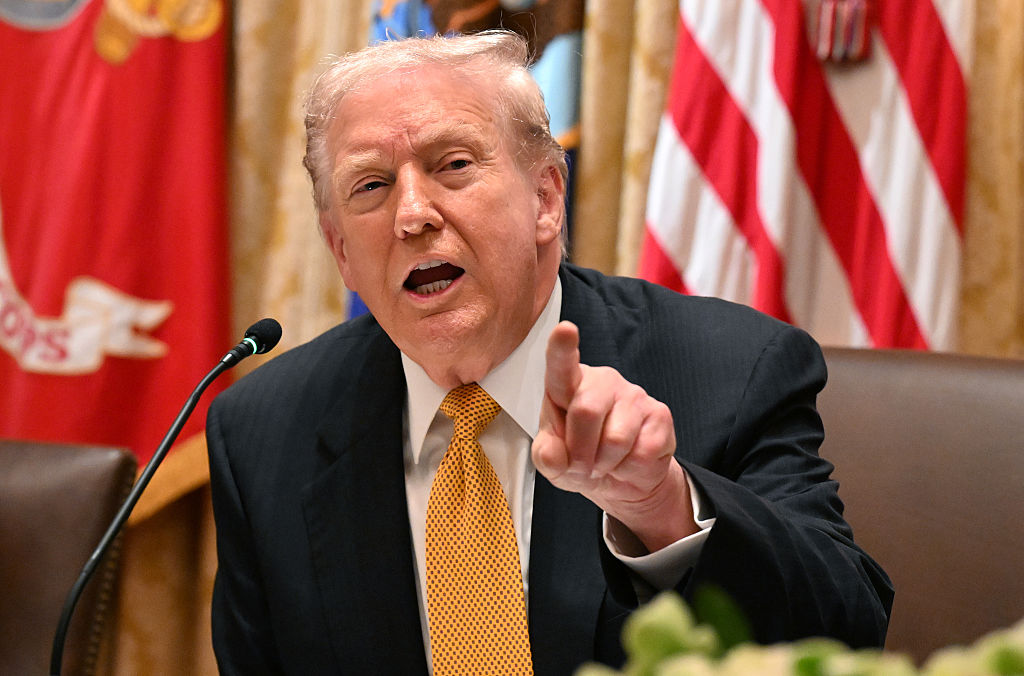
The new plan appears to have been negotiated primarily by Steve Witkoff (Donald Trump’s longtime golfing partner and fellow property developer turned all-purpose peace envoy) and Kirill Dmitriev (the Harvard and Stanford-educated head of Russia’s direct investment fund who has assiduously courted Trump since his return to power). The resulting document reads, as one would expect, as though it was written without the input of either country’s seasoned diplomats. While Trump is said to have signed off on the proposal, it is unclear that Vladimir Putin will do the same. US officials have since described it as a “working document” that could still change, notwithstanding the pressure on Zelensky to sign it right away.
First, it is worth noting the concessions the new plan envisages from the Russian side’s previous demands. There would only be de facto, not de jure international recognition of the Ukrainian territory Russia currently controls, for instance, and Moscow would abandon its claim to the sizeable proportion of Kherson and Zaporizhzhia it does not yet hold (despite the fact that Putin claims to have annexed both regions, along with Donetsk and Luhansk, declaring them formally part of the Russian federation in 2022). The Ukrainian armed forces would be limited to 600,000 personnel, which although a substantial reduction on its current size, at around 900,000, and an unacceptable restriction on a sovereign nation – as the plan declares Ukraine to be in its first point – is still significantly larger than its pre-war strength, and many times higher than Russia’s previous red line.

The plan also designates $100 billion in frozen Russian assets to be used for “US-led efforts to rebuild and invest in Ukraine,” from which the US expects to receive “50 per cent of the profits”. It seems highly unlikely that Putin will sign off this part of the plan when he has long insisted those assets belong to Russia and Russia alone. Similarly, he will likely push back against the notion that international sanctions will be lifted “in stages and on a case-by-case basis,” which could well be a very long process, and will depend on the agreement of other powers, such as the EU and the UK, beyond the US.
Ukraine would be expected to surrender the roughly 15 per cent of Donetsk it still holds to Russia, in keeping with the Kremlin’s previous demands, but that territory would be considered a “neutral demilitarised buffer zone,” which Russian forces could not enter. It is unclear how this could be enforced, given that the territory would be “internationally recognised” as belonging to Russia and Nato military personnel would not be permitted in Ukraine, thwarting the idea that a multinational “coalition of the willing” might deploy a post-war monitoring and reassurance force.
The concessions required from Kyiv are, perhaps unsurprisingly, much greater than those stipulated for Moscow. Crimea, Luhansk and Donetsk would be recognised as “de facto Russian”, for example, along with the parts of Kherson and Zaporizhzhia that Russia currently occupies. Ukraine would have to amend its constitution to vow never to join Nato, and abandon any hope that Nato troops might be stationed in Ukraine. In return, it would receive substantial help with reconstruction (presumably minus the 50 per cent cut for the US from any profitable ventures), could still press ahead with its application to join the EU and would receive “reliable security guarantees.”
This last clause is, by far, the most important of the entire proposal for Ukraine and will determine whether any part of this plan has any realistic prospect of success. But it amounts to just six ambiguous words. In full, point five reads: “Ukraine will receive reliable security guarantees.” The nature and mechanism of those security guarantees has been at the crux of Zelensky’s pleas to the US since the start of this war, and precipitated the blow-up between Trump and the Ukrainian president in the Oval Office in February, as he attempted to make clear that without a credible deterrent in place, Ukraine would be permanently vulnerable to another Russian attack.
There is another reference to a “US guarantee” in point ten, which also states that the US will “receive compensation for the guarantee.” From whom and for what is not clear. If Ukraine invades Russia, “it will lose the guarantee.” (The text does not specify if this includes the “de facto Russian territory” that is currently part of Ukraine.) If Russia invades Ukraine, the plan says, “in addition to a decisive coordinated military response, all global sanctions will be reinstated, recognition of the new territory and all other benefits of this deal will be revoked.”
But there is no indication of who would be involved in mounting this “coordinated military response” – Europe was pointedly excluded from the negotiations over this plan, as it is from the “joint American-Russian working group on security issues” that will subsequently be established. Both Trump and his predecessor, Joe Biden, have previously ruled out sending American troops to defend Ukraine, so it is far from clear what that response would comprise.
Nobody who remembers the Budapest Memorandum Russia signed in 1994, along with the US and UK, vowing to respect Ukraine’s sovereignty and its existing borders – or indeed the UN Charter, which prohibits the use of force other than in self-defence or when expressly authorised by the UN Security Council – will be reassured by the clause requiring Moscow to sign a “non aggression agreement” between Russia, Ukraine and Europe. It is “expected that Russia will not invade neighbouring countries,” the document says, which is not the same as specifying that Russia “will not” invade again. Point 15, which states that “Russia will enshrine in law its policy of non-aggression towards Europe and Ukraine,” would be laughable if the situation were not so grave.
But fear not, this agreement will be “legally binding,” which should guarantee its faithful implementation by Putin, a leader who famously respects and follows all laws. It will also be “monitored and guaranteed by the Peace Council, headed by President Donald J. Trump,” in a clause that appears to have been cut and pasted from the Israel-Hamas peace deal. (No, there is no hint of who else will be part of that council, and whether there is another role for Tony Blair.) Sanctions, we are told, will be imposed for any violations. So, Ukraine and its European allies have nothing to fear. Not for nothing has the military strategist Lawrence Freedman described the document as a “dog’s breakfast”.
Alas, the implications of this comically inept peace proposal are altogether too serious. Zelensky has, once again, been placed in an impossible position by Ukraine’s most important security partner. This time – and surely not by coincidence – Trump is attempting to strong-arm Zelensky at a moment of profound vulnerability for the Ukrainian leader as he confronts an escalating political crisis over a corruption scandal that has already brought down personal friends and political allies. He has now been given one week to agree to the terms of this agreement – or else.
Addressing the nation on 21 November, Zelensky warned that Ukraine now faced “one of the hardest moments in our history” as the country is forced to choose between “the loss of our dignity or the risk of losing a key partner.” He had already made his choice, he said, when he took his oath as president and vowed to defend Ukraine’s sovereignty and independence. “Every day, I remain true to every word of it,” Zelensky said. “And I will never betray it.”
[Further reading: Tinkering with ECHR definitions will not help the government]
Content from our partners



Related
Join the debate
Subscribe here to comment