
Foreign policy crises present a dilemma for opposition parties. At moments when national security is at stake, there is an opportunity to put aside party differences and back the government, showing a united front to the world and indicating a level of mature statesmanship. Alternatively, there is also an opportunity to point-score, striking while the government is distracted.
What they choose depends hugely on the crisis in question, and how the party’s response might be perceived. Ed Miliband’s pivotal decision not to back David Cameron on UK military action in Syria in 2013 was primarily driven by fierce opposition to further involvement in the Middle East within a Labour Party still scarred from the Iraq War – but it’s hard to imagine the calculation that losing a parliamentary vote of this nature would damage the Prime Minister’s authority didn’t feature at all.
When it came to Britain’s response to Russia’s illegal invasion of Ukraine in 2022, Keir Starmer did not hesitate in backing Boris Johnson in full. Whatever other criticisms Starmer threw at Johnson (and, later, Rishi Sunak), Britain’s position on Ukraine was not one of them. Perhaps he knew that a different Labour leader might have taken a different tack, and sought to distance his party as far as possible from that perception.
What then to make of the reactions from the Conservatives – and, indeed, from Reform – to the government’s handling of the current geopolitical turmoil?

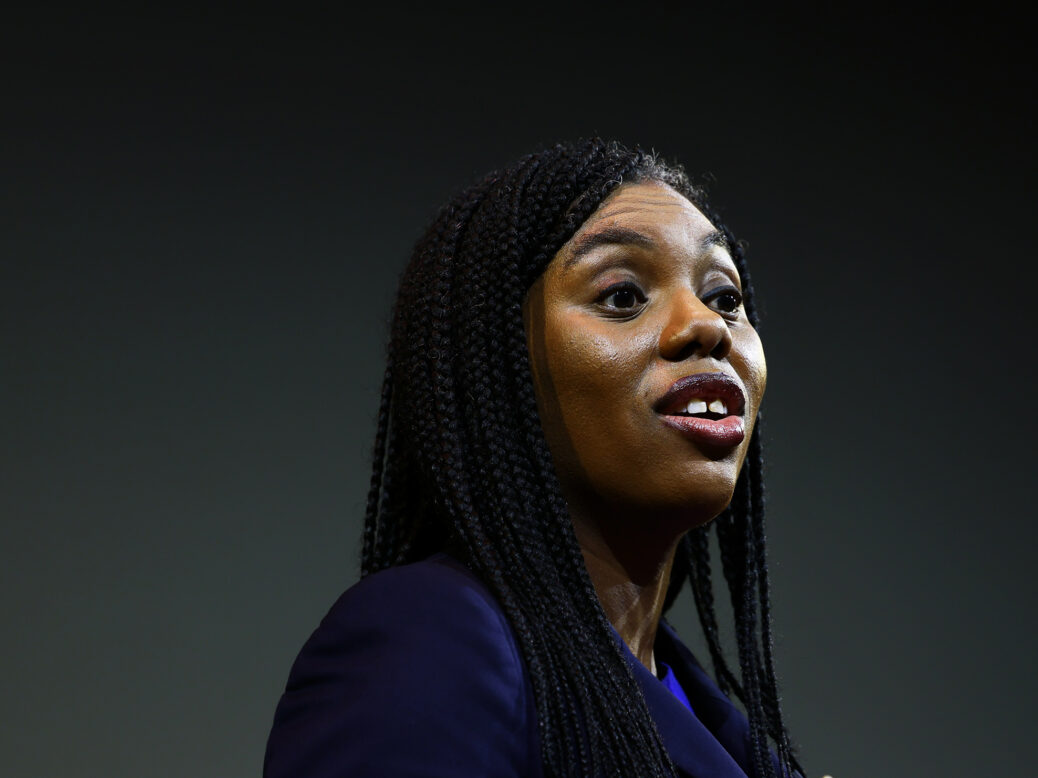
Both Kemi Badenoch and Nigel Farage have, to different degrees, chosen to attack Labour’s response to the Israeli and American action in Iran. Badenoch in particular has thrown herself into the discourse. First, before the missiles from Donald Trump’s heralded B-2 bombers had hit the Iranian nuclear sites, she published an op-ed on Saturday night not only backing Israel’s military assaults whole-heartedly, arguing “Iran is a direct threat to Britain”, but criticising the UK government for being less enthusiastic about it. Attacking what she called a “weak and morally deficient Labour government”, she wrote that “Keir Starmer and David Lammy vacillate and equivocate, and Lord Hermer imposes his own interpretation of international law”. She continued: “We are no longer trusted and are viewed as unreliable. Lammy’s confused antics diminish us on the global stage.”
Badenoch could not have known about Operation Midnight Hammer at the time of writing. She could not have known that the US had already chosen to strike Iran and to bypass Britain entirely in doing so, launching its missiles not from the shared UK-US Diego Garcia airbase on the Chagos Islands, but from Missouri, giving Downing Street only a cursory heads-up. But it’s a theme she returned to on Monday, telling veteran Conservative historian Charles Moore at an event at Policy Exchange that she suspected the UK was being “cut out” of foreign intelligence briefings because our allies do not trust the Labour government. She offered no evidence for her claim, but had previously argued the UK had been “left out of the planning of the US strikes on Iran”, implying the lack of warning was down to Britain’s lukewarm position.
Nigel Farage struck a similar tone at his own event on Monday, suggesting Britain has alienated itself from the White House. “I’m not sure America is going to need our help with Iran. I think we’ve hindered them already,” he argued, speculating that Diego Garcia would have made more sense to launch an attack had the UK been onboard.
These positions make a degree of sense, simply because the government’s response to Operation Midnight Hammer is so garbled. As George wrote yesterday, the Prime Minister finds himself stranded, unable to either support or condemn US action – and, as Megan Kenyon has pointed out, he is paralysed by the left of his party and risks splitting his entire political movement. In the Commons on Monday night, David Lammy was in a similar bind, answering justifiable questions from MPs about the UK’s position and whether the strikes were legal with the stonewalling statement: “We were not involved. This is not our legal context.” The vibe from Starmer and his team seems to be that they hope the whole geopolitical quagmire will simply de-escalate and go away. Hardly a vote of confidence for British leadership.
But Badenoch and Farage face their own pitfalls. For a start, the British people have little appetite for UK engagement in the Middle East (Ben Walker has analysed the public’s scepticism for aiding Israel in its fight against Iran), and have no love for Trump either. Support among Brits for the US president took a sharp fall this year after his jaw-dropping meeting with Volodymyr Zelensky. It nose-dived even among Reform voters – by far the group most supportive of Trump in general. There is also polling evidence suggesting Nigel Farage’s favourability ratings fell due to the unpopularity of his closeness with Trump. (The New Statesman’s Freddie Hayward asked the Reform leader yesterday if his stance on UK support for Operation Midnight Hammer had anything to do with his friendship with Trump. Farage did not look amused.) Coming down fiercely on the side of Trump, seemingly in opposition to the UK government, makes both the Tory and Reform leaders hostages to fortune if the ceasefire agreed last night ends up disintegrating and the situation escalates further. Who knows what the US president might do next?
More broadly, there are dangers to playing politics on security matters – even if the government position is a mess. It risks making both the Conservatives and Reform look unpatriotic, too caught up in their own games of point-scoring at a time of crisis for grown-up politics in the national interest.
Finally, there’s the blunt reality that it seems to matter not one jot whether the UK supports the US or not – Trump is not looking to Britain for guidance, advice or permission. All the same, it’s hard to imagine how telling the world our government is weak, unreliable and not to be trusted helps the UK’s standing on the global stage – or the reputation of the opposition leader.
This piece first appeared in the Morning Call newsletter; receive it every morning by subscribing on Substack here
[See also: Can the ceasefire hold?]
Content from our partners



Related

Join the debate
Subscribe here to comment