
The other week a friend said to me that every time he turned the radio on he heard my voice. I told him it could be the first symptom of madness – he might need to see a shrink. Or an exorcist. But when he listed all the subjects I’d been “banging on about” across several stations and frequencies, I had to admit I’d appeared on the airwaves quite a lot recently and promised him I’d stay away from the microphone for a while. So he will have felt betrayed if he’d tuned in to the World at One the next day to find me at it again. I don’t see myself as a quote-for-hire, and anyway this was for a news programme, so one of the basic principles of hiring (ie, payment) was never going to be fulfilled. But I’d been asked to read a poem, and the topic of conversation was trees, so I couldn’t really say no.
Several years ago, the opposite side of the valley from my house was planted with ash saplings. It was a Herculean task for the three or four figures – volunteers, probably – who I watched digging hundreds of holes by hand, lugging the young trees up the steep hillside in the drizzle, then planting them and encasing the bark in deer-proof sleeves. I was looking forward to a time in the future when a small forest would form part of the view from my study. But 18 months later the trees were diagnosed with Hymenoscyphus fraxineus, or ash dieback. It was among the earliest outbreaks in the country. In a peculiar, arboreal rehearsal for the Covid-19 pandemic, warning notices appeared and the area was cordoned off. Soon afterwards every sapling was uprooted and burned.
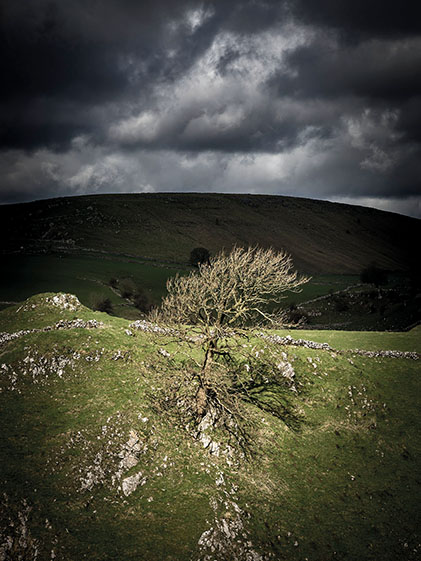
The ash is a very recognisable tree, even among people who don’t know their elder from their alder. The pointed, oval leaves grow in pairs of five or six along the stems (pinnate) with a single leaf at the end, like an artistic flourish. The winged seeds or “keys” hang in thick clusters. The open and airy foliage creates dappled light beneath the canopy, and when the wind flexes the boughs, the whole tree looks like a swirling mass of sprats in a Jacques Cousteau film. Those specimens that have succumbed to the blight have become ghost trees, blanched skeletal giants among the greenness of summer or the drabness of winter.
Ash trees are as much a part of our history as they are of our landscape. I’ve heard it said that with the right kind of coppicing an ash can live for more than 1,000 years, so it’s conceivable that there are living trees in the UK pre-dating the Norman conquest. What kind of arrow did Harold get in the eye, I wonder, because the ash is both a tree of war and of peace. We fashioned spears from it, just as we have made tables and snooker cues. When a type of tree has been with us for so long, it’s inevitable that it will have entered our mythology and folklore, too, as a cure for warts, a remedy for ruptures, even a protection against snakes. It is said that the year Charles I was beheaded not one ash tree in the country produced any keys, and from that time such fruitlessness has been seen as a dark portent for royalty. I wonder if Charles III, with his keen interest in horticulture, checks the ash trees in the royal parks each spring, loosening his collar as he makes his rounds.

The good news – and the news I’m asked to comment on – is that the ash is making a remarkable comeback, apparently, adapting genetically to combat the fungal infection, and without any human intervention. It’s a story about the resilience and ingenuity of nature, but I feel the urge to warn against complacency. In a warming world there will be more bugs and diseases for our native trees to deal with, and not all species will have the time, circumstances or capabilities to survive.
Moving towards the philosophical, I also say that we need to stop thinking of the natural world as a material resource for our lives and think of it more as a resource for our imaginations, stimulating and challenging our creativity, leading us to brighter and bigger thoughts. Then I probably satirise my own argument by saying that we wouldn’t have been able to go to the moon if the apocryphal apple hadn’t landed on Newton’s head. I picture my friend rolling his eyes and reaching for the dial.
[See also: Jenny Saville’s human landscapes]
Content from our partners



Related

This article appears in the 09 Jul 2025 issue of the New Statesman, The Harbinger
Join the debate
Subscribe here to comment