
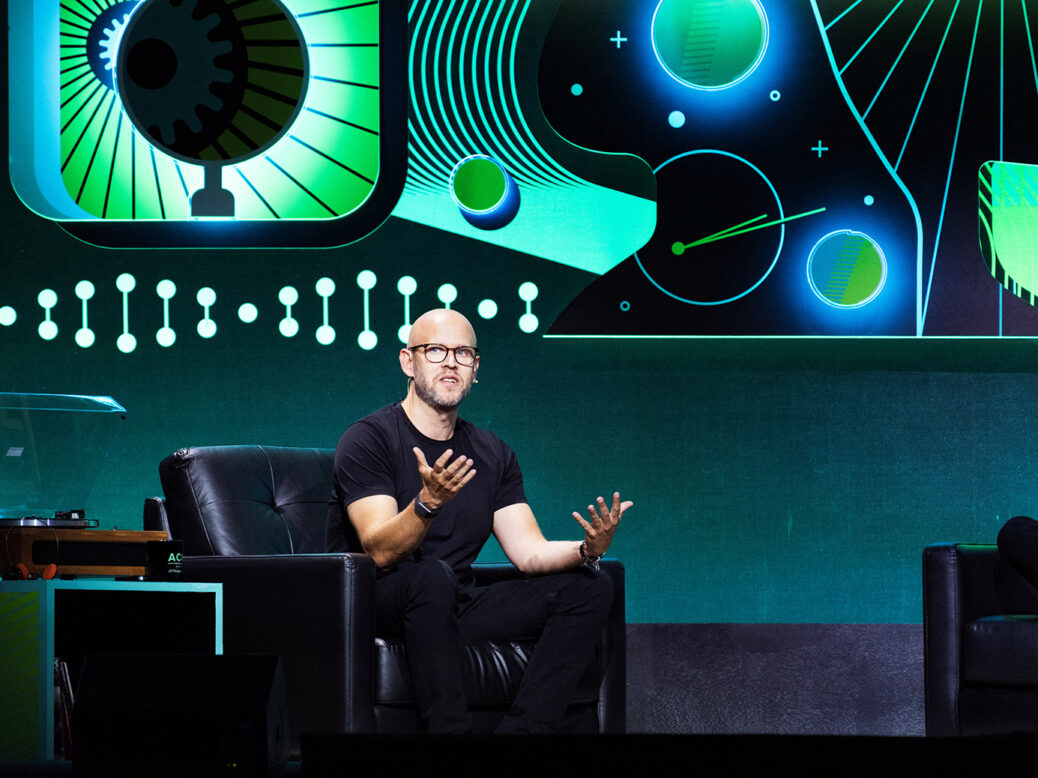
Spotify has always felt hollow to me. It gives you the world’s music in one place, yet somehow strips the life out of it. Daniel Ek, the man who sold this new way of listening, is stepping down as CEO. To many, his company looks like one of the great success stories of the digital age. To me, it has always looked like abundance without depth – efficient, addictive and strangely soulless.
In the years when I was first discovering music, it carried a kind of weight that is hard to explain now. You saved up to buy a record or CD and when you had it, you lived with it. The cover art mattered as much as the sound, spread across your knees while you listened, the images and lyrics poured over until they felt like secrets. You played an album again and again, examining the words and what they meant, letting them shape how you saw yourself and the world. You would put a needle on a record and the idea of jumping a track was unthinkable. You listened to the whole thing because that was the point. Now tracks are often skipped half way through, impatience setting in before the end. It mirrors so much of today’s fast content: the impulse to keep moving, to swipe past, never to sit still. Spotify does not just enable that habit, it perpetuates it.
Spotify is often called a success: more than 600 million users worldwide, billions in revenue, a billionaire founder. The figures sound impressive, yet they only show how far music, and so much of what we consume digitally, is reduced to data: proof of reach rather than proof of meaning. A stream still pays less than half a penny, which says less about artists’ worth than about the culture Spotify created.
Spotify has made itself indispensable, especially for the generation that grew up with it. My teenage daughter and her friends don’t talk about what it pays artists or what it does to music. For them, it is simply how you listen. Playlists become personal diaries, built up over years, and losing them would feel like losing part of themselves. Spotify has tied them in for life. What feels disposable to me is permanent for them, and that contrast may be the clearest sign of what Ek achieved.

As for what happens now, Ek is not really gone. He has just moved to a higher chair, while two of his deputies step up. From the outside it doesn’t look like much will change. There has been criticism in recent years, with artists pulling music in protest and complaints about how Spotify treats them, but the service itself seems as entrenched as ever. I doubt my daughter or her friends will notice the difference.
Ek’s real achievement is building a platform that no longer needs him. It carries on with the same abundance, and the same emptiness. That may be the truest measure of his legacy. Spotify is so ingrained that even its flaws feel permanent. The abundance remains, but the heart is still missing.
[Further reading: Spotify is not as cheap as it seems]
Content from our partners



Related



Join the debate
Subscribe here to comment