
Over the last two decades, Andrea Wulf has carved for herself a fascinating niche: the entanglement of Enlightenment natural science with philosophy, politics and the arts. She has written about the American Founding Fathers as horticulturalists, the international collaboration to measure the transit of Venus, and the Romantic circles of Jena, Germany. Her prize-winning life of Alexander von Humboldt is now joined by a life of his sometime mentor, the once celebrated 18th-century traveller and naturalist George Forster. (Wulf uses, as Forster himself generally did, the English rather than German spelling of his given name, Georg.)
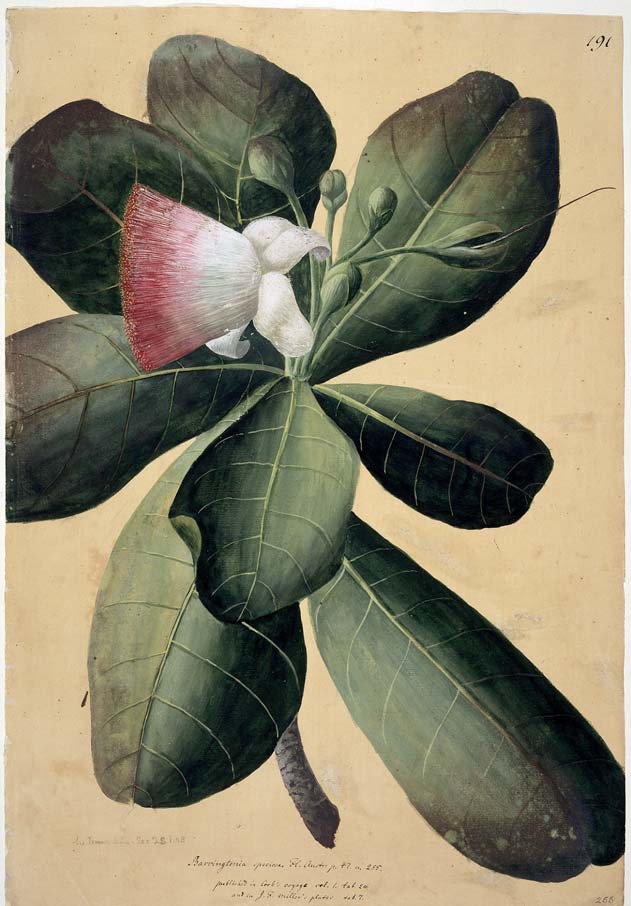
Forster was born in 1754, in a damp parsonage near Gdańsk, the eldest of seven children of a clever, poor and irascible Lutheran pastor. A sickly baby “fed bread and diluted milk”, he was scarred for life by an early bout of smallpox. At the improbable age of ten, he was engaged as his father Reinhold’s botanical assistant on an eventful and eye-opening 3,800-mile expedition across the Russian empire. Two years later, he was apprenticed to a merchant in London. At 17 he joined his father on another long expedition. Joseph Banks had pulled out of Captain Cook’s second attempt to circumnavigate the globe and another naturalist was needed at short notice. Reinhold was hired, and George again went with him, as his assistant and the ship’s draughtsman.
The journeys of HMS Resolution lasted three years and covered 75,000 miles in every kind of climate: Antarctica, Tahiti, Tonga, Easter Island and New Caledonia. The journey confirmed the younger Forster in his convictions about the basic equality that underlay the evident diversity of human beings. The book he published in 1777, A Voyage Round the World, at the age of 22 gave him a celebrity on par with Captain Cook’s own. By comparison, a reviewer wrote, Cook’s own narrative was “a mere sailor’s journal”.
Despite Wulf’s dogged attempts to paint the rest of Forster’s life as being just as full and exciting as his voyage around the world, it is hard to avoid the sense that the years after his return to Europe were a long wilderness in the least stimulating corners of 18th-century academia. He married, unwisely, the volatile Therese Heyne, described by a common friend as “a strange mixture of nobility, greatness of the soul and a thousand follies, to which vanity and sentimental infatuation lead her”. One of these follies was her insistence on encouraging the advances of the absurd amateur poet and librarian “Willie” Meyer even after she had agreed to marry Forster. “Blind love, foolish, born out of whim… has no place here,” he earnestly wrote to her of his ideal of marriage. Giddy on the cod Romantic effusions of her admirers, she found her husband cold and baffling.

Exile to another university post in Vilnius brought Forster no comfort. His university flat was damp, the botanical garden “barely big enough to plant a few cabbages”. His time there was, nevertheless, fertile. It took philologists and historians many years to catch up with his hypothesis that the languages and religions of Polynesia had spread eastward in a series of migrations from a point of origin somewhere in the Malay-speaking islands of South-East Asia.
When a second Russian expedition to the Far East was cancelled, he went, instead, to Mainz in western Germany, where he took up a position as university librarian. Now in his mid-thirties, he befriended a man who had many of his own virtues: Alexander von Humboldt. Forster travelled with the younger man along the Rhine, producing a book about the people and communities who lived along it.
By then, there was another one of Therese’s lovers to accommodate (or endure). But these were the years following the storming of the Bastille, and George came out, riskily, as a public and unembarrassed champion of the revolution. He was rendered stateless when Mainz fell to the Prussians. He was able to see Therese and his daughters for one last meeting before he retreated to a freezing garret in Paris, where he died in 1794 aged only 39.
A short life, then, but more than eventful enough to merit a full biography – this is the first since a pair were published in English in the 1970s. Wulf’s methods are largely archival, but enlivened by the willingness to retrace her subject’s journeys without her turning the book into the story of her travels rather than Forster’s. And although the endnotes occupy more than 100 dense pages, she strives to keep the main text uncluttered and pacy. Wulf is confident enough that the facts of such a life speak for themselves to avoid any tedious traffic in revisionary argument. Biography, as envisioned here, is reminder, not novelty. She wants to remind us that Forster matters.
Wulf’s case for Forster’s significance begins with the arresting open scene, where we meet the 19-year-old George in August 1774 on a beach in the Pacific island of Vanuatu, “green, cushioned, lush and fecund, dripping with water and life”. Only a few days before that, he has been breaking bread with the islanders: “They had shared meals of roasted yams and delicious coconut pies with a crust of baked bananas.” Young George is convinced they are all “members of one great family”.
But there is a serpent in Eden: a marine has just shot an islander who stepped over an arbitrary line that Captain Cook had drawn in the sand to mark out the area where the crew of the Resolution would land their dinghies. Forster seems to be alone among the Europeans in thinking the marine acted wrongly. After all, as Wulf writes, “The islander had simply refused to be controlled by a stranger on his own island.”
The more we learn about Forster, the easier it is to accept him at Wulf’s estimation, as “a liberal thinker far ahead of his time”. He wrote of human equality and dignity, even of human rights, when these ideas were not common currency. Unlike other early champions of these ideals, he did not make exceptions for people of other races. Immanuel Kant, often regarded as the intellectual ancestor of our modern ideas of equality, thought the races of the world (“whites, the yellow Indians, the Negroes, and the copper-coloured red Americans”) were arranged in a hierarchy with, naturally, the whites at the top. Why, Forster wondered, should a man, who had seen the inadequacies of such classifications, accept the arrogant claims of a philosopher who generalised about the human race without once having left the small town of Königsberg? Forster’s polemical attack on Kant was, more than anything else, an attack on Kant’s methods, his “armchair philosophy”.
Forster’s own method, by contrast, was travel. It gave him his beliefs about despotism, about the enormous diversity of human cultures, and revolution. His boundless curiosity was equally directed at the exotic and the familiar. He admired many of the customs and virtues of individual Pacific Islanders he met, without lapsing into Rousseau’s generalities about the “noble savage”. The islanders were, no more and no less than the people who lived along the Volga or the Rhine, individuals.
On his travels, he could be disgusted by the practices of indigenous people when they offended his conscience, even when his shipmates were inclined to be lenient – as when the Māori offered (clearly unwilling) women as “gifts” to European sailors. But Europeans could be disgusting too. In Vilnius, he was appalled at the sight of countesses picking lice from their heads in public and knights blowing their noses into their fingers. And whatever one said about the Māori men’s treatment of women, what the European sailors did was no better; often, rather worse.
Wulf’s thesis is not, of course, that travel itself broadens the mind; after all, it appears to have done very little for some of his fellow travellers beyond confirming their conviction in their own superiority. His crotchety father saw the same things, but restricted himself to terse, factual journals that needed the imagination and generosity of his son to turn them into a bestseller of both travel writing and moral argument. In Forster, one sees the Enlightenment arguing with itself: its empiricism turned against its own racism, its universalism turned against its tendency to restrict the scope of its own ideals.
In working through these arguments as they play out in the life of one man, Wulf makes a compelling case for that lately much-maligned form, the single-life biography. Reinhold’s complaints about goats urinating through walls, Therese’s letters about her domestic life, George’s sheepish admissions about having spent more than he could afford on “black silk breeches and matching stockings” – such details would not have survived the pressures of the group account on which a less wise publisher may have insisted. Wulf reminds us that one life, examined with the right attention, can contain its own world.
Nikhil Krishnan is the author of A Terribly Serious Adventure: Philosophy at Oxford 1900-60 (Profile Books)
The Traveller: The Revolutionary Life of George Forster and His Search for Humanity
Andrea Wulf
Allen Lane, 512pp, £30
Purchasing a book may earn the NS a commission from Bookshop.org, who support independent bookshops
[Further reading: Thank God for George Michael]
Content from our partners


Related


Join the debate
Subscribe here to comment