
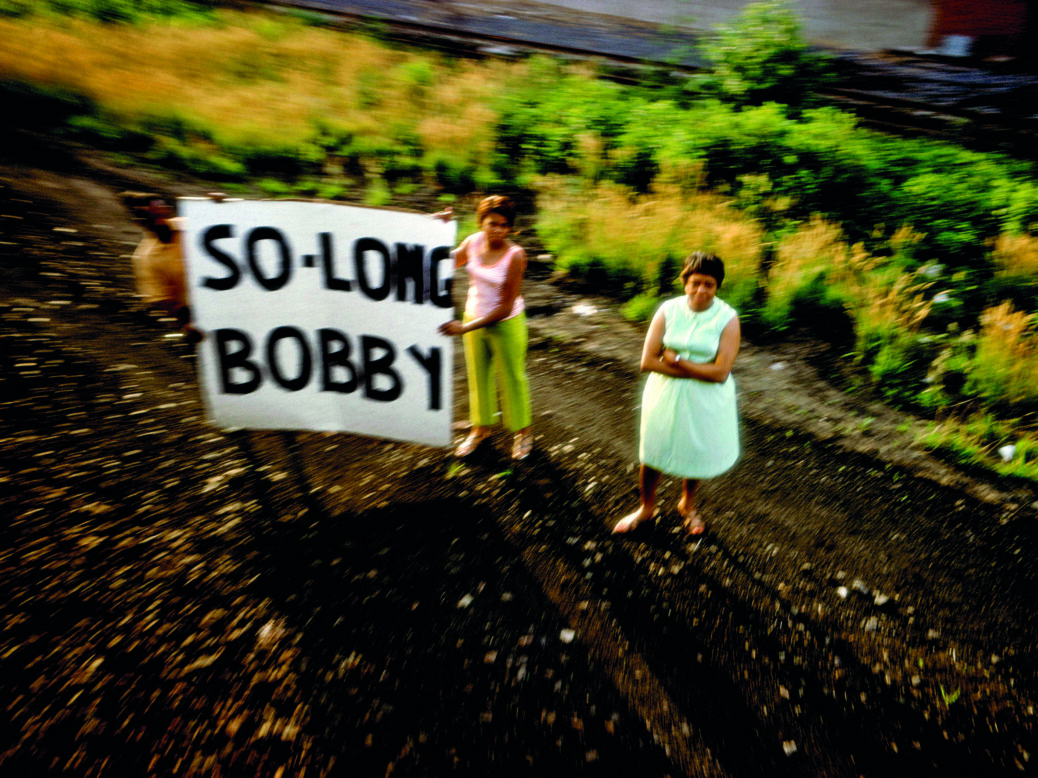
Just two months after Martin Luther King’s assassination, Robert Kennedy was shot dead in Los Angeles. The next day, the New Statesman published an editorial on the fear of “bloody riot” in the American consciousness.
Whatever may have been the motives of the gunman, the shooting of Robert Kennedy was, in an objective sense, a political act – and for two reasons. First, the Kennedy campaign, though it clearly reflected the personal ambitions of the head of a powerful clan, also expressed the anguished aspirations of the poorest and least privileged sections of American society. Candidates must be judged not only by their personalities and formal programmes but also by the men who flock to their support. Senator McCarthy represents “safe” liberals. Vice-President Humphrey is the choice of the Democratic establishment: the party bosses, the more hard-headed Southern racists who do not want to waste their votes on Wallace, right-wing Labour and the friends of LBJ. The Kennedy camp included many millions of rank-and-file Democrats and young people; but, more significantly, it had attracted massive support from black people, Puerto Ricans, Mexican-Americans and poor white people in all regions except the South. They are the Americans who have nothing to gain from the continuance of American society as it exists today, and everything to win from radical changes in its structure. A Kennedy presidency was no guarantee that any, let alone all, of their hopes would be realised. But it would ensure that the options before America remained open. All other candidates are merely variations on the Great American Myth – a corrupt and violent capitalist society, masquerading under a torrent of progressive verbiage. To remove Kennedy was thus to slam the gates of hope in the faces of the poor.
The shooting raises a second question about the nature of American society, and perhaps a more fundamental one. How long can the American state itself endure the strain of violence, which increasingly undermines its political processes? The comforting reflection that America was itself conceived by armed settlers and spread across the continent by force of Winchester rifles and six-shooters is a Hollywood cliché which abuses the historical facts. America was a product of an overwhelming devotion to constitutional forms and the rule of law; violence, though common, was essentially an aberration. There are more firearms per head of the population in America today than at any time in her history. They are more deadly, cheaper, more freely available and more frequently used.
What is worse, this heavily-armed and deeply divided civil population lives in a nation which has become a major dispenser of violence on an international scale. Colossal firepower is daily flourished in South-East Asia: a performance watched, in colour, by American families gathered in their living-rooms. The state, in the Hobbesian sense, has always been conceived as the domestic peacemaker, the strong arm which crushes the individual’s urge to settle disputes by force, and obliges him to seek the arbitration of the courts. When the state practises violence – even genocide – abroad, how can it preach legality at home? If the firearm is the preferred instrument of public policy, how can it be denied for the redress of private grievance? The double standard might work in a society where arms are banned to individuals and where divisions between classes and races are narrow. But in America to bear arms is itself represented (falsely) as a constitutional right; and the gross inequalities which exist there have repeatedly proved incapable of constitutional solution.

These sombre reflections occur at the opening of a summer which, even before the murder of Martin Luther King and the shooting of Robert Kennedy, promised unprecedented violence. Already it is becoming increasingly difficult for the normal processes of electing a president to function; there are well-grounded fears that the Democratic Convention, in smouldering Chicago, will degenerate into bloody riot. The removal of the apostle of non-violence, and now the incapacity of the one presidential candidate whose election promised structural reforms, have blocked – perhaps completely – the avenues of constitutional advance. At least, this is what millions of the deprived will feel. And meanwhile, the unremitting carnage in Vietnam, directed and executed by the legal state, flickers across the consciousness of the American people. Perhaps the Los Angeles shooting will shock America into drastic solutions to restore respect for public order – though the precedents are not encouraging. A more likely outcome is a collapse of the restraints which hold a civilised nation together.
[See also: Geoff Dyer on the Trump assassination attempt: the shot seen round the world]
Content from our partners



Related

This article appears in the 17 Sep 2025 issue of the New Statesman, Can Zohran Mamdani save the left?
Join the debate
Subscribe here to comment