
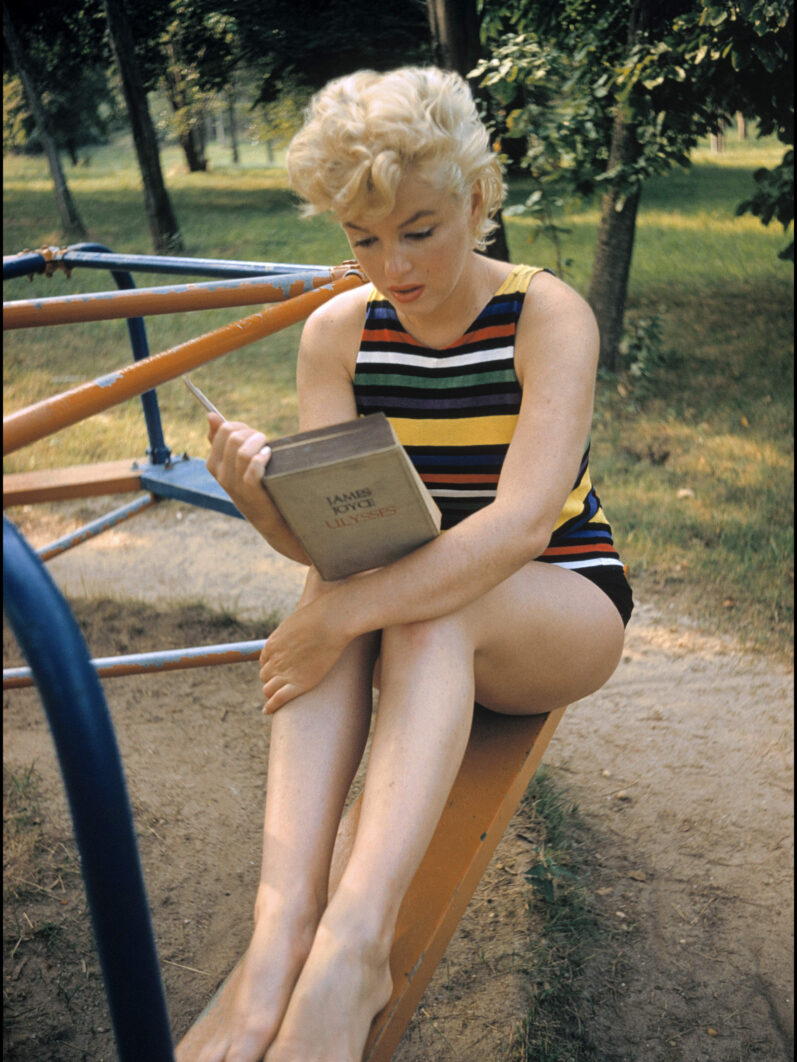
When I was a teenager, Marilyn was on half the bedroom walls of the people I knew, boys’ and girls’ alike. I’d like to claim we were drawn to the brightness, the wit, the tragedy but that would be a lie. We wanted a beautiful face on the wall, and hers was the most beautiful we could think of. Nothing more complicated than that. The complications came later.
I was reminded of this recently at the National Portrait Gallery, where Marilyn Monroe: A Portrait marks the centenary of her birth, and where visitors arrived already feeling like they knew her. They filled in the gaps as they went: what was happening in Monroe’s life when a photograph was taken, what she must have been thinking, whether the sadness in her eyes was already there. Everyone seemed to know her so well. Everyone always has.
Perhaps the difficulty with Marilyn is that none of us comes to her empty-handed. We arrive carrying our own version of her. The smiling Marilyn. The lonely Marilyn. The damaged Marilyn. The ambitious Marilyn. The brilliant comic actress. The woman trapped by fame. The woman who mastered it. We want the images to confirm what we already believe.
Curated around more than 200 works, the exhibition is largely chronological and refreshingly unburdened by theory. It begins with the young Norma Jeane, before she became Marilyn, and moves through Monroe’s career through the photographers, artists and image-makers who helped construct her public identity. There are familiar masterpieces and unexpected discoveries, contact sheets and magazine covers, paintings, publicity material and personal possessions. Rather than arguing for a single interpretation, the exhibition accumulates perspectives and allows contradictions to sit alongside one another.
The first room belongs largely to Philippe Halsman and his exuberant photographs of Monroe jumping. They are hard not to enjoy. There she is, airborne, laughing, game for it, somehow both ridiculous and glorious. Nearby, Halsman and Salvador Dalí transform her into Chairman Mao, a touch of genius that immediately establishes Monroe not simply as a person but as an image. Long before Warhol began reproducing Marilyn as a cultural icon, Dalí and Halsman had already grasped how endlessly she could be reinvented while remaining instantly recognisable.
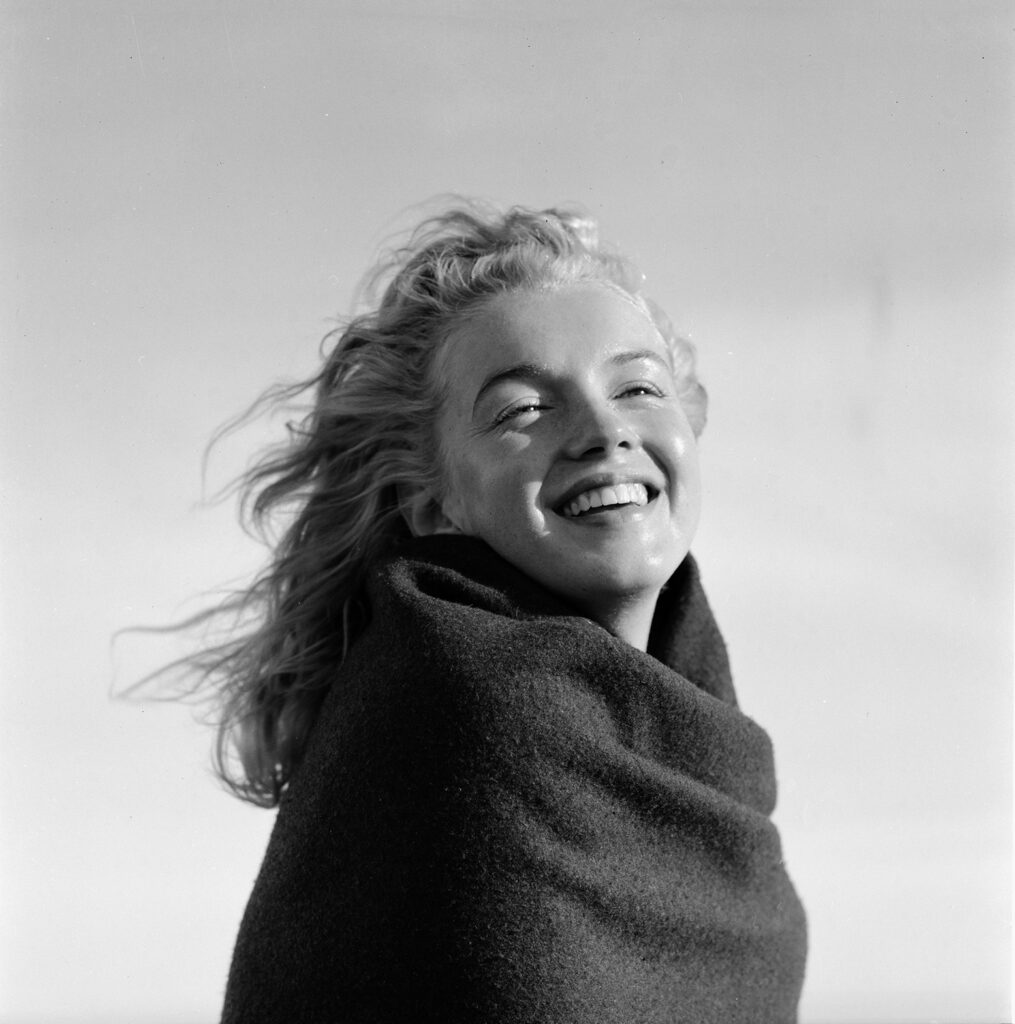
The room I returned to was the one devoted to her early years, much of it given over to André de Dienes – one of the first to photograph her. They met in 1945, when she was an unknown model still using her given name; for a time they were lovers, briefly engaged. Long after, after the fame, after her death, he went back through his pictures from those first sessions and annotated them by hand. One page reads: “Norma Jeane 1944 (The Future Marilyn Monroe).” What moved me was not the phrase but the moment he wrote it. An old man, turning over photographs of a girl he had loved, inscribing them with everything still to come. By then, the future he points to was already over. Those early photographs are fascinating partly because they invite the most dangerous kind of looking. It is almost impossible not to search them for clues. The tilt of a head, the guarded smile, the girlish brightness. The future is there because we know it is there. She did not.
And yet, much of the exhibition’s pleasure is cruder than that, and I won’t pretend otherwise. Again and again, I stopped in front of images I already loved: the Cecil Beatons, Milton Greenes, the Sam Shaw portraits from the years she was married to Arthur Miller. I did exactly what I’d done as a teenager. I looked because she was beautiful. The bigger questions could wait.
Eve Arnold’s photographs are as extraordinary as ever. One shows Monroe from behind stood at a bathroom mirror, her skirt hitched up at the waist, arms raised to her hair. We see almost nothing of her face. Arnold and Monroe knew each other for years, and the pictures carry a closeness few other photographers have managed to capture. Not the off-guard candour of a stolen shot, but something Monroe seems to have allowed, even wanted. She is not performing for the lens so much as trusting it. Like the best photographs here, it leaves space for uncertainty.
Richard Avedon’s celebrated 1957 portrait may be my favourite image of Monroe ever made. I have looked at it countless times but still felt a pull towards it in the gallery. It remains startling because it feels so modern. Years before vulnerability became a form of celebrity currency, Avedon presented Monroe without the dazzling smile and exuberance that had become part of her public image. She appears thoughtful, distracted, somewhere beyond the camera’s reach. Not sad exactly. Simply present.
Monroe’s greatest gift may not have been to the camera at all. For me, she comes most alive on screen – in motion, singing, laughing, transforming herself moment by moment, so alive that watching her can still feel exquisite. And yet, surrounded by her in these galleries, I felt something else entirely. The camera catches something the moving image lets slip: a quality of presence that no film frame quite holds. Room after room, I did not want to look away.
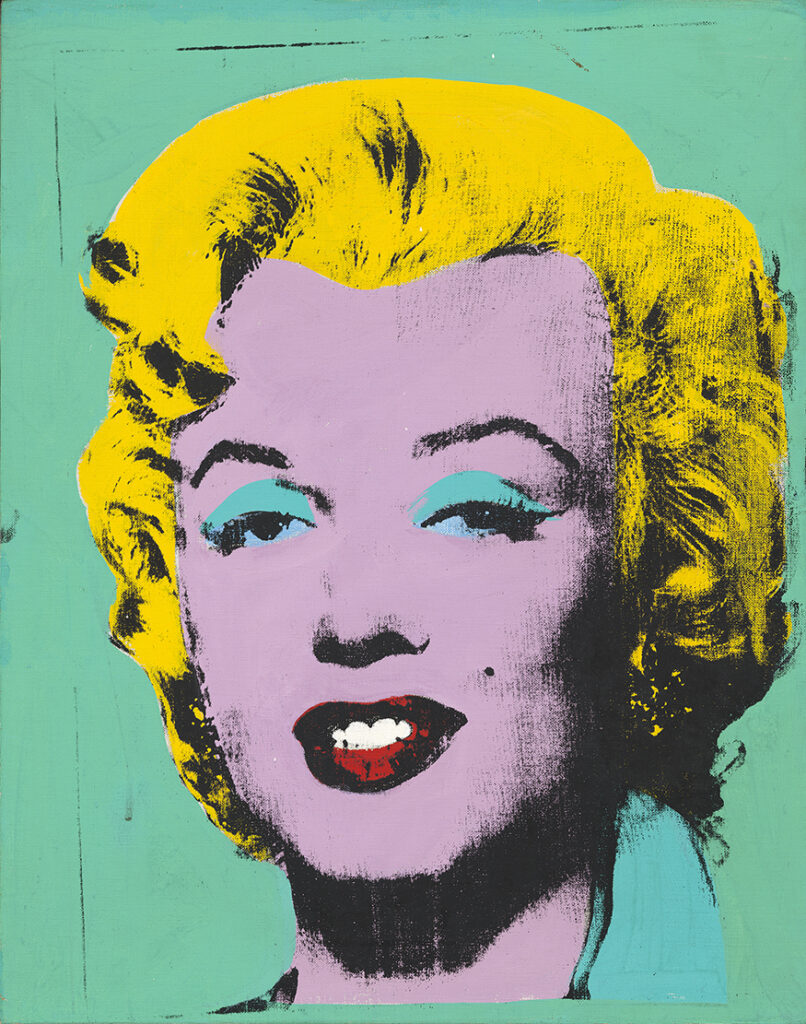
The paintings left me cold – almost all of them – but I should be fair, because their presence is the point: a show about Monroe’s afterlife has to reckon with what artists made of her. And mostly they were not painting Monroe at all. They were painting the idea of her, or fame, or themselves, which is their right but left me cold, nonetheless. Pauline Boty’s portraits are sincere, the tribute plain in them; yet to me they feel lifeless. Warhol’s, the best known in the show, are where she disappears completely: an icon still gilded and repeated until the woman becomes surface, product, belonging to anyone. The one that stops me is Marlene Dumas’s Dead Marilyn, painted from the photograph taken in the morgue. I found it indecent, an intrusion on a woman who could no longer refuse to be seen, and yet I keep turning it over, unsure whether the discomfort is a failing on my part or the point. It is the only painting in the room I cannot dismiss.
Oddly, one of the most moving things in the exhibition is not a photograph or a painting at all, but a pair of white shoes displayed in a glass case. Scuffed, creased and visibly worn, they undid me a little. The accompanying label explains that Monroe became such a devoted customer of Salvatore Ferragamo that the company retained a custom shoe form for her, allowing her to reorder favourite styles. It is a small, oddly charming detail. The woman who became one of the most recognisable faces in history turns out to have had the same habit as countless others: finding something she liked and sticking with it. After all those rooms of images, here was something that had belonged to her. The leather had softened around her feet. The heels had worn down through use. Looking at them, I was not thinking about Marilyn Monroe the icon, but about somebody getting dressed in the morning, hurrying to a studio, walking across a room, living an ordinary life. Unlike the photographs and paintings, the shoes offered no interpretation. They made no argument. They testified that she was here.

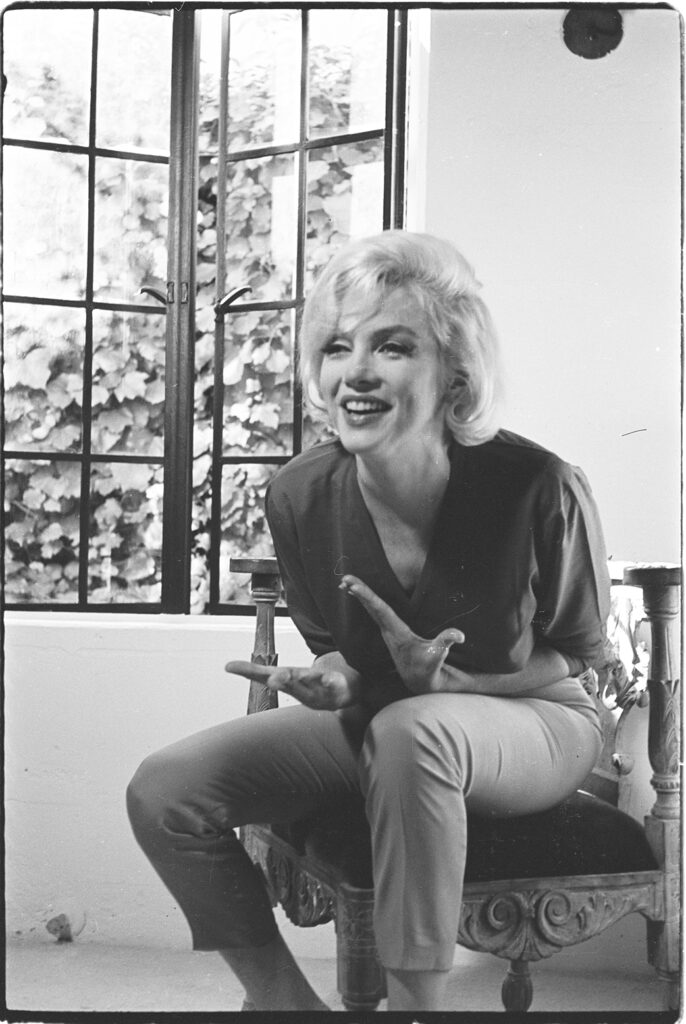
The final photographs have always unsettled me. Knowing what comes next, every expression risks becoming evidence, every glance a clue. Some viewers see tragedy in her eyes. I am no longer sure whether that is really there or whether we project it backwards through history. Yet there is a palpable absence in some of those images that I do not feel in Avedon’s portrait from five years earlier. The difference is not happiness versus sadness – it is presence versus vacancy. The one exception stopped me: Monroe in a black dress, in profile, her head resting on her hand. Something in her has come back.
By the final room, I was thinking less about the woman herself than about our endless desire to explain Marilyn. Biographers, artists and audiences have been doing much the same for decades. We seem unwilling to accept her as she appears before us. We need her to signify something larger. The exhibition’s most striking achievement may be that it resists all such conclusions.
I had wondered whether Monroe means anything to my daughter’s generation, or only to mine and the ones before. Later that evening my nineteen-year-old sat with me and the catalogue, and we spent far longer over it than I expected. She turned page after page, lingering over the photographs, caught by the same thing I had been at her age: the vulnerability, the “insane beauty”. She passed over the paintings without a glance. It was the photographs that held her, where something of the real woman still waits to be met.
[Further reading: What photography means now]
Content from our partners


Related

Join the debate
Subscribe here to comment