In Blackpool, Knowsley and Kingston upon Hull, patients are up to twice as likely to die prematurely from cancer as those in England’s best-performing areas. Such disparities are the product of decades of uneven policy decisions, shaping where specialists train and work, how screening programmes are distributed and which primary care services have the capacity to act on early warning signs.
Around 28,400 deaths annually are directly linked to inequality. Three national strategies – the 2011 Improving Outcomes Plan, the 2015 Cancer Strategy and the 2019 Long Term Plan – each pledged to narrow this gap. The result was more centralised care with a distinction between cancer units, treating close to the patient’s home, and cancer centres – providing specialised care often outside a patient’s local area. While this has improved outcomes overall in England, it often requires patients, particularly those from rural or coastal areas, to travel long distances.
A Macmillan survey found that around 40 per cent of patients were missing out on the treatment and care they need simply because of where they live. Respondents were asked whether they had experienced a range of barriers to care, including travelling more than an hour for tests or treatment, and whether they had considered declining or had turned down care because of travel times.
Unveiling the National Cancer Plan in February, Wes Streeting acknowledged the urgency of fixing regional disparities. “For too long, your chances of seeing a doctor and catching cancer early have depended on where you live,” he said. “That’s not fair and has to stop.”
Delivering on that promise will depend heavily on Cancer Alliances, the regional NHS bodies responsible for coordinating care across providers to help patients. The plan allocates £200m in ring-fenced funding to these organisations for 2026/27 – the only new money explicitly designated for frontline cancer delivery. Their role is to translate national policy into local practice, determining whether access to screening, diagnostics and treatment is consistent across regions.
The plan acknowledges that the “level and effectiveness of assistance to challenged trusts from Cancer Alliances has been variable”. NHS data suggests 90 of the 118 trusts (76 per cent) are missing the first target of ruling cancer in or out within 28 days of urgent referrals in at least 80 per cent of cases. And 86 trusts (73 per cent) have failed to hit the target of 75 per cent of patients starting treatment within 62 days.
“There are significant differences in local areas’ specialist cancer workforce, which leads to vastly different services being on offer. Previous strategies haven’t set out national standards across the whole patient pathway,” says Paulette Hamilton MP, chair of the APPG on Less Survivable Cancers. “This has resulted in local fragmentation.”
Hamilton believes the National Cancer Plan provides a strategic direction for cancer care in England. “Plans have often been focused on driving improvements on the most common cancers and ones that are already seeing progress. [This plan] will ensure a strategic focus and accountability over progress for less survivable cancers,” she says.
But how did we get here in the first place? For Liberal Democrat MP Clive Jones, it comes down to money. “They put more resources into bigger hospitals, but less into smaller ones around the country. And that has helped to create the postcode lottery. There aren’t incentives for doctors to go and work in areas like, say, Norwich or King’s Lynn,” he says. The latter had only 54 per cent of patients begin treatment within 62 days of referral to its Queen Elizabeth Hospital last year – the fourth-lowest among 119 acute NHS trusts.
The plan suggests early diagnosis rates remained “flat” for nearly a decade beginning in 2013. Centralisation of specialist care carries much of the blame.
Jones, a member of the APPG on Cancer, speaks with the benefit of first-hand experience navigating the system. In 2008, he went to his GP with a lump in his chest. The doctor told him not to worry, saying it was only gynaecomastia, a medical condition where men develop breast tissue.
Nine months later, playing golf, Jones swung his club and caught the lump. The pain was sharp enough to send him back to his surgery. “It really, really stung,” he says. A different GP referred him immediately. In weeks, he had a diagnosis of breast cancer – rare in men. Within months, he had undergone a mastectomy. The cancer had spread to the lymph glands. “I had them all removed in my left arm.”
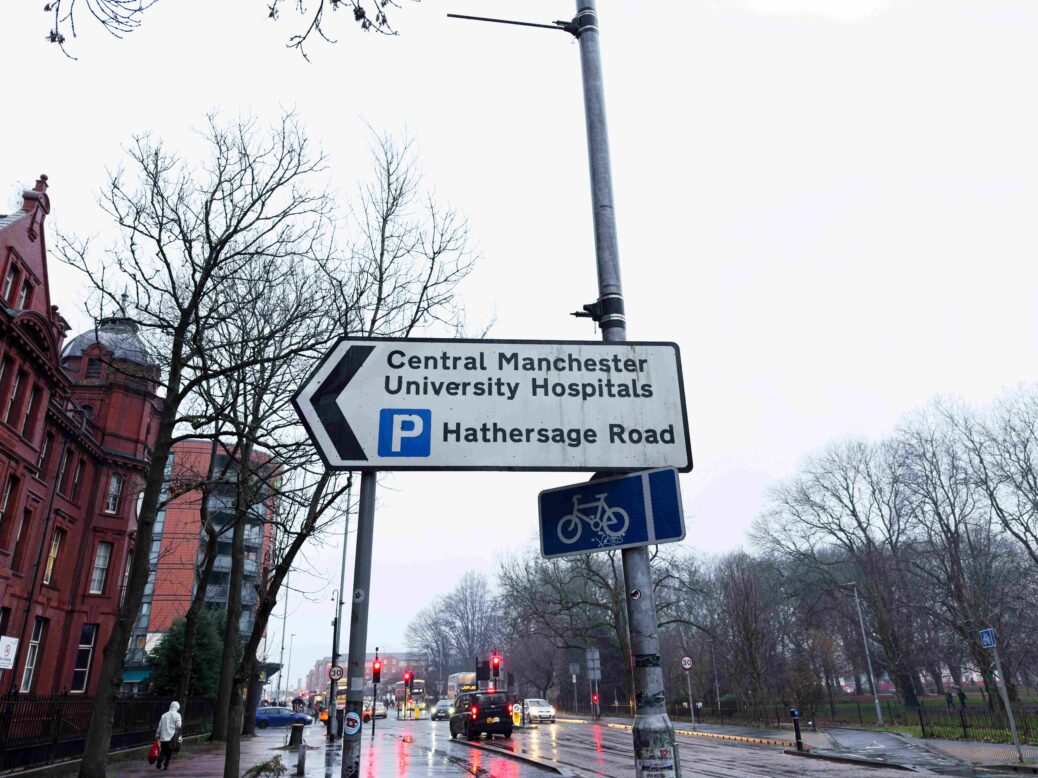
Jones says he benefitted from living within easy reach of the Royal Marsden, a world-leading cancer hospital in west London. “We can get in and out fairly easily. Somebody in Blackpool has probably got to be looking to go all the way into Manchester – and that’s a heck of a journey.”
One of the features of the cancer plan is to bring forward a named cancer nurse for every patient. But in already underserved and isolated areas, establishing a suitably distributed workforce is a huge challenge. In 2024, for example, the Royal College of Radiologists found there was an average of 6.8 radiologists per 100,000 people in England. In the East Midlands, it was 5.5, while in London, it was 9.9. In particular, it found that NHS England had a 30 per cent workforce shortfall, with 4,923 consultant radiologists, amounting to a shortage of 2,000.
“I don’t know where all of these people are going to be magicked out of thin air,” Jones says.
In many cases, efforts must also be made to reach specific groups. For example, research suggests the lack of bowel cancer screening in some cities may be in large part due to some demographics being less engaged with the healthcare system. A third of eligible people in London, Birmingham and Greater Manchester do not take up screening, compared with a quarter in the south-west. In the most deprived areas, one-year survival rates for bowel cancer are eight percentage points lower than in the least deprived: 74 per cent against 82 per cent.
Genevieve Edwards, chief executive of Bowel Cancer UK, recalls a case that illustrates the economic dimension of the lottery. A self-employed patient with a young family told his clinical nurse he couldn’t afford to take the time away from work to undergo chemotherapy. Despite her efforts to persuade him, he was adamant. He subsequently died from a cancer that, Edwards says, is “preventable, treatable and curable if it’s diagnosed at the early stage”.
Her charity has launched Bowel Towns, a targeted initiative working with GPs, pharmacies and community groups in areas where deprivation, poor screening uptake and bad outcomes overlap. “Whether you survive cancer or not should not be determined by where you live,” she says.
Hugh Adams, head of stakeholder relations of Brain Tumour Research, also points to stark inequities for clinical trial access, often the only route to new treatments. “If you are diagnosed in London and you have a progressive oncologist, you will know about the latest treatments,” he says. “If you are being treated elsewhere, we understand the position to be very different.”
He estimates that somewhere between two and ten per cent of brain tumour patients ever access a clinical trial at all. The lottery, he says, can come down to a single clinical decision made while a patient is unconscious on the operating table – determining whether tissue is stored in a way that keeps future treatment options open.
“It’s more about inequity of access,” he says. If you’re in a remote area, the idea that you can do a four-and-a-half-hour round trip to the Royal Marsden is for the birds. We have heard of people not going on clinical trials because of the stress they think it’s going to involve in terms of travel.”
Adams also believes social demographics play a significant role. “You’ve got to think about people who are older, or perhaps of different heritage, that may struggle to get the information in the way that someone who is of a certain demographic and lives in Cambridge might.”
The lottery, in other words, is compounded by health literacy, access to information and the assumptions built into how that information is delivered.
The plan cannot close a gap it cannot measure. Adams says that if his charity wants to understand how many brain tumour patients are accessing clinical trials, “the only way we can really do it is by conducting surveys amongst our own community. That basic information is difficult to get – and if we haven’t got the numbers to begin with, how are we going to be able to gauge our progress?”
One of the ways the National Cancer Plan seeks to narrow this inequality is through a commitment to provide £13.7m in funding for a new brain tumour research consortium. It aims to increase trial access across the country. “We have got a line of sight to the government funders now,” Adams says. But he is clear about what accountability will require. “If there seems to be a continuation of the postcode lottery, the community would be up in arms, and we would make our voice and dissatisfaction known very vocally.”
After Jones finished his treatment in March 2009, he went on to start a business, become a council leader and win a seat in Parliament. His children, aged 13 and 14 at time of diagnosis, are now in their thirties. Another gets married in December. “I got to the end,” he says. “Got the right treatment.”
Not everyone does. For some, the odds are stacked against them before treatment even begins.

Content from our partners


Related