
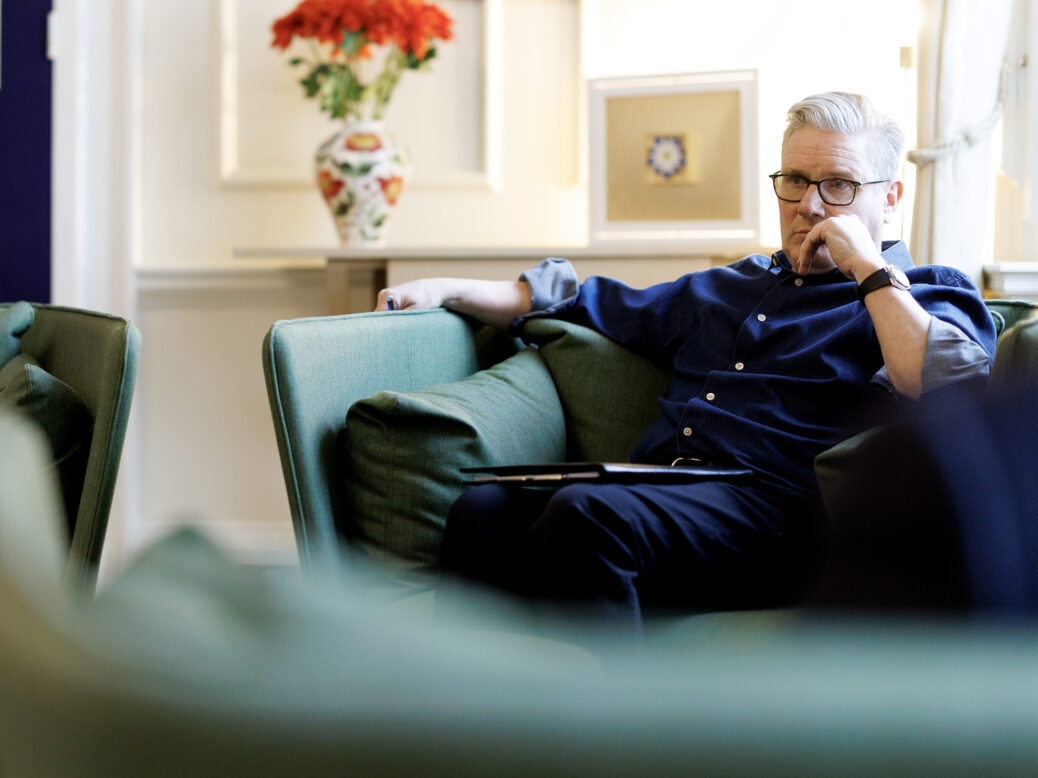
Donald Trump has viciously criticised Keir Starmer for being “very uncooperative” when the United States and Israel launched their war on Iran, and unfavourably compared Starmer with Winston Churchill. Trump made his undiplomatic views about Starmer clear in interviews with the Sun and the Telegraph, then elaborated at an Oval Office press conference.
When Starmer is pressed on this at Prime Minister’s Questions later today, I expect he will restate the position he has already set out: “It is my duty to judge what is in Britain’s national interest.” This is the most defensible position he could have taken. On the government’s own terms, the initial offensive was almost certainly contrary to international law. It is also unpopular. The Chancellor is already talking about possible economic “shocks” because of the conflict. Starmer initially hesitated before granting permission for the US to use two UK bases for strictly defensive purposes.
The Trump row splashes the Times, the Telegraph, the Mail and the Sun today, and Starmer’s opponents on the right are clearly relishing the spectacle of the president attacking the Prime Minister.
Yet they have struggled to make a robust case for Starmer to deepen British involvement, and their criticisms of his “national interest” position have been muddled. They range from evasion and non sequiturs – a passionate moral case for regime change in Iran that has little to do with Starmer’s test of what is in the UK national interest – to conspiracy theories: that Starmer is somehow “controlled” by the Attorney General, Richard Hermer (whom he specifically appointed because they see eye to eye on questions of international law, as my colleague Ailbhe Rea has explained in this week’s magazine); or that he makes foreign policy decisions based on calculations about how they might affect Labour’s support among British Muslims. That will come as news to Labour’s 2024 election candidates in Blackburn, Birmingham Perry Barr, Dewsbury and Batley and Leicester South.

The blunt fact is that Donald Trump has started a war that is already measurably unpopular in the United States and elsewhere. Some 49 per cent of Britons oppose it, according to a YouGov poll of more than 4,000 UK adults conducted over the weekend, with nearly a quarter undecided – and my hunch is that those “undecideds” will drift into the “oppose” camp if the war continues and its downsides become more pronounced.
Yes, the Prime Minister is weak and unpopular. But his stance on this war may not be.
This piece first appeared in the Morning Call newsletter; receive it every morning by subscribing on Substack here
[Further reading: We cannot afford another failed government]
Content from our partners


Related

Join the debate
Subscribe here to comment