
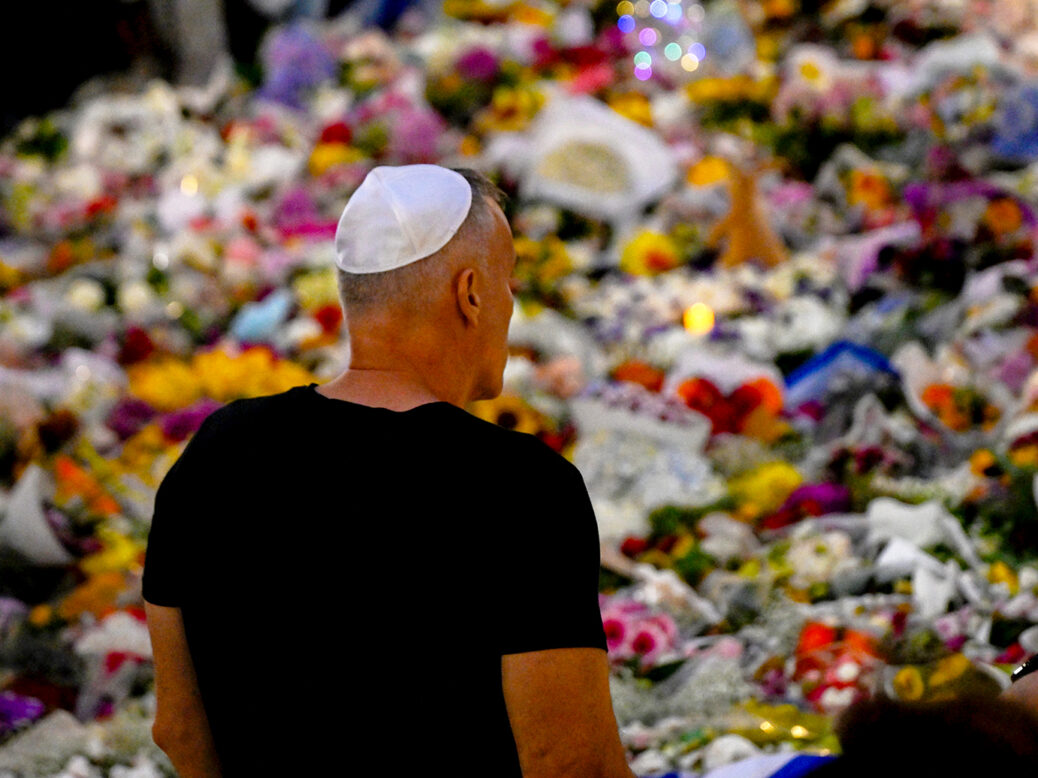
Australians often believe their country is insulated from the troubles of the world. “The tyranny of distance” can be a luxury. As an island continent, Australia can feel like a happy, sunny sanctuary from the pathologies of hatred and division.
The weekend’s anti-Semitic terrorist attack in Sydney has shattered that myth. Australia is now gripped by shock, grief and anger. Its people are in a state of collective mourning. In the weeks and months ahead, they will be asking: how did this happen? And what does it say about the country?
Australians have had to answer these questions before. In 1996, in Tasmania’s Port Arthur, gunman Martin Bryant killed 35 people and injured 23. In response, then prime minister John Howard enacted sweeping laws that restricted the sale of semi-automatic rifles and pump-action shotguns. A national buyback scheme resulted in the surrender of more than 650,000 guns. The reforms have often been cited internationally as a model for gun control. In the decades since, Australians have assumed that this model was working.
Clearly, it is no longer working as well as it had been. One of the perpetrators of Sunday’s attack held a gun licence, which was first lodged in in 2015, had lapsed and was finally granted in 2023. Prime Minister Anthony Albanese has said his government will move to tighten gun laws once more.

The issue isn’t just about gun control. This was, after all, an attack squarely aimed at Jews. Many of those killed had gathered at Bondi Beach for a celebration of Hanukkah. Police are investigating possible links that gunmen Sajid and Naveed Akram have to Islamic State terror groups. There are already questions about whether intelligence and counter-terrorism authorities failed to identify an imminent threat.
Then there are broader social and cultural questions. That this heinous anti-Semitic assault was conducted by a father and son, of Indian background, invites debate about Australia’s celebrated multiculturalism. This will likely dominate the national conversation.
Australia is widely regarded as an exemplar of multiculturalism. More than 30 per cent of people were born outside the country. On multiple measures, those who come to Australia as immigrants are well integrated into society. Compared with many other liberal democracies, Australia has strong public support for diversity. Studies perennially show that eight in ten people agree that multiculturalism has been good for Australia.
Cultural harmony, however, has recently come under strain. For many Jewish Australians, the Bondi attack has been the realisation of their worst fears. Concerns about anti-Semitism have been mounting since 7 October 2023. In the days following the Hamas attack on Isreal, pro-Palestine protesters were filmed making anti-Jewish chants on the steps of the Sydney Opera House. There have been arson attacks on synagogues. The Prime Minister’s special envoy to combat anti-Semitism reported a 316 per cent increase in anti-Semitic incidents between October 2023 to September 2024.
The Australian experience has mirrored developments elsewhere. Anti-Semitism has risen in many other countries, including the UK, fuelled by responses to the Israel-Hamas war. This is the reality of racism in a globalised and digital world. War in one part of the world can quickly set off conflict in others. Old hatred, which many thought had faded, can quickly be revived.
As with anti-Semitism, there also isn’t Antipodean immunity to far-right politics. Neo-Nazi extremists have made their presence increasingly felt through public stunts and protests. Pauline Hanson’s One Nation is polling at its highest levels for years. Hanson’s immediate response to the weekend’s attack was to call for an end to mass migration, pointing to a Muslim takeover of England.
There will be significant tests, then, for the Albanese Labor government. It will need to show calm, assured leadership. It will need to defend Australia’s multicultural nation-building project against an increasingly confident politics of division.
Australians have so far rallied with unity and resolve. There have been outpourings of solidarity with Jewish citizens and residents. The Sydney Opera House was lit this week with an image of a menorah, at the instruction of the New South Wales premier. The Bondi shootings have been regarded not just as an attack not just on Jews, but on all Australians. One can perhaps even go further. This massacre – taking place as it did on Bondi Beach, that most iconic stretch of sand – was also an attack on the Australian way of life.
This is the brutal reality check of the past few days. It seems foolish now to think that there is some kind of Aussie exceptionalism, that some things “could never happen here”. For many Australians, the notion that their country is a sanctuary from the world is now gone. As a Sydney friend of mine wrote to me: “We’re mourning not only the lives lost, but the notion of who we were before Sunday.”
[Further reading: The Bondi Beach shooting was an attack on Jews]
Content from our partners



Related

Join the debate
Subscribe here to comment