
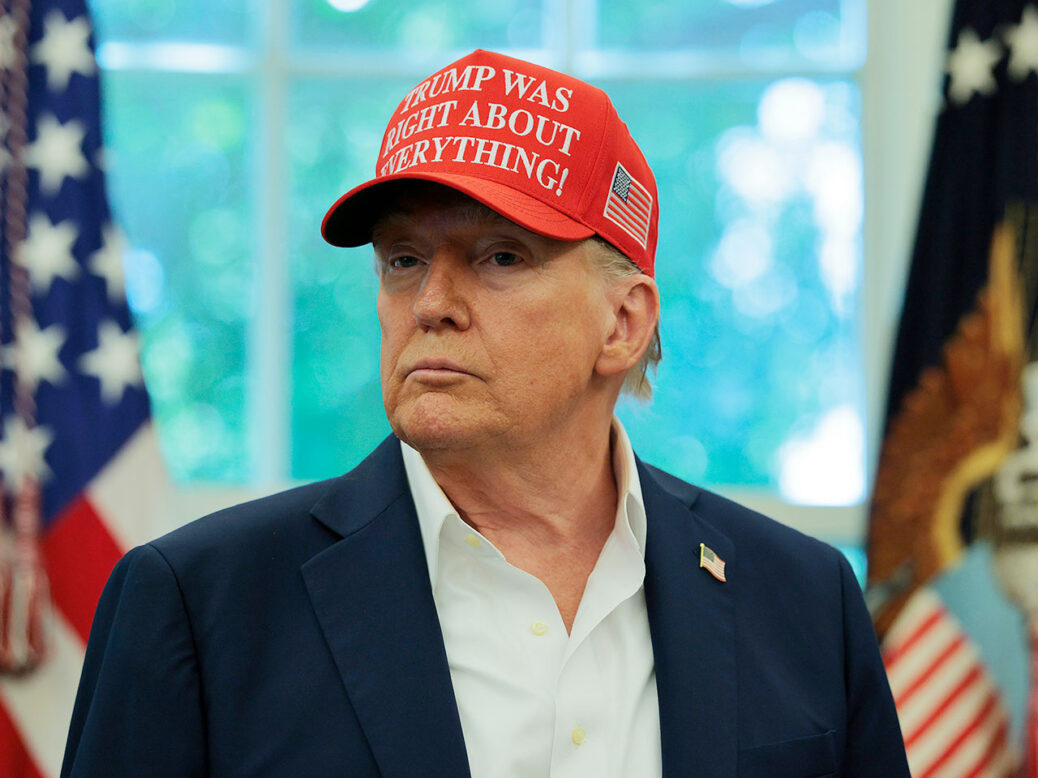
The age of political euphemism is over. Politics cannot cope with the soft, technical language of the lanyard class, where consultants talk about “restructuring” when they mean mass firings and torture is reclassified as “enhanced interrogation”. The technocrat might speak about “progressing towards a more equitable and just balance between high-income groups and those financially struggling”. That might be why they keep losing elections all over the West.
But straightforward language has not become de rigueur among the populists who keep beating them. Instead, we have entered the age of dysphemism, in which coarse and unpleasant language marks a politician out as authentic. A lie told in an honest way is often more appealing than a truth that sounds ambiguous. Herein lies the danger: making the situation sound worse than it actually is justifies the suspension of democratic norms.
Consider three amorphous terms that are abused by aspiring dictators: “emergency”, “terrorism” and “war”. Much about Donald Trump’s power grab in 2025 can be explained by the way he has recast these three words.
Trump’s tariff policy is founded on the idea of “emergency”. Without an emergency, the power to levy tariffs lies with Congress. Trump said his tariffs were necessary because the trade deficit was so large that it posed a threat to national security – and so he declared an emergency. The fentanyl epidemic was used in a similar way to impose tariffs on Mexico, Canada and China. In the name of putting down an emergency of crime, soldiers now clean Washington DC’s streets and Trump has taken control of the city’s police force.

The common thread is that nothing new had to happen for Trump to declare an emergency. The status quo sufficed; he simply found a new word for it.
Then there is “terrorism”. Few ideas have been more permissive for governments in the past two decades. The war on terror crystallised this new supra-category of criminal. Those arrested recently in London for supporting the proscribed Palestine Action group know the power that designating someone as a terrorist hands to the state. So does Trump. One of his first acts in office was to recast the drug cartels as terrorists. Turning criminals into terrorists allows the US president to deploy the military, not just law enforcement. He recently shared a video of drug smugglers in a speed boat, said to have been Venezuelan, being blown up by an American airstrike. Gone are the days when the Drug Enforcement Administration or FBI seized drugs and arrested the smugglers. Anti-drug operations now sit within the domain of the commander-in-chief.
The drone strike was once the ultimate euphemism. It made death mundane, a flicker on a black-and-white screen withheld from the public eye. Barack Obama, drone-striker-in-chief, favoured them because he thought they were clean and efficient. Trump prefers to parade state violence.
Now, the world watches a video of a bomb hitting a boat, which the president has posted online. When someone suggested that killing 11 people without a trial might constitute a war crime, his vice-president said on X that he does “not give a shit what you call it”. Language, and therefore to some extent the law, has been relegated. You get the sense the administration wants the strike to sound wicked, not clinical. That is the age of dysphemism in action.
Finally, there is “war”. Trump has announced that the Department of Defense is to be renamed the Department of War. Perhaps this is the most honest thing he has done. Everyone knows the American military wages war; calling it a defence department is nothing more than a euphemism – a form of political correctness – and euphemisms are dead.
Trump is like an 18th-century pirate armed with a 21st-century military. By redefining emergency, terrorism and war, he has prised open the legislative loopholes which hand him the power to maraud around the Western Hemisphere.
Note that Trump is turning the linguistic ticks of the ancien régime against itself. Dysphemism and euphemism are, of course, two sides of the same deception. One makes you feel obliviously content with what’s going on; the other is designed to make you feel so scared that you will let a president take whatever action is necessary to protect you. That is why the trend towards dysphemism is indicative of a darker turn in politics – a more suspicious tone. People know something isn’t right, so uncouth language chimes more resonantly than vacuous appeals to “grown-ups” or “adults in the room” or “sensible policies”. Trump’s corruption of language, in other words, is a reaction against the euphemism of the past half century. His big lies are only possible because euphemism has been so pervasive for so long.
Euphemism has long made the unpalatable policies that politicians pursue sound like inevitable technicalities. Now, Trump is making everything sound worse than it is in order to hand himself the power to fix it. He has broken the proverbial glass box in the Oval Office, which was only meant for an invasion or civil war – all by using new words to describe the same reality.
[See also: David Lammy’s Gaza cowardice]
Content from our partners



Related
This article appears in the 10 Sep 2025 issue of the New Statesman, The Fight Back
Join the debate
Subscribe here to comment