
Britain’s stubborn inflation is decades in the making
Today’s jump – to the highest rate for a year – is the product of chronic bad government.

This morning’s inflation figures contained a nasty surprise. The consumer price index (CPI) was 3.5 per cent higher than last year in April, above the consensus of 3.3 per cent predicted by economists and financial markets. Earlier this month the Bank of England predicted inflation would peak at 3.5 per cent in the third quarter of this year; that peak has arrived already. The biggest contributor to the jump was energy bills – gas prices rose 7.5 per cent – but the second-biggest rise was water bills, which rose 26.1 per cent, the steepest rise since privatisation. At Prime Minister’s Questions this afternoon, Keir Starmer and Kemi Badenoch traded lines about whose fault the resurgence was, but the fact that water ...
Can you ever forgive Nick Clegg?
The 2010 election’s favourite politician has returned from Silicon Valley with a message for Britain.

No one agrees with Nick. Not anymore. Cleggmania ended not with an assassination, but by self-slaughter. When the great enabler first graced the national stage at the 2010 election, he seemed clean in so many ways, but untainted, most crucially, by Iraqi bloodshed. Before long, he was celebrating a shotgun marriage with David Cameron in Downing Street’s Rose Garden. Five years later, he left, spoiled by the violation of a promise from page 33 of his manifesto. Window-smashing students demonstrating against tuition fees chanted “Tory scum”, but held banners saying “Clegg, you sellout.” For Nick, though, it all came off pretty easily. As his country embarked on Brexit, and then a decade of agony, Clegg was off to California to make ...
Are the Blairites still the future?
The institutions behind the Labour right are not as close to Keir Starmer’s Labour Party as they might like.

If, going about your business within the Labour Party, you encounter a confident, self-described and evangelical Blairite, it is very likely they have some association with the organisation that began its life as “Progress”. Founded a year before Blair’s 1997 victory, it flew the flag of New Labour reformism more enthusiastically than anyone else. After the 2010 election, Progress formed a haven for New Labour’s loyalists. During Ed Miliband’s leadership, it provided a forum for internal critics of his limited attempts to move the party left. Through the Corbyn years, Progress were definitively Core Group Negative, loud and angry about Labour’s political transformation. Their strength derived from the fact that, in the broad sense of the term, they had “a ...
Revealed: no one understands Rachel Reeves’s fiscal rules
Exclusive polling shows that 96 per cent of people cannot confidently explain the basis of the Chancellor’s economic plan.

In May 2001 the Conservative MP Oliver Letwin let slip, on a phone call to a journalist from the Financial Times, that his party had a long-term plan to cut public spending by £20bn a year. The idea – which his party furiously denied – was so controversial that Letwin was said to have gone into hiding. Labour produced a “wanted” poster for the missing MP. But in the following decade, as I write this week, George Osborne was able not only to impose bigger cuts but to sell them to the public as electoral promises. Letwin was busted for selling uncut Tory small-state ideology. The 2008 financial crisis gave Osborne a story to tell and a thesis to back it up. ...
Scotland has not turned against immigration
Scottish Labour could only flinch at Keir Starmer’s “island of strangers” speech.

Britain, according to Keir Starmer this week, is in danger of becoming an “island of strangers”. This was the justification offered by the Prime Minister for his crackdown on immigration as he vowed to “take back control of our borders”. The choice of phrasing has played well with some. Nigel Farage, in that impressively demotic way he has, said that his Reform party “very much enjoyed your speech... you seem to be learning a great deal from us”. Those voters concerned about the level of migrants arriving on Britain’s shores and a perceived lack of integration may have been equally intrigued. Others, not so much. Critics have accused Starmer of echoing the language of Enoch Powell and of playing to the populist Reform ...
PMQs review: Farage eclipses Badenoch as real opposition leader
The Prime Minister spoke to the Tories and Reform MPs as though they were on equal footing.

Labour has decided (as reported by George Eaton) that, while the Conservatives may be the official opposition, the main threat comes from Nigel Farage and Reform UK. Today’s PMQs demonstrated quite clearly who Keir Starmer sees as his biggest rival – and why. Let’s get Kemi Badenoch’s performance out of the way first. There was a brief moment of solidarity at the start when she condemned the suspected arson attacks on the Prime Minister’s family home, saying “this wasn’t just an attack on him, but on all of us and our democracy”, after which Starmer thanked her for messaging him straight away. The issue of MP safety is one that genuinely unites the House. It went downhill for Badenoch from there. The ...
How Labour learned to love immigration control
Keir Starmer’s warning of “an island of strangers” owes less to Enoch Powell than it does to Robert Putnam.
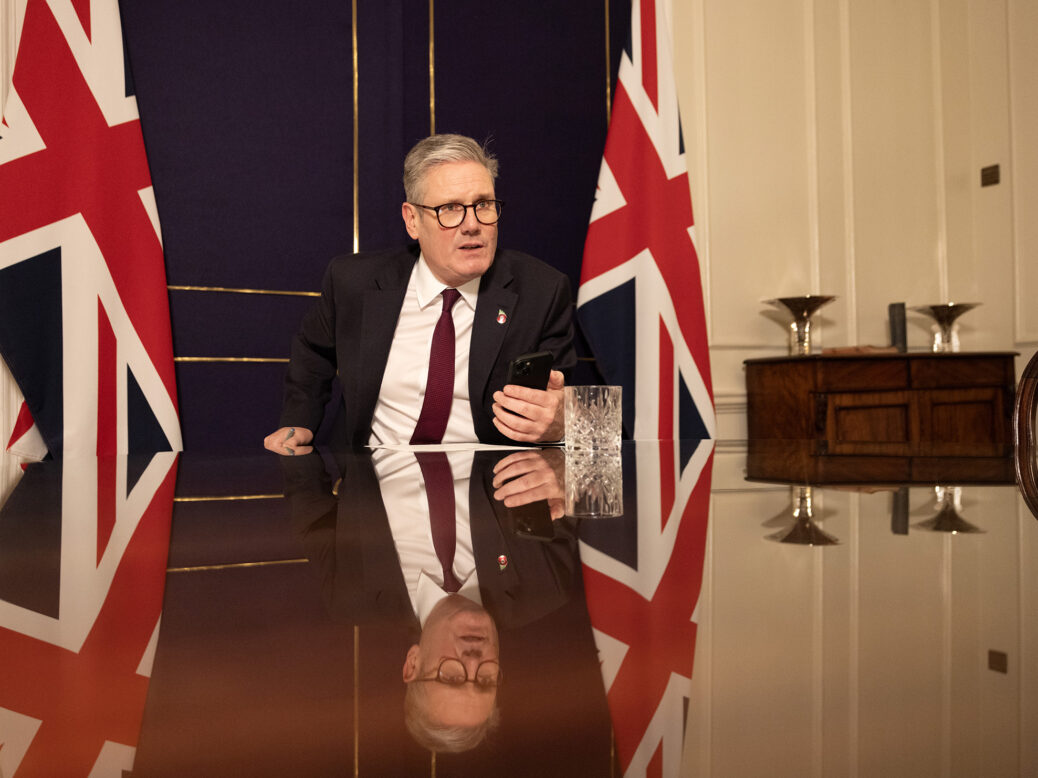
Two decades ago, Britain chose the liberal path on immigration. “Let’s be good Europeans,” the Foreign Office’s senior representative told Tony Blair as Britain became one of just three EU countries not to impose transitional controls on eastern European migration (the others were Ireland and Sweden). “Yes, we shouldn’t worry about numbers,” Blair replied. But it was the numbers that would haunt his successors. A Home Office-commissioned study projected that only 5,000-13,000 migrants would arrive per year. Yet by the end of the decade, 1.5 million eastern Europeans had done so, representing the then single biggest inflow of people in the UK’s history. The consequences of this have reverberated through British politics ever since. Nigel Farage’s ascent to the mainstream began ...
Rachel Reeves shouldn’t U-turn on winter fuel cuts
It would be a dangerous risk for a high-borrowing government to bow to political pressure.

It has been a few years since I spent a local election campaign “on the doorstep”, but the message currently to be found there appears to be clear. Voters “on the doorstep” hate the cuts in winter fuel payments. The government, it is therefore argued, needs to address the issue if it wants to restore its flagging popularity. Unfortunately, it is not as simple as that. This is not to doubt the doorstep reports. Taking £200-300 away from the majority of pensioner households was never likely to be popular. People appreciate being given stuff and what begins as a privilege soon becomes an entitlement. Pensioners have a higher propensity to vote, and to be at home when canvassers call. These attributes ...