What do consultants do? Put simply, we get things done. A word often used is “delivery”, but that understates the scale of transformation our industry drives across our economy and society.
From spearheading multibillion- pound infrastructure programmes and digitising antiquated institutions to revamping ailing retailers and stabilising failing councils, consultants are the agents of change.
At a time of uncertainty, when progress can feel stalled and confidence fragile, consultants are trusted partners helping clients in the public and private sectors, at home and across the world, navigate change, modernise operations and unlock new opportunities.
But the role we play is not passive, nor is it merely reactive. It carries responsibility. Assisting and advising clients brings with it a clear obligation to lead.

That duty is embedded in the principles of “consulting excellence” we sign up to as members of the Management Consultancies Association (MCA). It is also at the heart of the Chartered Management Consultant (ChMC) accreditation, which an increasing number of consultants are obtaining to demonstrate the highest level of standards and ethics.
In short, consultants don’t just serve, we lead.
Our latest annual members’ survey, the most comprehensive report in the consulting profession, shows where that leadership role now matters most.
First, we must lead on AI and digital transformation. Consulting has rapidly become the bridge between technological innovation and real-world application, deploying new technologies responsibly and effectively. Others may develop extraordinary innovations, but it is consultants who implement those discoveries, train staff to use them and unlock their full value.
That role is only set to grow. Nearly nine in ten consulting firms expect digital to dominate the year ahead, while three quarters plan to invest further in these capabilities.
This represents a huge opportunity and an enormous responsibility. As we move into the next phase of rollout, with complex AI systems embedded across the economy, consultants are shaping the future. The onus is on us to ensure that transformation is delivered safely, sustainably and ethically.
Second, we can lead for the long term. Our survey shows that sustainability has slipped down clients’ immediate priorities, with only 10 per cent of consultants predicting it will be a top-three growth area this year – an 18-point drop from last year and the lowest level in five years.
But this is no moment to pull back, and it does not mean our industry should retreat from its commitment to net zero, or downplay its expertise in clean energy.
As MCA members, we commit to ensuring our firms operate in increasingly sustainable ways. That commitment has not changed – and nor should it. Indeed, it is incumbent on us to lead by example; keep targets on track and support clients to do the same.
As we accelerate adoption of AI and digital technologies, we must ensure that progress reinforces rather than undermines environmental aims.
Third, we can lead on people. The profession continues to attract diverse talent and is recognised for strong investment in training, early career development and flexible working. But there is clear evidence that more must be done.
Almost half of consultants (48 per cent) worry that increased hybrid working could hinder opportunities for training and development, a seven-point rise from last year.
Many also fear that reduced in-person interaction could weaken client relationships and limit on-the-job learning, career development and flexible working.
If consulting is to remain a people-first profession and a source of long-term value for clients, we must listen carefully and respond decisively.
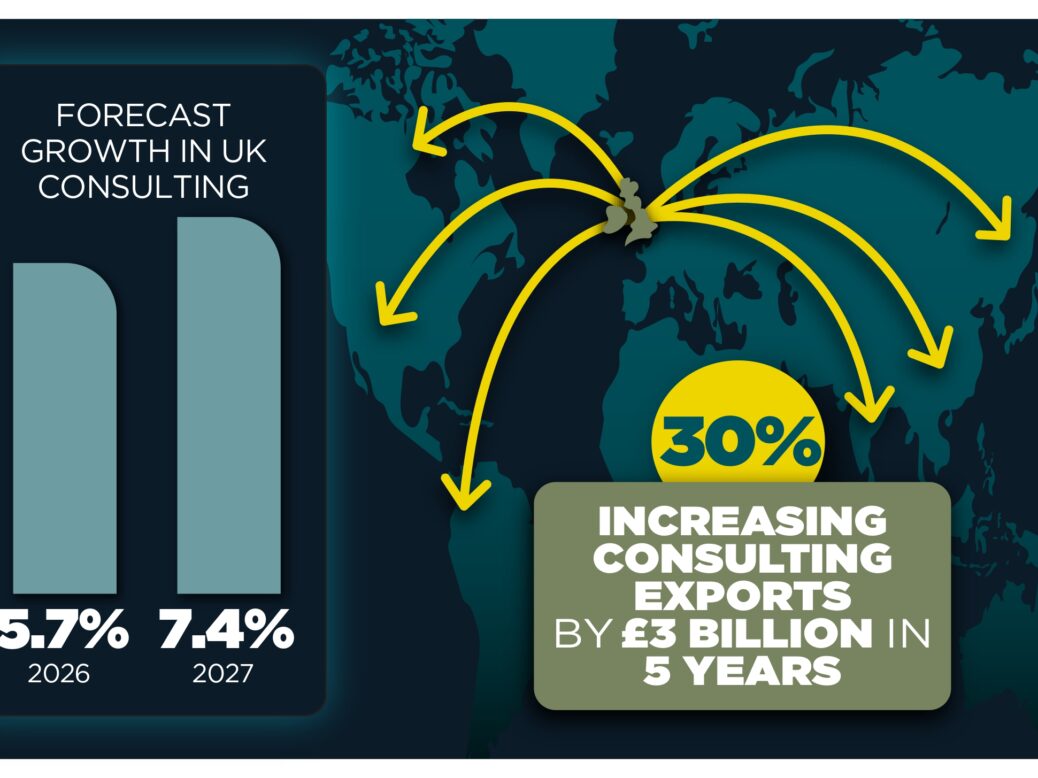
Finally, we can lead with optimism. And this might be our most pressing task of all. In difficult times, negativity can become a self-fulfilling prophecy. Yet our survey paints a more hopeful picture: the industry is forecasting growth of 5.7 per cent this year and 7.4 per cent in 2027.
That growth is not guaranteed, however. It depends on a willingness to challenge inertia, take difficult decisions and supercharge delivery. As one consulting leader put it: “It’s time to move from the narrative of Broken Britain to Brilliant Britain.”
The lessons from consulting are in many ways lessons for the wider economy. Because we are intertwined with so many other sectors, we act as a bellwether. What we see in consulting often reflects what is happening across the organisations we serve.
And the messages are clear: lead on technology, commit to the planet, invest in people and choose optimism. If we listen, and if we act, then I am convinced we will be able to look back in a year’s time at tangible progress on so many
of the things that really matter.
Related