
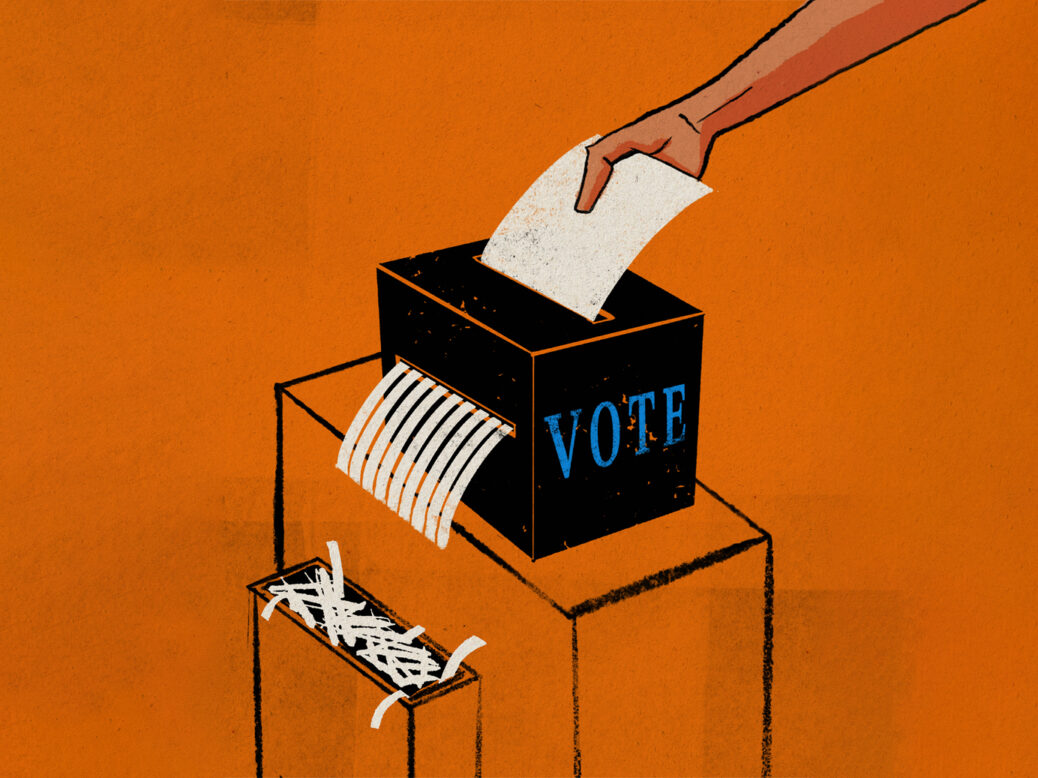
If nothing is happening, why keep electing the same old faces? Why not try someone new? This is the mood music against which millions will cast their vote on Thursday 7 May 2026. After all, more than 50 per cent of us have little trust in our local councillors.
Local elections are not decided by bin collections. If they were, the party offering weekly rather than fortnightly or three-weekly collections would win a landslide. Instead, local contests tend to follow the national mood. In 2013, Ukip secured more than a hundred council seats on the back of immigration – which was then, as now, a central concern for many voters. Newly elected councillors spoke almost sheepishly to cameras about residents citing potholes as their reason for voting. Yet those same candidates had been mandated to campaign on claims that 29 million Romanians and Bulgarians would soon gain the right to live and work in Britain “and draw benefits here”. Not even a debt-free county council could have done much about that.
The simple truth is that a councillor’s majority will ebb or flow depending on how well the Prime Minister is faring with the public. That is why forecasts for this year’s elections point to heavy losses for more than a thousand Labour incumbents.
This apathy, and a general crisis of confidence in institutions, stems from the dominant issue of the day: the cost of living. For well over three years, it has been the main force shaping voter behaviour. Voters who see little financial or material improvement under a government elected on a promise of change have few reasons to remain loyal. They will go searching.

Even when voters are prompted to think locally, many simply don’t. Perceptions of council performance are tied to views of the national government. According to Ipsos, country-wide promises outweigh local ones when it comes to voting decisions. Yet there is a caveat: around one third of voters still say their impression of the local candidate will be decisive – suggesting that personality and individual appeal can still sway outcomes. (That’s at least a flicker of encouragement for anyone eyeing a council seat in 2027.)
Birmingham’s bin strike may loom large for the city’s frustrated electorate. But even without it, the frustration would still be present. The anger, the urge to lash out, would persist. Voters are angry; they want to act on it. And councillors – though often neither responsible for nor capable of resolving the issues driving that anger – will bear the consequences all the same. Such is the nature of the game. A local litter-pick will count for little while Downing Street dominates the public mood. It is, in the end, a brutal business.
[Further reading: Keir Starmer puts his fists up]
Content from our partners


Related


Join the debate
Subscribe here to comment