
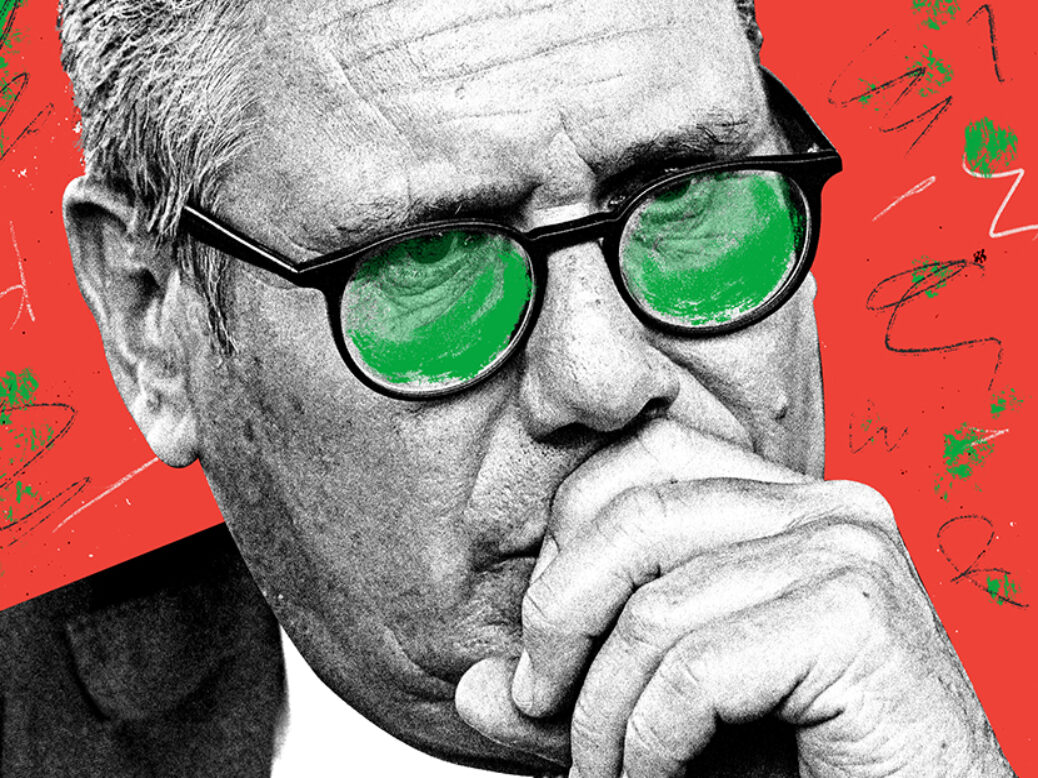
On the Saturday after the Gorton and Denton by-election, Labour MPs all around the country were in their constituencies recovering from watching their party place third in one of its safest seats, and wondering what the surge of Zack Polanski’s Green Party might mean for them. His words, “This is what replacing the Labour Party looks like,” were ringing in their ears. Then an email popped up in their inboxes. It was from Keir Starmer.
“We’ve seen the true colours of Zack Polanski’s Greens in this campaign,” he wrote. Their willingness to welcome George Galloway’s “divisive, sectarian politics” was a sign, he wrote, “that the Greens are not the harmless environmentalists they pretend to be”. They are “more interested in dividing people than uniting them”. Labour would “continue to warn of the risk” they pose, he wrote, from “extreme policies like legalising all drugs and pulling out of Nato that most voters strongly reject”, to “the risk of splitting the progressive vote so that Reform come through the middle”.
Many Labour MPs were horrified. “We’ve learned no lessons from that defeat,” one member of the government despaired. After a campaign hammering home that “Hannah the plumber”, the friendly Green candidate in her colourful clothes, accompanied by her four greyhounds, was peddling “extremist” drugs policies, with no palpable electoral gain, many in Labour ranks wanted an alternative approach to this new threat. One day later, they got it. Wes Streeting took to the stage at Labour North conference and declared: “We’ve got to respect the voters by understanding why we lost. We lost because the party that represented hope in the eyes of too many voters wasn’t us.” He said that Hannah Spencer’s victory speech had been “a Labour speech”. And Streeting had a warning: “We mustn’t fall into the trap of sounding like our attack on the Greens is an attack on hope, or give the impression that there aren’t things that unite us as progressives.”
This is the debate Labour has been having with itself ever since. Anna Turley, the party chair, has held sessions with MPs over how to approach Polanski’s party, often marked by heated exchanges and deep disagreements. In late March, as Labour prepared to launch its campaign for the May elections, the party’s high command was unable to reach an agreement on how to approach the Greens until the last minute. Labour insiders describe Polanski’s party as an “entirely new threat”, and say it is therefore still “an evolving conversation” about how to tackle them. The Reform attack lines, by contrast, had been ready for weeks.

Let’s start with the areas where Labour has managed to reach consensus. Since that badly received email, Starmer has accepted that describing the Greens as “extremist” is ineffective. His party unanimously agrees.
Having scrutinised the Greens’ record in local government, there is broad agreement Labour can make a simple argument that “when the Greens get into power, they just don’t run things very well”, as one strategist puts it. The party is trying to learn from Labour’s experience in Brighton, where it retook the council in 2023 after years of Green rule. However, this becomes a rather unglamorous debate about bin collections, especially drawing attention to the 2021 strike that took place in Brighton under the Greens’ watch, and in Bristol where they attempted to introduce rubbish collections once every four weeks before ditching the policy after public opposition. Yet readers will note that Labour also has an uncomfortable history with bin collections in local government, presiding over the strikes that produced “rats as big as cats” on the streets of Birmingham. Perhaps that line won’t prove so effective for the party in the longer term.
On everything else, Labour is more divided than it maybe even realises. One party figure told me that attacks on the Greens’ drugs policy are a thing of the past, but another pointed out that Labour’s latest focus group suggested the party’s drug attack lines had “really cut through”. Voters said they found the legalisation policy concerning, but recognised that a single Green MP elected in a by-election wouldn’t be able to change the policy. “It would be effective in a general election,” one insider concludes. Even in a local election, in which the Greens wouldn’t be in a position to change national drug policy, some in the governing party have concluded it is an approach worth taking. A Labour Party attack van was dispatched to south London recently with “Greens have the wrong answers: legalise all drugs, economic chaos costing families more, leave Nato and put our security at risk” emblazoned on its side.
Long before the Green surge reached its current peak, John McTernan, the former political secretary to Tony Blair, warned his party at last year’s Labour Party conference that if it wants to defeat the Greens, it needs to understand why it is losing so many votes to them. He brought it back to a diagnosis shared by many on the party’s liberal right and soft left: that Labour is in denial about who its core vote really is (or was, before it started splitting), despising the city-based, white, graduate middle class, and black and brown working classes, who make up its base, and preferring an idealised version of the white working class that deserted it long ago. The Greens’ show of love for these voters is at the root of Labour’s predicament in a way that plenty in the party worry its strategists don’t appreciate.
Lucy Powell, the party’s deputy leader, hit on a similar theme when she held a post-mortem for colleagues after the Gorton and Denton by-election. She said that the lesson to be drawn from that defeat was that the party “must give people a reason to vote Labour and give a better account of our purpose, values and record”. Labour’s analysis found that protest voters were still willing to return to the party, she informed them, but had wanted to send a protest vote.
A key part of Labour’s approach to defeating the Greens is to sell its own achievements in office: its renters’ reforms, employment rights, childcare support and the lifting of millions of children out of poverty by scrapping the two-child benefit cap. Labour can’t win against the Greens by decrying them as dangerous or silly, goes the thinking, but by providing the progressive, hopeful option that voters – Labour’s core voters – are looking for.
Yet Labour has also decided to get its “boxing gloves on”, as one insider describes it. They believe there is political ground to be gained from exposing Polanski as a person. “He does seem to give people a bit of an ick,” is how one Labour source puts it. The party intends to draw attention to Polanski’s switch from the Liberal Democrats to the Greens, as well as to the claim he once made that he could enlarge women’s breasts through hypnosis, which Labour insiders describe as “very weird, as well as misogynistic”. Polanski has apologised for that embarrassing incident, and the team around him believe that any damage it has caused to his reputation is now “baked in” to his poll ratings. Labour isn’t so sure, pointing to polling showing that Polanski’s approval ratings dip when voters are made aware of the hypnosis story.
There’s plenty more that Labour insiders are hoping to get stuck into. Some party figures want to lean into parallels between the Greens and Reform, by painting both as dangerous populists who sell “snake oil” rather than answers. They believe there’s a lack of substance to be probed on Polanski’s economic policy, Nato, nuclear, the party’s previous position on Caesareans, and much more. “The Greens certainly aren’t moderating their attacks on us, so why should we?” asks one party official, who says a “softly, softly” approach won’t work. Labour’s battle with the Greens could get nastier, even as an internal battle about whether that approach will work continues to rage.
[Further reading: Will Keir Starmer survive the May elections?]
Content from our partners



Related


This article appears in the 08 Apr 2026 issue of the New Statesman, The Fall
Join the debate
Subscribe here to commentIt is rather late in the day for Starmer to consider Labour being a progressive party and then accusing Greens of being responsible for “splitting the progressive vote.” Starmer began abandoning progressive politics when he started purging the party of its leftist party members – which worked in tandem with his u-turns on promised progressive policies. What could be more divisive? Moreover, it takes some brass neck for him to consider his leadership progressive whilst using the Terrorism Act to attack our civil liberties and criminalise peaceful protestors opposed to a genocide in occupied Palestine.
Agree. I think that while McSweeney was influential “progressive” became a term of abuse. This made no sense electorally – as the article points out – and it remains to be seen whether Starmer’s government can start speaking to the coalition that elected it. Basic stuff you would think..