
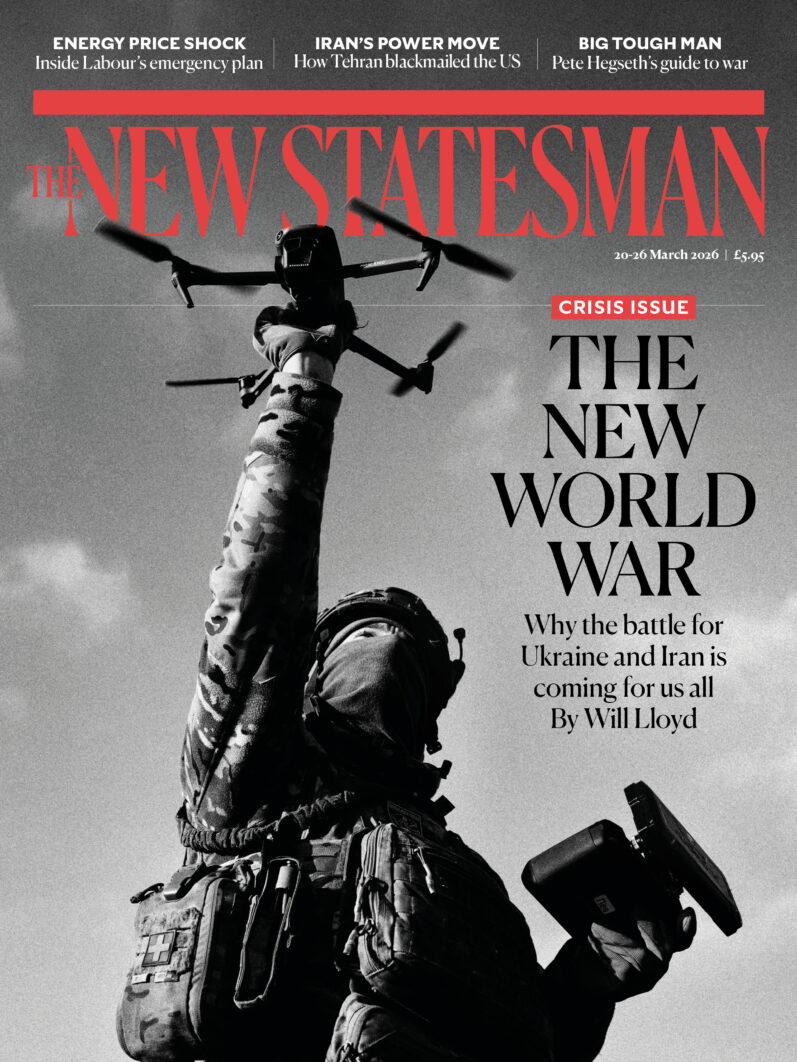
Fifty years ago this month, Harold Wilson resigned as prime minister. For a boisterous young schoolboy at Dulwich College in south London, it was a moment of elation. Nigel Farage strolled into his classroom singing “The Sun Has Got His Hat On” (in part, it seems, to wind up his Labour-supporting teachers). For a more serious-minded student 20 miles away, meanwhile, it was a less joyous occasion. Keir Starmer, 13 years old at the time, had only really known two prime ministers in his short life: Harold Wilson, the dominant politician of his childhood who took over when Starmer was just two, and Ted Heath, who had briefly interrupted this period of Labour rule with a crisis-ridden four years scarred by economic stagnation, Middle Eastern war and inflation. Sound familiar?
In recent years, Starmer has become – at least in the wider Westminster imagination – somewhat tied to Wilson, the Labour leader to whom he once remarked, rather off-handedly, that he most looked up to. In fact, when I asked the Prime Minister about this as we walked through No 10, he was somewhat dismissive of this notion. I had asked whether he ever lingered to look at the portraits of his predecessors which line the staircase at the back of the building. No, he replied, matter-of-factly. But wasn’t Wilson his hero? Again, no. He had just been asked which of Labour’s former leaders – other than Attlee – he most admired. Whatever else there is to say about Starmer, he is not a political obsessive. The tragic fates or glorious legacies of those who came before are not the stuff that moves him.
Still, there are similarities. Wilson, like Starmer, was never beloved by the public. Like Starmer, he was also seen, in some ways, as shifty and untrustworthy, having emerged from the left of British politics only to govern as an establishment centrist. And yet Wilson, unlike Starmer, was a remarkable politician – sharp, witty, astute and successful. Over the course of his career he fought five general elections and won four, outmanoeuvring both the Powellite right and Bennite left in the process, securing Britain’s place in Europe, keeping the Labour Party together and Britain out of another American war. He then quit on his own terms at the time of his choosing. As the prospect of global conflagration rears its head once again – as Will Lloyd writes in our cover story this week – the lessons from Wilson’s refusal to enter Vietnam will surely be playing on the mind of the Prime Minister.
For these reasons and others, I probably think about Wilson more than I should – though not because of his dizzying success. Whatever his accomplishments and political prowess, there is something so full of pathos about Wilson’s last days in office in the 1970s, the decade our own seems determined to mirror. In many respects, Wilson had everything Starmer lacks: raw political nous, ideological depth and what we now like to call “communication skills”. For a brief period in the 1960s, at least, Wilson looked like he had it all. And yet, by the time he resigned as prime minister, aged just 60, he was a broken man.

Wilson left the premiership grey, exhausted and lost, drinking in the day just to cope, barely able to muster the energy to get through the week, let alone control the ship of state. On one occasion, talking with a friend, he dismissively referred to himself, tears in his eyes, as a part-time prime minister. In one interview shortly before he left office, he was asked about his plans for retirement. He replied that he hoped to “think about the problems facing the country”. Such was the scale of Britain’s problems, he seemed to be saying, it was simply not possible to think about them at the same time as managing them. It often strikes me that this is the stage of politics in which we once again find ourselves.
Thinking about Wilson brings home the scale of the challenge facing Starmer today. Wilson was one of the brightest minds ever to have served as prime minister. And yet the challenge defeated him, twice, just as it had defeated Heath before him. In an interview shortly after his resignation, he was asked what he wanted his “era” to be remembered for. First, he had “established a totally new relationship between government and people in the fight against inflation”. Margaret Thatcher came along to strike off that epitaph. And second, he had “settled the position of Britain within the European Community once and for all”. History would undo that too, in time. In politics, little lasts for long – even legacies. Make of that what you will.
[Further reading: How academics ruined Shakespeare]
Content from our partners



Related
This article appears in the 18 Mar 2026 issue of the New Statesman, The new world war
Join the debate
Subscribe here to comment