
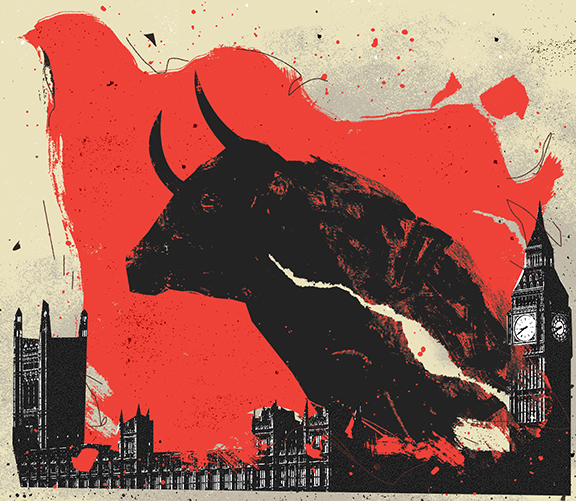
Like many men, I was once briefly obsessed with Ernest Hemingway. The romance of it all was just too intoxicating: the drinking and violence; power and machismo. Oh how I longed to go to Harry’s Bar. Or to Madrid, Havana, Paris… the sea. Perhaps Orson Welles would be there too. And Winston Churchill. And Richard Burton. You get the picture. At some point these fantasies gave way to cynicism. A short, disturbing story called “The Short Happy Life of Francis Macomber” (1936) acted as something of a break, centring on a pathetic cuckold hunting in Africa who finds happiness in the final minutes of his life by killing a lion – only to be accidentally shot in the head by his wife. Hemingway’s experience of war had implanted in him a notion of raw courage as the ultimate source of meaning. But wasn’t it all just a kind of anachronistic chauvinism? Besides, why was he so fixated on Africa? And why couldn’t he write female characters?
My tastes moved on. After a spell with Ian McEwan and then with George Orwell, I discovered John le Carré: the anti-romantic who painted in greys, rather than Hemingway’s blistering reds. Le Carré admired courage too, of course, but also intelligence and cunning. His moral universe was dark, complicated and equivocal. He understood England and its elite, the smart, besuited men and women of Whitehall I was beginning to get to know in Westminster: the Jeremy Heywoods of our world, ruling with wily elitist charm. Here were my subjects too.
Suddenly, though, I find myself back with Hemingway. Perhaps the declinism of Le Carré has become too real, the greys too close. I think it is more than that. The political challenge facing Britain today is, of course, systemic rather than merely personal. Between 2008 and 2016, the country’s settlement collapsed in a way that no one has worked out how to replace. Even if we wanted to rebuild what we had, the old world has gone – stamped out by Trump, Putin and Xi. As such, our leaders are routinely broken on the wheel of this reality, becoming lost and purposeless, unsure how to protect Britain’s dying prosperity. That is Le Carré’s world: one of stark ethical calculations – men who sacrifice their own morality in their bid to play the game.
And yet, even that conception seems to flatter the people I see in Westminster today, whose struggles are more urgent, primal and tragic, one in which character is tested and frequently fails. So obvious is Britain’s decline that only those too unwilling to face up to the reality – or too cowardly to confront it – can plausibly claim not to see it any longer. And so, the question becomes one of courage: who is prepared to address this reality? Who has the determination to seize the power necessary to do anything about it? These are the questions that will define 2026, determining not only who will be prime minister by Christmas next year but whether they will have any chance of staying in position beyond the next general election.

In “The Capital of the World” (1936), Hemingway pushed character to its violent, tragic limits in a way that has never left me. Set in a hotel called the Luarca in Francoist Madrid, it describes three matadors who are staying there, all destined to fail because of human weaknesses buried within them: “One who was ill and trying to conceal it; one who had passed his short vogue as a novelty; and the third… a coward.” None of this was fair, of course. The coward had once been brave, but lost his nerve after receiving a “peculiarly atrocious horn wound”. The ill matador had once been great, but was now reduced to trying to conceal his illness as he withdrew from life. And the third matador, the novelty, “had become old-fashioned before he had ever succeeded in endearing himself to the public”.
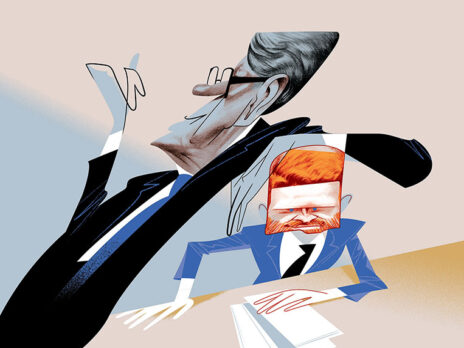
The three matadors have served as archetypes of so many of the politicians I have watched over the years: men and women of seriousness and intelligence who cannot overcome the limitations of their characters. In one sense, there’s an element of each of Hemingway’s three matadors in Keir Starmer himself. Once a dashing young activist, today he appears broken, his assurance gone after the blows he has suffered. Unable to endear himself to the public, he instead finds himself leading a government unable to conceal its illness and so withdraws from view as much as it can, drawn to foreign policy, far removed from the Commons.
Partly, you might say, this is as unfair on Starmer as life has been to the matadors of the Luarca. So he hasn’t won the public’s fancy? So what. There are more important things to worry about. And yet, it does matter. Politics has always been a degrading popularity contest. To remain in power, politicians require our support and so find themselves in a constant battle to win affection – or respect. But, usually, this only makes them less likeable. Politicians, in turn, grow to resent their dependency, and poison enters the relationship.
Though I have met many people who dislike Starmer personally – including within the current cabinet – I have always found him to be a decent man who cares about doing the right thing. But perhaps he simply does not have “it”. “His virtues, which were courage and calm capability, and his name on the poster, would draw no one to a bull ring,” Hemingway wrote of one of his matadors. The early blows Starmer suffered in power wounded him more than I understood at the time. The explosion of street violence last summer, the freebie scandal and the clumsiness of the government’s early economic choices left an impression that Starmer cannot shake. Perhaps it was over before it even began: his general election victory was just too shallow. I have a message from a political strategist sent to me the morning after the general election. “That’s him done,” the former No 10 official wrote, to my surprise. “The Tories lost. Labour didn’t win. He’s going to have such a rude awakening.” At the time, I was dismissive. “Not sure I agree.” Surely he was secure until 2029? He was Prime Minister with a landslide majority. He had five years to do as he pleased. Yet, it was my friend who seems closer to the truth.
What is striking about politics is the raw, overwhelming importance of instinct. It was Henry Kissinger, ironically, who once observed that leadership is less a question of capability than character – that great, hard-to-define quality combining elements of instinct and moral strength. “You can always hire intelligent people,” he once put it. “But you cannot hire character.” Instinct, in particular, comes to the fore in moments of crisis, when decisions must be taken on unfamiliar terrain. Instinct acts as a gravitational pull, shaping leaders, governments and even countries, no matter what grand project is declared. Look at Britain’s relationship with the EU. When times become difficult, we look to Europe as a salvation. When we were out, we wanted in, and then when we were in, we wanted out. Now that we are out and struggling, our attention turns back towards going in.
When it comes to Starmer himself, his instincts are now clear for all to see. Politically, we watch a man setting a direction which he believes to be the right course of action for the country: to be tough on immigration, to leave Brexit well alone, to reduce welfare spending and grow the economy. Starmer does this in the service of protecting his own chances of re-election and, as he sees it, the civility of Britain’s political settlement. And yet his instincts often pull him in the opposite direction. While he believes – or believed – that he must ensure taxes for “working people” do not go up, all his instincts pull towards a higher tax-and-spend social democracy. Similarly, while he declares in public that Britain risks becoming an “island of strangers” without border control, he regrets the words almost as soon as they leave his mouth – words seen as an affront to his decency. And finally, now, while he sets out red lines limiting Britain’s “reset” with Europe to reassure the voters whose support he sees as necessary to remain in power, every sinew of his body pulls him closer to these self-same boundaries which he doesn’t really believe in. Starmer’s instinct is conservative. This is why he cannot be a leader in the charismatic, insurgent sense, but rather becomes one of Max Weber’s rational legalists, drawing authority from convention. He seeks to manage, to compromise, to delegate and to withdraw. He wants his cabinet to sort out their differences before coming to him. He loathes the theatre of politics; the spectacle; the showmanship. He expects his political picadors and banderilleros to do their job so he can make his decisions efficiently.
As such, he finds himself gored by the animal, taurine instincts of politics: the rage and rebellion, artistry and ambition. As the pressure mounts on him, we can see that his instinct is to fight on, though in private he continues to avoid confrontation with those now planning for a future without him.
The question that now hangs over the Labour Party is which of these leadership contenders has the instinct required to seize power. Much will depend on the answer to this question. Andy Burnham is popular in the country, but he must declare his challenge early or risk being left behind once the action begins in Westminster. Though he believes his time has come, he will have to fight just to enter parliament, let alone secure the crown. In short, Burnham must go where his own instincts have not taken him so far: he must confront and defeat those standing in his way, making enemies and causing hurt.
Of the other contenders, the most likely are Wes Streeting, Angela Rayner and Shabana Mahmood. But who among them, as Churchill’s old friend FE Smith wrote, has the stout heart and sharp sword to claim the prize? Labour MPs – and members – will ask themselves which candidate is most likely to win public affection, escaping the fate of Hemingway’s matadors – for just as there are instincts in individuals, there are forces beyond reason lodged in the national viscera too.
In Hemingway’s tale, no matador ever left the Luarca of their own volition. “A bill was never presented to a guest unasked until the woman who ran the place knew that the case was hopeless.” Keir Starmer has a few months to show us the case is not hopeless. Yet as Hemingway also noted: “There is no record of any bullfighter having left the Luarca for a better or more expensive hotel. Second-rate bullfighters never became first rate.”
[Further reading: Starmer still lacks a true mission]
Content from our partners



Related

This article appears in the 12 Dec 2025 issue of the New Statesman, All Alone: Christmas Special 2025
Join the debate
Subscribe here to comment