
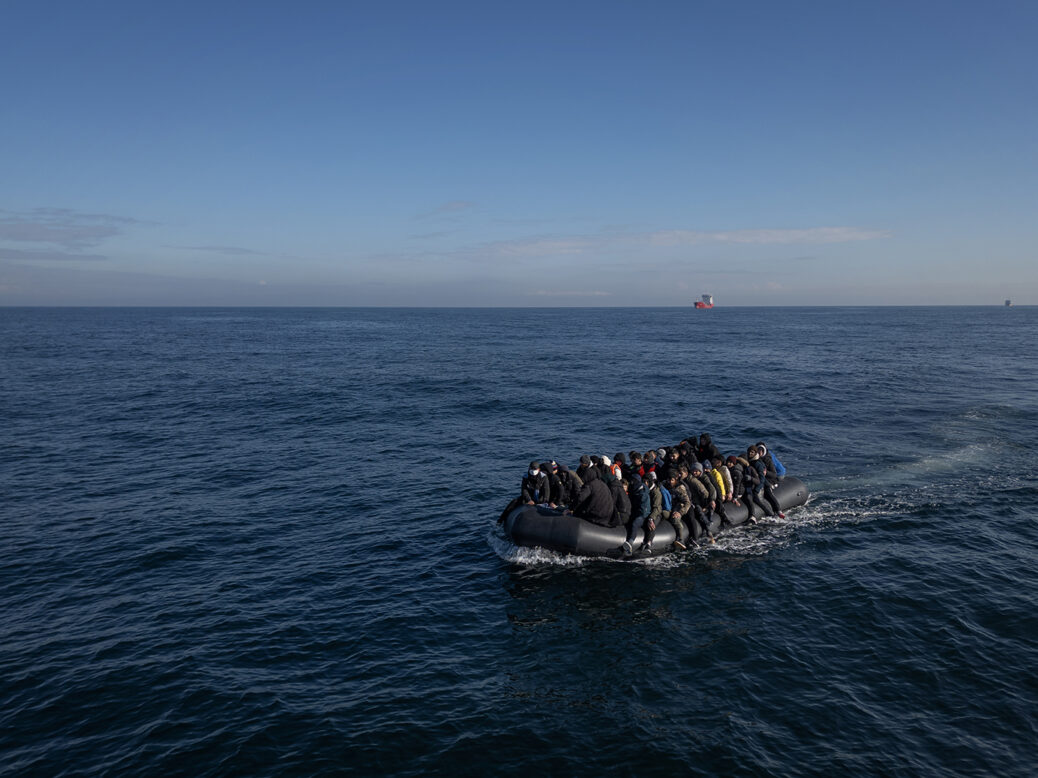
Time after time in the House of Commons and in TV studios, Shabana Mahmood has repeated the same thing: her new measures toughening the rules for asylum seekers and refugees to some of the most restrictive in the democratic world, are not about politics. They are not about defeating Nigel Farage and Reform. They are about tackling the numbers. It’s about fixing the system.
Simply put, the public is being told that this Labour government will reduce asylum seeker and refugee numbers, stop the boats and empty the hotels. Nigel Farage is, as Mahmood had made clear, not “living rent-free” in the Home Secretary’s head.
Despite growing discontent among Labour MPs and supporters, most will likely back Shabana Mahmood’s measures, albeit reluctantly. They will walk through the voting lobbies, frustrated and out of options. This is not why they entered politics. They wanted hope, and the possibility of real change. Yet here we are.
These are fundamental changes to our refugee and asylum process. Such changes will have very real, ugly impacts on many of those who are genuinely fleeing persecution.

The measures, Mahmood says, are about rebuilding trust in our borders and rebuilding faith in a system that many will continue to depend on.
Politics is about making the problem clear and then fixing it. The first part draws the public’s and the system’s attention to the issue; the second gets the solution underway.
And this is where the problem lies.
There is close to no evidence that the government’s plan will reduce numbers to the extent that she suggests. In fact, like so many home secretaries before her, Mahmood risks promising the public one thing and delivering something quite different, with all the resulting toxicity that comes with broken promises on migration.
Conservative home secretary after home secretary promised their own sweeping reforms to “pull factors” that they claimed encourage migrants to make the crossing. Unfortunately, the evidence does not support the idea that such measures have an impact on numbers.
Over the last decade, these kinds of deterrents have been repeatedly shown to be ineffective. There is no evidence that refugees “shop around” for a place to head, or that the UK has specific pull factors. There’s also no evidence that we’re far more generous than the rest of Europe, and certainly not more generous than France, through which the majority of migrants travel.
The only specific pull factors are that we speak English and that we once had a global empire; unless we all plan to parler en français or invent a time machine, neither is going anywhere.
Yet we are back to discussing pull factors. Why? Because they are instinctively rational. I think back to my own experience of working with policy experts and sitting down with researchers, on all sides. I’d sit there and ask, “Surely there are factors that make people choose Britain?” But no. All the evidence, collected over decades and in depth, shows that much larger forces are driving the number of refugees. Like all human migrations, they are driven by the forces of war, conflict and climate. And to tackle them, we’d have to tackle this at an international level, yes, with France, but also at source and across Africa and the Middle East. This is a challenge made more difficult as countries reduce international development support and accompanying programmes that help those desperately wishing to stay in their home country (the vast majority). Little to no time is being spent on this kind of important work.
But that work is hard and complicated. It requires trade-offs. As Keir Starmer said himself in his first Labour conference speech as Prime Minister, a working system would also mean taking in legitimate refugees and accepting the situation as it is, not as we wish it to be.
But this isn’t the mood the country is in. Many want action, or at least a certain number of voters want action. Something must be done, or be seen to be done, and once again we turn to the magic wand of pull factors. It is time for politicians to be honest about what is actually driving the crisis and what, in the end, can tackle it.
The solution is not making life much harder for recognised refugees in your own country. Solutions lie in that great tangled drawer of international agreements and global conflicts. This isn’t simple, and indeed isn’t the hot topic of public conversation, and yet, unfortunately for the government, it is true.
There are viable ways to reduce numbers and improve flows through the system. As noted in research from the Future Governance Forum, these ideas require political will as well as a commitment of time and money. But there also needs to be a recognition that a politics aims for zero refugees is a politics from a parallel world, or at least a world that Labour should not wish to inhabit.
The bigger problem will come after Labour MPs walk through the lobbies, reluctantly endorsing a policy and politics that sit at odds with so much they believe in. What do they do when it doesn’t work?
Yet it will change our politics; it will once again raise the saliency of the issue. And it will move us ever closer to the endpoint of this kind of politics – a system that demands ever larger-scale deportation. Eventually, this will be the destination.
[Further reading: These are Farage’s boats – we must not let him off the hook]
Content from our partners



Related

Join the debate
Subscribe here to comment