
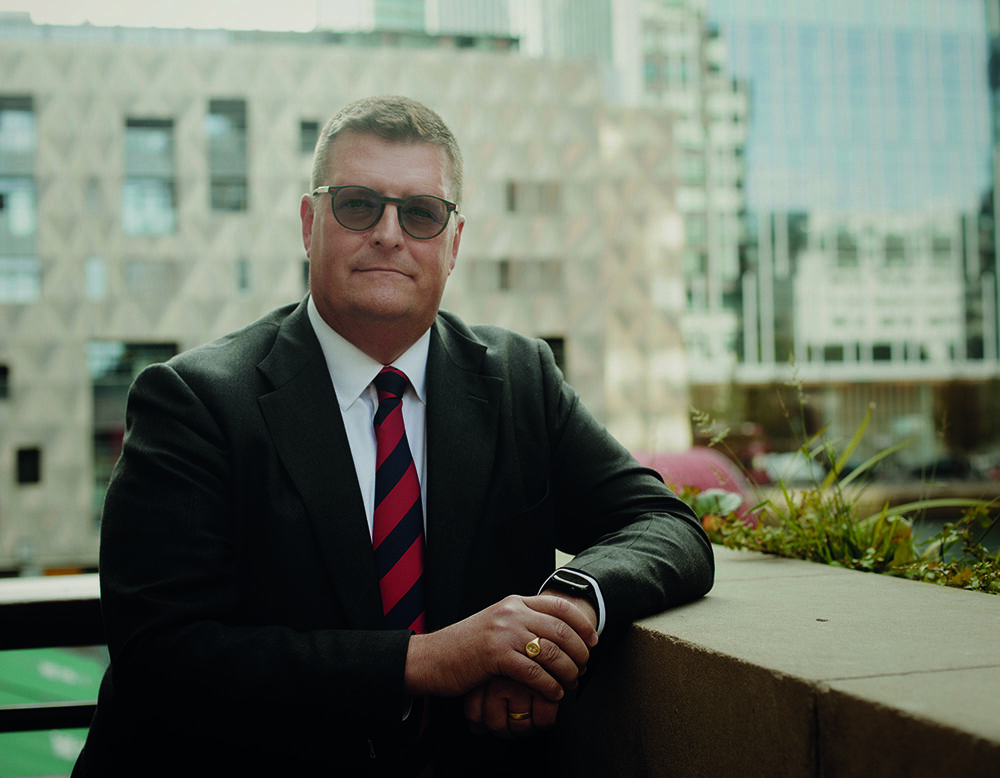
When Ruth Perry took her own life in January 2023, while awaiting the outcome of an inspection she knew would downgrade her school from outstanding to inadequate, Martyn Oliver, now Ofsted’s chief inspector, was still a headteacher. The coroner ruled Perry’s suicide was “likely contributed to by an Ofsted inspection” – the first time the inspectorate had been named a contributing factor in a headteacher’s death. As a fellow school leader, Oliver told me, the moment “really socks you between the eyes, and makes you sit and reflect upon that moment of that one-word grade”.
The elimination of the single-word judgement, used in every inspection since 1992, has been the subject of emotionally charged debate in the years since Perry’s death, and is at the heart of the new Ofsted framework published on 9 September. Critics have long argued such condensed judgements do not adequately capture and communicate a school’s complex context, strengths and weaknesses, and place unreasonable pressure on headteachers. In notes Perry wrote before her death, she described herself as “heartbroken”, “absolutely panic stricken” and “devastated by the impact of how I have done a disservice to the community”.
When I met Oliver at the Ofsted office in London’s Canary Wharf, he told me that until Perry’s death, he hadn’t questioned the existence of the one-word grade. “Big chunks of my leadership career… have been built on the idea of that one-word grade,” he said. In his three decades as a teacher, working in the east Midlands and the north of England, he took some of the country’s most difficult schools from inadequate to outstanding, “six, seven, eight, nine times” – so many he can’t remember the precise number. “Working in a school which is one of the largest schools in the country and it goes outstanding, and then being asked to go to a school that’s inadequate – those two words meant something.” Driving around North Yorkshire, where he lives, he regularly passes two schools he worked with and sees the banners proudly advertising their outstanding status. “Especially when [they’ve] been in special measures, they want to tell the community. But schools are more than just a headline on a fence.”
Reflecting on the one-word judgement in the wake of Perry’s suicide, and later in consultations as head of the inspectorate, he began to see its limitations. In the moment of receiving an outstanding result, Oliver said, “Of course, you celebrate it and you’re in the euphoria of that moment. But on reflection, the next day, you think: everything isn’t outstanding. There are things you want to do, and the best people are always striving to do better.” When the prospect of ending the practice was mooted, he “became quite excited about the idea of embracing the fact that you can have strengths and you can have areas that you need to develop… That’s the point behind the reforms: to try to identify, with fairness, all of the strengths and, as gently as possible… call it out when it’s not good enough for children.”

In September last year, Ofsted – which inspects not just state schools, but early-years providers, colleges, teacher training providers, children’s social care services and some independent schools – suspended single-word judgements with immediate effect. Now replacing them are report cards, which give a broader picture of a provider’s performance. The new, colour-coded cards, revealed last month, measure six different areas (such as “inclusion”, “curriculum and teaching”, and “leadership and governance”) on a five-point scale, from “urgent improvement” to “exceptional”. Parents will be able to click on each headline judgement to access a longer, narrative summary of inspectors’ findings. Safeguarding – failings which led Perry’s school to be downgraded – will be judged separately, either as “met” or “not met”.
Polling by YouGov found that two thirds of parents prefer the new approach, but the teaching unions have derided what they describe as the “Nando’s-style” report cards and claimed the reforms will not reduce teacher stress. This view is confirmed by the independent well-being impact assessment of the framework commissioned by Ofsted, which found that the stress related to inspection is “unlikely to materially change”.
It also identified two conflicting responses to the new framework from school leaders: that it is both “the same old Ofsted model in new packaging” and that it “seems quite different” and will be “demanding” to get to grips with. Are the competing demands on Ofsted ultimately impossible to satisfy? “It’s difficult to take a very well-known, very highly regarded – people might be contesting it, but nonetheless, highly regarded – framework… and to do away with it; to remove the judgement, but to find a way of keeping standards and fairness high. There’s a tightrope there where, if you’re not careful, it could become impossible to serve everyone and you end up with nothing.”
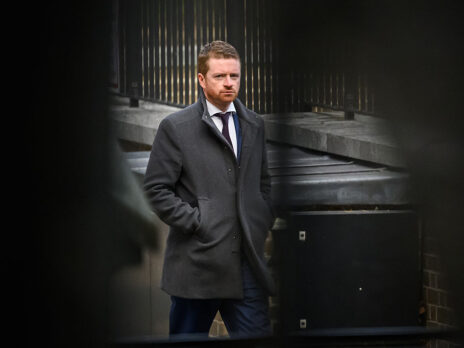
Standing at well over 6ft, Oliver, 53, is something of a gentle giant. He is principled and scrupulous yet warm; before he became a headteacher, he taught art. It is easy to imagine him being the sort of teacher who commands rather than demands respect. Growing up in Lincolnshire, he said, his own teachers – “really inspirational people” – were a part of his life beyond the school gates: “You knew the teachers; I knew where my maths teacher lived, I knew where my English teacher lived, you knew everyone lived in the community. It was different in the Seventies and the Eighties like that.”
Oliver’s father, a potato merchant, regularly drove him to London at weekends to visit art galleries. “My entire childhood was full of aspiration and hope, and I could see the difference that education provided.” After completing his teacher training in Wales, Oliver returned to England to teach, eventually working his way up to be chief executive of Outwood Grange, one of the very first multi-academy trusts, which under his leadership grew to comprise 41 schools.
He became Ofsted’s chief inspector in January 2024, taking over from Amanda Spielman. (Though Spielman was heavily criticised for her response to Ruth Perry’s suicide, she was not pushed, but left at the end of her fixed five-year term.) Oliver was first interviewed for the role by then education secretary Gillian Keegan, along with schools ministers Nick Gibb and Diana Barran, and later at No 10. “Art teacher goes for a job interview in No 10…” he intoned, as if it’s the start of a joke. “At some point I stopped being overwhelmed and looking around the room, and focused on the right thing.”
Of every job Oliver has ever interviewed for, he told me, he only missed out on one – to the woman who would one day become his wife. “It’s only because she beat me to it that I married her, otherwise I never would have gotten to know her in the first place. So I happily surrender to her in life, work and everything.”
He started teaching in 1995, three years after Ofsted in its modern form came into being, “So I’ve experienced as a teacher, as a head of department, a head of year, a head of sixth form… every type of inspection there has been.” Asked how many Ofsted inspections he has been through while working in schools, he made an oddly specific guess of 96. “I can remember… the ones that I liked the best and the ones that I found the most intuitive, the most insightful. And I’ve drawn an awful lot on that.”
In 2023 the Beyond Ofsted inquiry reported that 74 per cent of teachers surveyed said their experience of Ofsted was negative. Teachers often complain that an Ofsted inspection can vary considerably depending on the luck of which inspectors are appointed to their school. In the case of Perry’s inspection, the coroner ruled it had “lacked fairness, respect and sensitivity” and was at times “rude and intimidating”. (Oliver’s first act as head of Ofsted was to halt all inspections until inspectors had received training on how to help alleviate staff stress.) He hopes that the new model will “feel so much better” for staff.
Under the previous framework, the result of an inspection was presented to school leaders at the end of the second and final day of the visit, and there was no mechanism for appeal. Now, “we’ll share the position, so people can say, well, hold on a minute, you’ve just gone and seen a brand new teacher, but go and see my experienced teachers and see what it’s like when we’ve developed them, because that will give you a view of the quality of leadership… That’s where it will feel fairer, as will the ability to call out [strengths and weaknesses] with more nuance [in] more areas.”
Other changes to the framework include more frequent inspections for early-years providers, an extra inspector per school visit so a wider picture of a school can be gained over the two days, and, Oliver hopes, a clearer set of expectations against which educational settings are judged, laid out in five “toolkits”.
At the centre of much criticism of the inspectorate, Oliver said, is a “misconception” about its role. “This is about identifying to parents where schools are doing what they’re supposed to do. If, as a parent, as a taxpayer, you send your child to a nursery, to a childminder or to a college, to a school, can you be sure that they’re going to be well cared for, well educated? And how do you know there’s someone checking? The answer is Ofsted.” Reports are ultimately “designed for parents”, and the data Ofsted gathers “designed to go to parliament”; implicit is that Ofsted is not designed for teachers. “We report on the state of the nation to parliament, we report to parents, and we find, without fear or favour, what we find independently.”
Ultimately, Oliver told me, inspection is an inevitable and vital part of working in the public sector. Hospitals, prisons, the police, the fire and rescue service – all are examined and graded. Even “someone selling coffee and chips in a lay-by on the way to Scarborough” is required to display a food hygiene rating. “Public service is difficult, but it’s a privilege, and you get given an awful lot of money by the taxpayer, by the general public, to carry out a service. It’s right that we’re held to account.”
Many headteachers dread not just the rigours of an Ofsted inspection, but the shame that follows if their school is downgraded: the negative impact on their staff, ostracisation from their community (as Ofsted results affect house prices, they can materially impact those who live in a school catchment area), even the loss of their job. Under the 2010 Academies Act, a school that is given the lowest rating, inadequate, and placed in special measures is automatically forced to become an academy, often involving the replacement of senior leadership.
Oliver was therefore pleased that the Education Secretary, Bridget Phillipson, commissioned a review of the accountability system – how and when the state intervenes in school improvement – which was published at the same time as Ofsted’s. Though separate responsibilities, inspection and improvement are inextricably linked, and revising them in tandem has a certain logic: “Here’s what the inspector is going to look at, and here is how we’re going to use that information, and other information, to hold the sector to account.”
Measures included in Phillipson’s controversial Schools Bill, still making its way through the Lords, will in some cases end the legal duty on the education secretary to forcibly convert struggling schools, allowing for other, perhaps gentler, more collaborative improvement programmes. “If you go back some years,” Oliver said, any inspection outcome below good resulted in “structured intervention. Well, you might say: ‘It’s less than good, quite rightly so.’ But there are circumstances where people go in to try and turn something round, and a matter of time isn’t given.”
Under the new system, if a school is placed in special measures, the response “is still structured intervention, because children only get one chance at childhood”, but otherwise, wherever possible, the approach will be: “If there’s an area that needs attention, work on it, folks. We’re going to monitor; you need to monitor. And if it gets to that, help is coming.”
“The high-stakes nature [of Ofsted] isn’t just the judgement,” Oliver said. “It’s the bit that follows. And we do need to dial down the rhetoric.” He believes key to changing the way teachers view Ofsted is “talk[ing] about how we use that language in a far more mature way, to say: what’s high stakes about getting help?”
But the innovation Oliver is “probably the most excited about” (an excitement I expect estate agents will share) is a tool called “Ofsted: explore an area”, which will allow parents, the inspectorate and the Department for Education to view results across all providers by region. “I’ll be able to look at area insights, because there’s something about these left-behind areas, disadvantaged areas, areas of low social mobility, high social deprivation. They’ve been like this for decades, decades and decades and decades, and in the short five years I’ve got, I’m going to do everything I can, every single thing I can, to try and close that gap.”
I wonder how Martyn Oliver, the art teacher from Lincolnshire, sitting in a shiny glass government building in Canary Wharf – “which feels really as far disconnected from a school as I can possibly think” – views the north-south attainment divide? He gently rebuffed the question. Whether he’s in educational settings in Cornwall or the Isle of Sheppey, Oliver said, he hears leaders talking about the same problems.
“But I think there is something about some of the communities in the north – brilliant people, but for some children and some families, education isn’t seen as the silver bullet. It’s like when you play sport, you want to visualise success; see yourself winning. It doesn’t mean you’ve got to know what job you’re going to do when you get older. But it doesn’t half help if you’re going to study maths, and you’re going to stay back after school, and you’re going to do your homework, and you’re going to revise at the weekend and in the holidays, [to know] why. Because I want to achieve that, to do this. The best schools in the north are doing that, the best schools in the south do that… Hope is the bit: giving children hope.”
[Further reading: “Build, baby, build” can’t mask Labour’s desperation]
Content from our partners

Related
This article appears in the 08 Oct 2025 issue of the New Statesman, The truth about small boats
Join the debate
Subscribe here to comment