
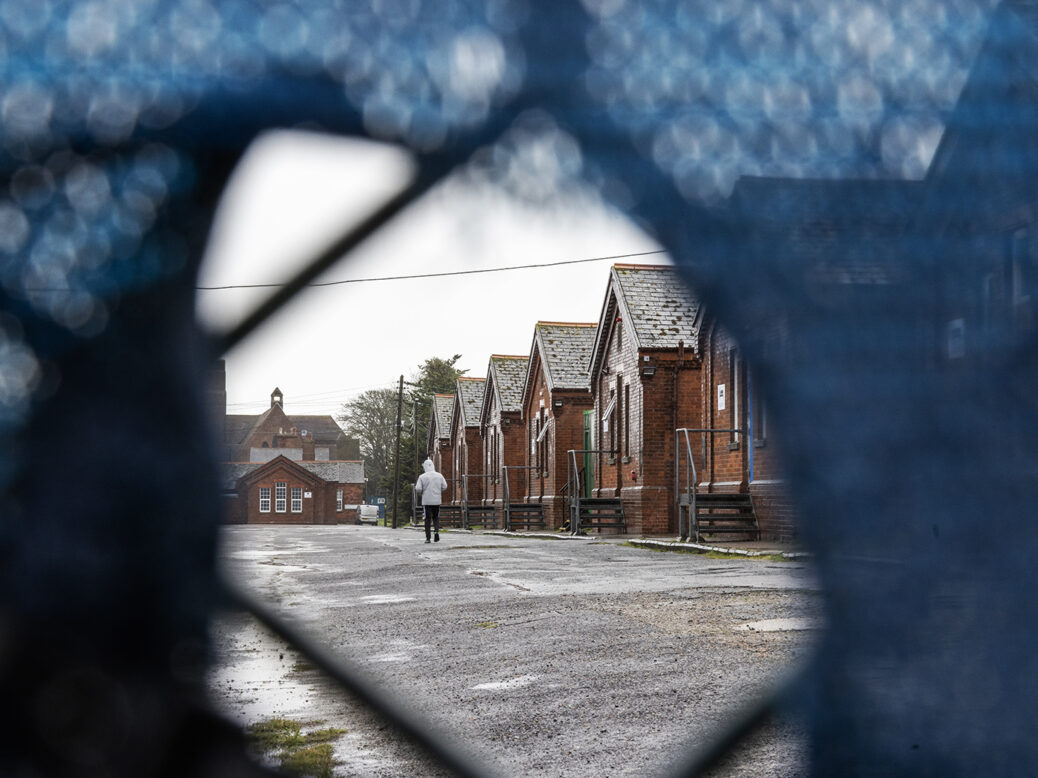
Welcome to Britain, where soldiers drive ambulances on NHS strike days, fill in for Border Force staff and have their barracks used to house asylum seekers. To be fair, our most diminished armed forces since the Napoleonic age might as well make themselves useful. It’s unclear, however, how useful the latest government plan to house more asylum seekers on military sites will actually be.
The idea is to decant people from the controversial hotels, visible on high streets and in town centres, into places that not only appear less comfortable but are less likely to define spaces in towns and cities with high footfall.
But do barracks really draw less local opposition than hotels? While they might not elicit as many accusations of “luxury living” as the hotels do, they are still sites of notoriety. They tend to house more people than an individual hotel does, and are often situated near small settlements and villages rather than more populous places – making the presence of hundreds of newcomers more keenly felt.
Remember Penally barracks in a coastal village of Pembrokeshire, which at its highest capacity in 2021 housed 250 asylum seekers? It drew near daily protests, and even an arrest for suspected arson. Then there’s Napier barracks in Folkestone, Kent, housing hundreds of asylum seekers – who once went on hunger strike amid unsanitary conditions and overcrowding – and which became infamous during its Covid outbreak and when it burst into flames and suffered electricity and hot water outages. Wethersfield airfield asylum centre in Essex, which houses about 800 men, has drawn protests both from locals – over the men’s presence – and from the men within, over their poor living conditions.

The idea of swapping hotels for barracks is not a new one, and has been suggested by asylum accommodation contractors to the Labour government. But the reason it has taken the government so long to commandeer barracks for asylum accommodation is mainly because of the competing interests of constituency MPs opposing such plans in their backyard, as I understand it. It is telling that the two latest military sites identified for housing asylum seekers – Cameron barracks in Inverness, represented by Lib Dem MP Angus MacDonald, and Crowborough training camp in Sussex Weald, represented by Tory MP Nus Ghani – are not on Labour’s patch.
MacDonald has called the choice of Cameron barracks “a bit odd” as it’s in the city centre (“I very much thought the idea of putting them in army camps was to have them out of town”), and council opposition is already bubbling up against use of that site. Ghani has said she is “furious” at plans to use the Crowborough training camp site – launching a petition against it. In contrast, Napier barracks, in the Folkestone seat of Labour MP Tony Vaughan, is due to be emptied of asylum seekers by the end of this year.
There is not much of a value-for-money argument either. Last year, the National Audit Office calculated that early such mass-accommodation sites, including Wethersfield, collectively will “cost more than the alternative of using hotels”.
What’s clear from the barracks plan is that there are no good options. Barracks draw local opposition and MP ire just as hotels do, and are more likely to result in scandal over unsafe conditions and fractious residents. Using bigger, less central hotels has also – I hear – been mooted (perhaps cynically in an attempt to reduce the headline number of hotels), but that could simply attract accusations of “super-hotels”. Another option, disused student halls, is also politically tricky as they are so often situated visibly in city and town centres.
The alternative to using hotels or mass-accommodation such as former barracks or university blocks is houses of multiple occupation, or HMOs – which are already in use as private landlords take on cushy government-funded contracts to carve up their properties to make room for asylum seekers. Residential rentals may be less likely to become focal points of protest, but are already impacting social cohesion in places where locals in need of housing see themselves as losing out.
Politically, barracks may be the least-worst option for the government, but the policy could result in tricky fights down the line with its own MPs to find enough of them.
[Further reading: Sarah Pochin’s comments shouldn’t have sparked a war]
Content from our partners



Related


Join the debate
Subscribe here to comment