
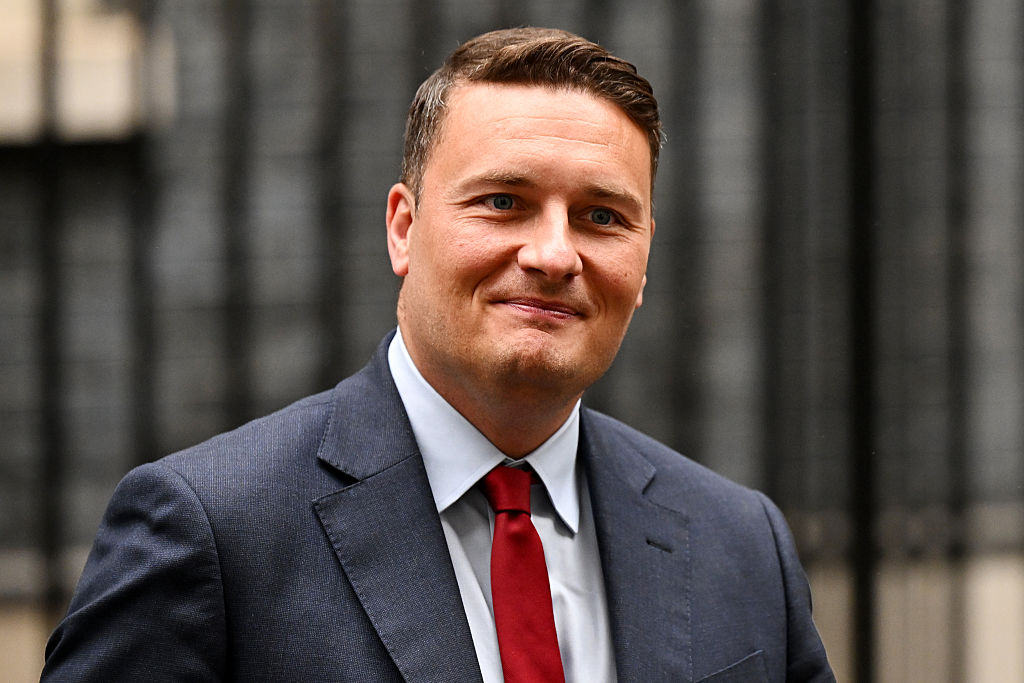
When the Health Secretary Wes Streeting announced an investigation into England’s maternity and neonatal care this June, he said “this will be an evidence-based investigation setting out what’s going wrong… It will look in detail at up to ten maternity units that are giving us greatest cause for concern.” Maternity safety, Streeting explained, was not only “the biggest patient safety challenge facing our country”, but would also become the “litmus test for all safety in the NHS”.
Those ten trusts, we were told at the time, would be chosen according to different NHS data sets. But what we saw in the government’s announcement on 15 September is somewhat different. There are not ten, but 14 trusts to be put “under the microscope”, the Department of Health and Social Care confirmed. And they haven’t necessarily been chosen because they are causing concern, but for myriad other reasons, too. It is this, along with the softening of Streeting’s other pledge – that the investigation would report directly to him “by Christmas” – that has caused great anger among some families whose babies have died or been harmed on English maternity wards. The “rapid national investigation” of maternity units potentially causing most harm, is now neither rapid – the full results aren’t now expected until spring 2026, rather than Christmas – nor a review of the worst-performing hospital trusts.
In its official communications, the Department of Health spoke of the need to have a “diverse mix of trusts”, so other criteria were used, including geographic coverage, provision of care to women from diverse backgrounds, and family feedback. NHS data was relevant, but analysis suggests it does not seem to have been the overriding factor in many of the choices.
The government mentioned two main data sources it used to select the units to be investigated: MBRRACE-UK perinatal mortality rates and the Care Quality Commission (CQC) maternity patient survey. Data on deaths does appear to have been an important determinant factor, with seven of the 14 trusts selected experiencing rates of stillbirth, neonatal death, or extended perinatal death (the combined rate of stillbirths and neonatal deaths – deaths within the first 28 days of life) that are at least 5 per cent higher than average when compared with similar trusts. In 2023 – the most recent year for which there is publicly available data – Oxford University Hospitals NHS Foundation Trust and Sandwell and West Birmingham Hospitals NHS Trust had the highest stillbirth rates when compared to similar-sized hospitals.

Sandwell and Birmingham had the highest rates of deaths in all categories, with its rate of neonatal deaths 50 per cent higher than the average. Leeds Teaching Hospitals NHS Trust had the worst extended perinatal death rate when compared with similar hospitals. Both trusts have had high mortality rates for several years.
The CQC maternity surveys do not appear to have been a key determinant of selection at all. In its 2024 survey, the hospitals regulator found two trusts (out of 120) performing “much worse than expected” overall – University Hospitals Birmingham NHS Foundation Trust and Milton Keynes University Hospital NHS Foundation Trust. Neither is included in the national investigation. University Hospitals Birmingham also had higher than average mortality rates. Sandwell and Birmingham was one of six trusts labelled “worse than expected” – but the other five are all absent from the investigation.
If we go back another year, to the CQC’s 2023 survey, none of the five trusts (out of 121) judged “worse than expected”, which again included University Hospitals Birmingham – are in the government’s investigation. Two things are clear when looking at the CQC maternity survey findings. First, they have had little influence over which trusts will be investigated. And second, they appear an unreliable indicator of good or poor maternity care anyway. While in some instances, there are other data sets that support the trusts singled out by the CQC as having better or worse than expected results, many are highly inconsistent.
The trust that was conspicuous by its absence from the list is Mid and South Essex NHS Foundation Trust. It is one of just four cited by Wes Streeting in June as a unit of “greatest concern”. (Coincidentally, it was highlighted by both the two most recent CQC maternity surveys as having “worse than expected” results.) The East Anglian trust has been plagued by difficulties in recent years: the CQC has imposed urgent restrictions on two of its hospitals; more than 1,200 maternity “red flag events” were recorded between April 2021 and March 2025; staff shortages have impacted the care received by mothers and their babies; and there have been substantial payouts for multiple stillbirths and babies born with brain damage. It is claimed that Mid and South Essex has paid out more than any other trust in the country over the past five years.
The government’s announcement on 15 September confirmed that three of the trusts included had nothing to do with data or performance. Shrewsbury and Telford, East Kent Hospitals and University Hospitals of Morecambe Bay – which have all been subject to previous maternity investigations – have also been chosen so that “learnings from these will be incorporated in this new investigation”. This is a surprising statement, since the maternity investigation’s terms of reference include the aim of “identifying the reasons recommendations [from previous inquires] have not been implemented”.
If one looks at the data for those three trusts, the picture is mixed. East Kent’s maternity services are now judged by the CQC to be good. But Shrewsbury and Telford still has a significantly higher than average rate of neonatal deaths (while nothing of concern is highlighted in the CQC survey), whereas one of Morecambe Bay’s maternity units remains rated inadequate, with the other two requiring improvement. In its 2023 maternity survey, the CQC singled out the trust for having “better than expected” results. Other than achieving a geographical spread, I have been unable to identify any data, or family voices, that support the inclusion of Norfolk’s Queen Elizabeth Hospital.
What is going on then? What was meant to be an urgent, rapid review of the ten most troubling maternity units in England has morphed into something altogether different, leaving some of the trusts that are causing most concern un-investigated. It is unclear what has led to this change in approach, or how it will lead to safer outcomes. One can only hope, given the Health Secretary’s acknowledgement that poor maternity care is “systemic”, that the chair of the investigation, Valerie Amos, and in government have made the right call.
[See more: Who will be the next Paul Ovenden?]
Content from our partners



Related



Join the debate
Subscribe here to comment