
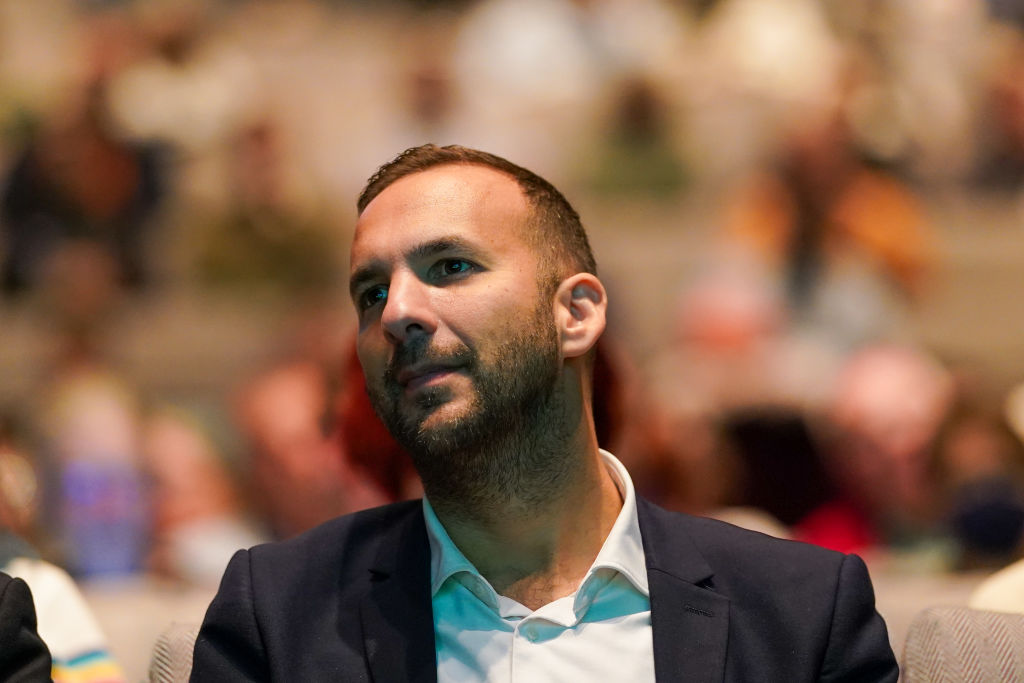
In exactly a month’s time, the Green Party will be in the first moments of a new, or renewed leadership. The battle to lead the party will be passed into the hands of members this afternoon as a month-long period of voting opens (the winner will be announced on 1 September). Since May, candidates to take on the role – the MPs Ellie Chowns and Adrian Ramsay (who is a current co-leader) and the London Assembly Member Zack Polanski – have been locked in a head-to-head. This race comes at a defining moment for the Green Party, and more widely for the left. After winning four MPs in last year’s general election (a record performance), the party could have the chance to capitalise on its victories in this new era of five party politics. And, with the imminent founding of a new left-wing party led by Jeremy Corbyn and Zarah Sultana, the future of the left hangs in the balance. Whichever candidate (or candidates) is successful, their leadership will define the party’s place in British politics going forwards.
Polanski fired the starting gun on this race when he announced his surprise (although not so to most party insiders) decision to run shortly after this year’s local elections. His platform of “eco-populism” has, in some ways, defined the campaign and its place in the wider political moment. Polanski, who is the party’s current deputy leader, said in his leadership pitch that the Greens should occupy a more progressive, populist space on the left in order to confront the infectious populism of Nigel Farage’s Reform. He has called for a wealth tax, a better approach to net zero and a more robust left-wing position on immigration.
In doing so, he has captured the imagination of the former Corbynite left, some of whom have ditched their former Labour allegiances and become paid-up members of the Greens. The commentator and former NS columnist Grace Blakeley announced her defection to the party in order to vote for Polanski in June. This, insiders in his campaign believe, is reflective of wider increases in membership of the party: people have signed up to Green Party membership in order to vote for Polanski. (This mirrors those who took advantage of Labour’s £3 membership deal to vote for Corbyn’s leadership in 2015). “I’m delighted,” Polanski told me, “there’s been a lot of focus on all the new members that have joined to vote for me.” He added: “I’m feeling confident, but not complacent. I will be campaigning until the very last day of voting for every single vote.” (When asked, the Green Party said they would not share membership data during the election campaign.)
Though it was clearly obvious Polanski was on manoeuvres, he did not inform Ramsay of his decision to run. Nor was Chowns aware of her now-opponent’s intentions. The pair stepped forward as candidates shortly after Polanski’s announcement, with Chowns stepping in to run as a co-leader, replacing Carla Denyer, the MP for Bristol Central who has been leading the party alongside Ramsay since 2021. Their campaign has focused on their ability to win first-past-the-post elections, and the pair have made clear the damage they think having a leader sitting outside of parliament would do to the progress the Green party has made. “People really want a professional party that can win elections,” Chowns told me when we spoke over the phone shortly before voting opened. “That’s what Adrian and I are standing for. Members can vote for a leadership who knows how to win elections.”

This has been a perennial criticism thrown at Polanski throughout the campaign: that as a London Assembly Member and not an MP, his leadership would provide a stumbling block for the Green Party’s enduring progress. Jenny Jones, a party grandee and former deputy mayor of London, who is backing Ramsay and Chowns told me: “I get on well with Zack, he’s an excellent campaigner.” But she added: “The reason I am voting for [Ramsay and Chowns] is because they are good at getting not only themselves elected, but getting other people elected”.
But this is a moment of flux in British politics. As Labour has moved rightward in order to face-up to the ongoing threat of Reform, it has become more exposed on its left flank. Analysis by Stack Data Strategy and shared with the New Statesman found that Labour is losing more votes to its left than to the right. The founding of Corbyn and Sultana’s party, and the increasing anger and frustration from left-wing voters over Gaza, has provided an opportunity for the Green Party. James Schneider, Corbyn’s former director of strategic communications, said in a recent interview with the New Left Review that Corbyn and Sultana’s party should be open to some form of red-green cooperation. Chowns and Ramsay have all but turned their backs on this idea: “We have a really distinct identity as Greens,” Chowns told me. On the eve of voting opening, they criticised Polanski’s eco-populist platform as “chasing the next headline, the next set of likes, rather than real substance”.
This has been an unprecedented campaign for the Green Party, not least because of the volume of media attention it has courted. But the outcome also bears wider political significance. A party led by Ramsay and Chowns would likely mean business as usual for the Green Party (beefed up local campaigning, and a focus on winning more seats). A victory for Polanski, however, would mark a new era for the party and more widely, for the left. In partnership with a new left party led by Corbyn, the Greens could do some serious damage to Labour’s left flank. In just over four weeks’ time, the future of the Green Party may finally begin to take shape.
This piece first appeared in the Morning Call newsletter; receive it every morning by subscribing on Substack here
[See also: One year on, tensions still circle Britain’s asylum-seeker hotels]
Content from our partners

Related

Join the debate
Subscribe here to comment