
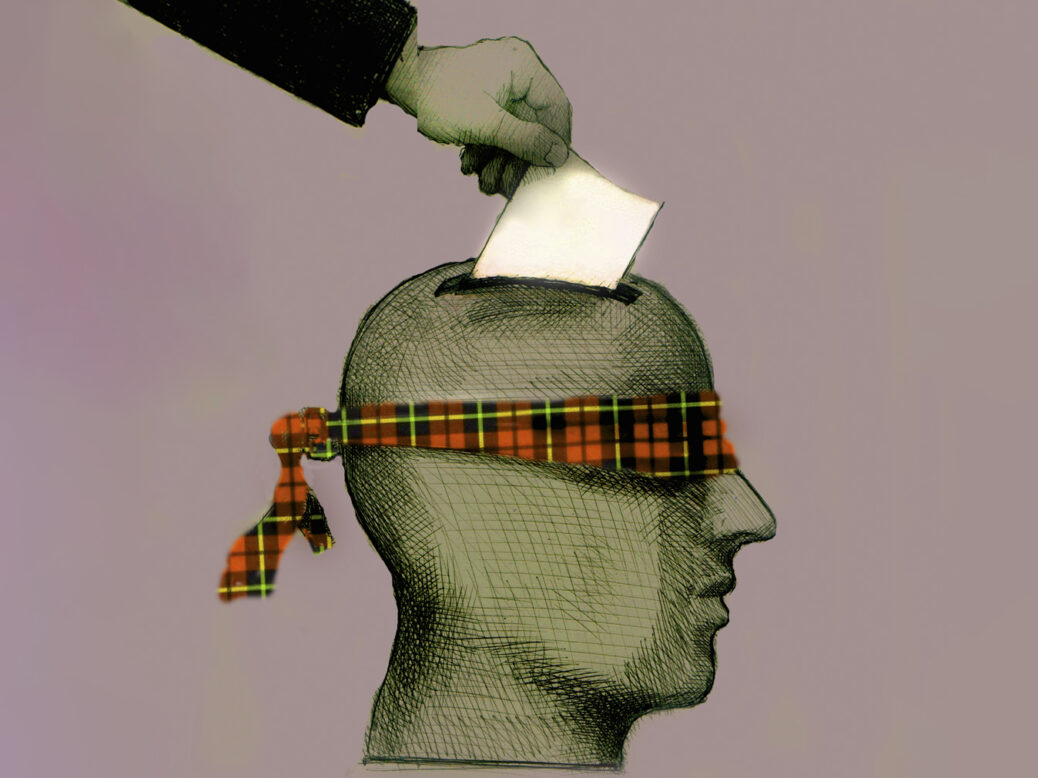
The stars are, just possibly, aligning for the SNP. The trial of Peter Murrell, its former chief executive, who has been charged with embezzling £459,046.49 of party funds, has been delayed until two weeks after May’s election. An uncomfortable experience, to put it mildly, has been narrowly avoided during a sensitive time.
What’s more, the Greens, Scotland’s other main pro-independence party, have decided to stand in just a dozen constituency seats, instead concentrating on the list vote. This leaves the path clear for the Nats to scoop up the first-past-the-post votes of most of those who want to leave the UK. A poll for More in Common this week found the party on course for 64 seats in May, just one shy of an overall majority. Not an unbridgeable gap.
Meanwhile, the unionist vote remains hopelessly divided. Anas Sarwar’s failed coup attempt against Keir Starmer impressed Scots, but has as yet had no impact on their voting intentions. Labour remains in third place, behind Reform. There are suggestions Malcolm Offord, Reform’s Scottish leader, could stand against Jackie Baillie, Sarwar’s deputy. Baillie is a formidable campaigner but her majority is only 1,483, with the SNP in second place – it is not unthinkable Offord could attract enough former Labour voters to allow the Nats to unseat her.
The consequences of John Swinney securing that overall majority could be seismic. It is the benchmark the First Minister has set for demanding a second independence referendum – and he has a point. It was after securing such a majority with 69 seats in 2011 that Alex Salmond sought and won the right to hold the first referendum, which resulted in a too-close-for-comfort 55-45 win for the union. Today, support for independence sits around 50 per cent. Again, it wouldn’t take much for that figure to tick higher. And you only have to win by one.

This was supposed to be the first election in two decades where independence was not the main subject of debate. Voters are more concerned with the ailing NHS, the cost-of-living crisis and immigration. But the prospect of a Nationalist majority could change all of that. The whiff of outright victory will encourage Swinney to major on the prospect of another referendum. The opposition parties will go to war with him on that territory. Independence is back.
What will a Labour government at Westminster do in the event of such an outcome? There will be resistance to a second plebiscite. It will be pointed out that the SNP has secured its Holyrood victory with a much smaller share of the vote. Polls suggest it will get around 35 per cent, compared to Salmond’s 45 per cent. But Swinney will have delivered what no one thought he could, and will have a mandate through a democratic election. He will have a right to deliver his manifesto promises, which will certainly include among them the right to hold a referendum.
The SNP will be confident of winning it this time, too. Conditions at Westminster are abysmal. It seems all but certain that defeat in Scotland, Wales, and in the English council elections will finally do for Starmer, giving the UK yet another new prime minister. Instability has become the norm, and Britain feels like a strange, ungovernable, un-unifiable country these days. Scotland’s voters might be weary of the long constitutional debate, but they are equally weary of successive London administrations that have spectacularly failed to live up to expectations. There will be the question of fairness. A third consecutive decade of SNP rule, a second overall majority: at some point the Nats will have earned the right to pose the indy question again. If not in these circumstances, then when? At what point do a broad swathe of Scots start to feel like there is no democratic outcome that allows them to at least make the choice?
There is much that still stands in Swinney’s way. Sarwar continues to believe Labour will rein in the SNP’s lead in the coming weeks, and he may well be right. Perhaps his anti-Starmer gambit will pay dividends over the period, successfully establishing his party as solely focused on Scotland and not tied to southern apron strings. The SNP government, despite its lead, is far from popular among voters after its long spell in office. There is a sense that the nation has not been well governed, that high taxes have not led to improved public services, that across a whole range of policy areas – health, education, ferries, drugs – the Nats have barely tried, or simply failed.
Admittedly, there are no shortage of scandals around the SNP. The Lord Advocate Dorothy Bain, who runs the Crown Office in Scotland as well as sitting in the Cabinet, was hauled before the Scottish Parliament this week after it emerged she had passed specific details of the Murrell case to Swinney a month before they became public. The opposition parties have accused Bain of handing a “clear political advantage” to the First Minister, and it must be said that she was unconvincing in her attempts to counter those accusations. There remain unanswered questions around the safety of Glasgow’s Queen Elizabeth University Hospital and whether ministerial pressure forced it to open too early, putting patients at risk. The gender debate remains live and contentious.
And yet, the stickiness of the SNP’s core vote is a remarkable thing. No failure, it seems, is too great to change minds. No length of time in office is seen as long enough. No scandal cannot be explained away. The goal of independence excuses everything else, and always comes first.
Can Swinney win his majority? Can he then secure a second referendum? Does the man who was once seen as a caretaker leader have it in him to leave his mark on history? Can the UK government and the unionist parties get their act together in time to stop him? The coming months will provide the answers.
[Further reading: Anas Sarwar’s epic misfire]
Content from our partners

Related
Join the debate
Subscribe here to commentWouldn’t Scottish independence help Farage, all those subsidies can be converted into tax cuts.